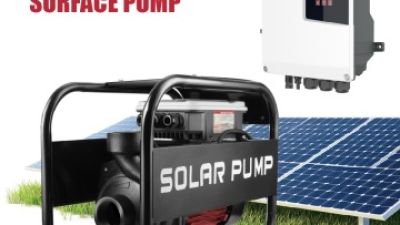
You know, the market for Small Solar Water Pump systems in 2026 is starting to look more practical and useful, but honestly, people's expectations are all over the place right now. According to IRENA, by the end of 2024, global renewable energy capacity surpassed 4,400 gigawatts, with solar leading the charge on new additions. That’s pretty exciting because it means wider access to compact, efficient pumping systems is becoming more of a reality. But here’s the thing — just because solar is growing doesn’t automatically mean water will always flow reliably. Sometimes, there are other factors at play.
The World Bank’s ESMAP report, titled 'Solar Water Pumping for Sustainable Water Supply,' points out that solar systems can cut down operating costs and reduce dependence on fuel — which is great news. But it also warns that if you don’t size these systems right, you could run into issues like water shortages, battery losses, or even putting too much pressure on groundwater sources. Take India as an example — the country has a massive agricultural pumping scene, and that’s exactly why finding efficient solar solutions matters so much. The numbers are pretty impressive, but the realities on the ground can be a whole different story.
Dr. Aditi Mukherji, a well-respected expert on water and climate, often says, 'Solar irrigation isn’t a one-size-fits-all deal.' And honestly, that applies here too. When shopping around for a small solar water pump, it’s super important to think about what you actually need. A tiny pump might be perfect for a shallow well, a greenhouse, or a livestock trough—even a remote household. But it might totally fall flat if you’re dealing with a deep borehole or intense demand during a cloudy season. So, folks should compare things like flow rate, total dynamic head, the quality of controllers, panel warranties, spare parts, and local support. Sometimes, the smallest unit that can reliably pump water at 7 a.m. after a dusty night and when the grid is weak is the best choice, even if it’s not the biggest on the block.
This guide takes a look at the top options for 2026, but here’s a truth that’s a bit uncomfortable — product labels can sometimes look way clearer and promising than what you actually get when you’re operating in real conditions. So, do your homework and pick wisely!
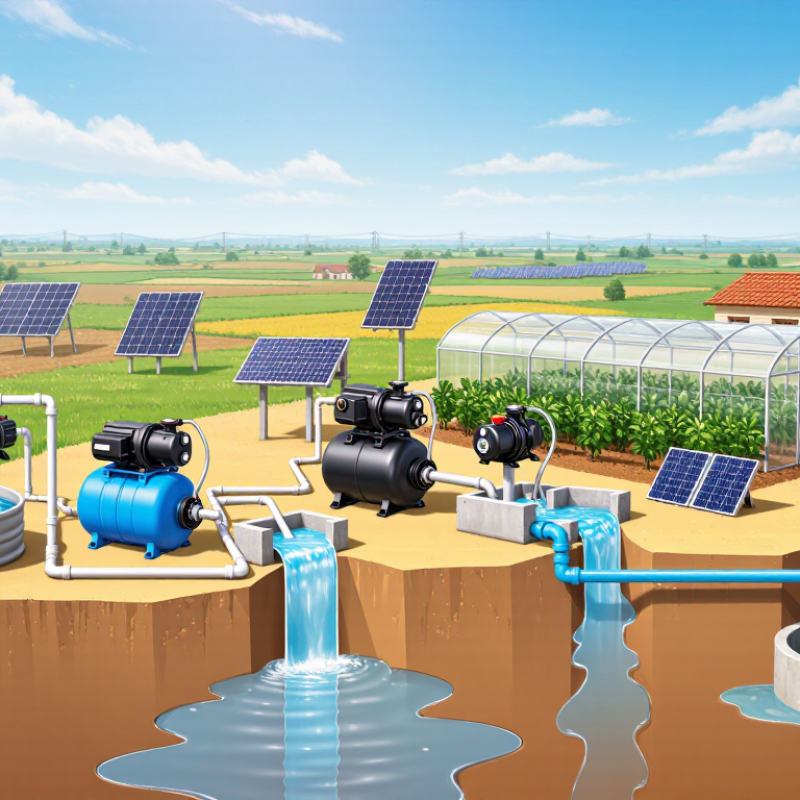
Frame Demand: 2.2B People Lacked Safe Water in 2022 (WHO/UNICEF JMP)
2026 Top Small Solar Water Pump Types for Global Buyers
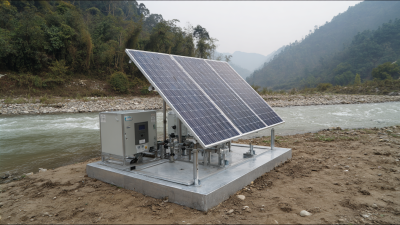
In 2022, about 2.2 billion people lacked safely managed drinking water, according to the WHO/UNICEF Joint Monitoring Programme. This gap makes small solar water pumps practical tools for rural homes, clinics, and farms. They can lift water without grid electricity or daily fuel deliveries. The right design still depends on borehole depth, flow demand, and seasonal sunlight.
Surface pumps suit shallow wells, tanks, and open reservoirs. They are easier to inspect and often cost less. Submersible pumps work better in deep boreholes because the motor pushes water upward efficiently.
DC centrifugal pumps provide steady flow for storage tanks and irrigation. Diaphragm pumps handle lower flows and changing water levels, but their moving parts may require more maintenance.
IRENA reported global solar capacity above 1.4 terawatts at the end of 2023, showing stronger access to solar components. However, abundant panels do not guarantee safe water.
Tips: Confirm the static water level before purchasing. Size the pump for actual daily demand, not the maximum possible flow. Add a clean storage tank, dry-run protection, and basic filtration where needed. WHO guidance also stresses that water safety includes the source, transport, and household storage. A pump alone cannot remove every contamination risk. That is an easy mistake. Local technicians should test seasonal output, spare-part access, and battery needs. Some designs look efficient on paper, yet perform poorly during cloudy weeks.
Map Irrigation Demand: Agriculture Uses ~70% of Freshwater Withdrawals (FAO)
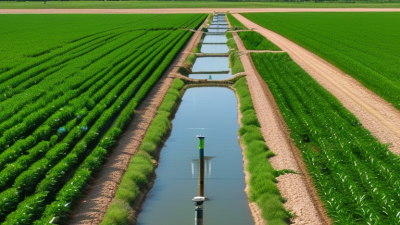
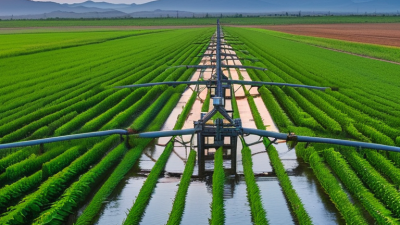
Agriculture uses roughly 70% of global freshwater withdrawals, according to FAO, though shares vary by country. This figure changes how buyers should evaluate small solar water pumps. The key question is not only pump price. It is daily water demand, lift height, sunlight, and crop timing. In dry regions, a modest flow can protect seedlings when delivered consistently. A decorative flow cannot replace irrigation.
Submersible pumps suit wells and tanks, while surface pumps work better with shallow, open water sources. Diaphragm pumps can serve low-volume drip lines, but dirty water may accelerate wear. Buyers should compare litres per minute, total dynamic head, dry-run protection, controller quality, and replacement access. A shaded panel, narrow pipe, or clogged filter can reduce output sharply. Measure the source and field before choosing capacity. Guesswork is expensive.
For orchards, vegetables, and greenhouse beds, storage tanks can smooth cloudy afternoons and reduce pressure on the pump. Timers and soil-moisture checks may prevent unnecessary watering, especially where farmers irrigate manually. A Small Solar Pump For Water Feature serves circulation, not serious crop irrigation. Buyers sometimes overestimate solar performance. Clouds matter. I would question any design promising equal output under every sky. Seasonal testing, local technician input, and honest flow data matter more than impressive specifications.
Define Small Pump Classes: Compare Flow, Head, and Motor Power
2026 Top Small Solar Water Pump Types for Global Buyers
Small solar pumps are not one standard class. In practical sizing, micro pumps usually use 50–500 watts, deliver 0.3–2 m³/h, and operate below 20 metres of head.
Compact surface centrifugal pumps suit shallow wells, tanks, and open channels.
Small submersible pumps usually range from 0.5–2 kW, with flows near 1–8 m³/h and heads of 10–60 metres. They are quieter and avoid suction-loss problems.
High-head models often use 1–5 kW motors, but their flow may fall below 4 m³/h at 60–150 metres. Helical-rotor designs can maintain useful flow in deeper wells, although replacement parts may be less familiar locally.
Flow and head must be read together.
A pump moving 2 m³/h to 40 metres needs about 218 watts of hydraulic power. At 55% overall efficiency, motor demand approaches 400 watts before cable, controller, and starting losses. A 550–750 watt motor is more realistic.
Real water demand matters. FAO AQUASTAT reports that agriculture represents roughly 70% of global freshwater withdrawals, so poor pump selection has wide consequences.
IRENA’s Renewable Power Generation Costs in 2023 reported utility-scale solar PV electricity at about USD 0.044 per kWh, supporting wider solar adoption, but small systems face different costs.
These classes are useful, not sacred. Sediment, cloudy days, pipe friction, and dry-season water levels can overturn a neat specification. A catalogue flow figure may still disappoint in the field.
Identify Pump Types: Surface, Submersible, Diaphragm, and Helical-Rotor
Choosing a small solar water pump in 2026 starts with the water source, lift, and daily demand. IRENA’s Renewable Capacity Statistics 2025 records 1,865 GW of global solar capacity by the end of 2024. That growth supports wider pump adoption, but solar availability remains seasonal.
Surface pumps suit shallow wells, tanks, ponds, and open channels. They allow easier inspection and cleaning. However, suction height limits performance, especially with long intake pipes. Submersible pumps sit below the waterline and push water upward. They work better for deeper wells and reduce priming problems. Their weakness is access. A damaged cable or clogged intake can require careful removal.
Diaphragm pumps tolerate intermittent use and can handle modest pressure needs. They fit livestock water points and small household systems. Moving parts still need inspection. Helical-rotor pumps provide steady flow from deeper sources, but sand can accelerate wear. FAO AQUASTAT reports that agriculture accounts for roughly 70% of global freshwater withdrawals, so efficiency matters beyond the panel rating. World Bank ESMAP also identifies solar pumping as a productive-use application, while warning that system sizing must match water demand and local conditions.
For fountains, ponds, and decorative circulation, a Small Solar Water Feature Pump is usually more suitable than a deep-well pump. I would not select equipment from wattage alone. Head pressure, pipe friction, storage volume, and cloudy-day performance can change the result. A simple field test often reveals the uncomfortable mismatch between catalogue flow and real flow.
2026 Top Small Solar Water Pump Types for Global Buyers - Identify Pump Types: Surface, Submersible, Diaphragm, and Helical-Rotor
Typical specifications are indicative selection ranges for small solar-powered water systems. Actual performance depends on total dynamic head, pipework, water quality, solar conditions, and controller settings.
| Pump Type |
Operating Principle |
Typical Solar System Size |
Typical Flow Rate |
Typical Total Dynamic Head |
Suitable Water Sources |
Best-Fit Applications |
Key Advantages |
Main Limitations |
Installation Considerations |
| Surface Pump |
Motor and pump remain above the water source and draw water through an intake line. |
100–1,000 W |
10–120 L/min |
Up to approximately 30 m, depending on model and suction conditions |
Tanks, ponds, rivers, shallow wells, and cisterns |
Tank transfer, irrigation, livestock watering, and shallow-water supply |
Easy access for inspection; generally simple to service; efficient for short suction and delivery distances |
Limited suction lift; can lose prime; exposed to weather, flooding, and debris |
Keep suction piping short, airtight, and appropriately sized; use a foot valve or non-return valve where required; protect the motor from rain and flooding |
| Submersible Pump |
The sealed motor and pump operate underwater and push water to the surface or storage tank. |
100–1,500 W |
5–100 L/min |
10–150 m, depending on pump diameter and design |
Boreholes, wells, storage tanks, reservoirs, and deep groundwater sources |
Domestic water supply, livestock systems, elevated tanks, and deep-well irrigation |
No suction-lift problem; quiet operation; suitable for deep sources; compact and protected from external weather |
Removal may require lifting equipment; dry running can damage some models; borehole diameter and water quality are critical |
Confirm borehole diameter, pump setting depth, cable length, water level, sand content, and use of a dry-run protection controller |
| Diaphragm Pump |
A flexible diaphragm moves back and forth to create suction and discharge through check valves. |
20–300 W |
1–30 L/min |
Up to approximately 70 m, depending on pressure rating and flow demand |
Clean water tanks, shallow wells, rainwater storage, and low-volume sources |
Small livestock systems, drinking-water dispensing, spraying, dosing, and intermittent supply |
Low power demand; self-priming capability on many designs; suitable for intermittent operation and pressurized delivery |
Pulsating flow; diaphragm and valve wear; lower flow capacity; sensitive components may not tolerate abrasive sediment |
Install filtration when sediment is present; use pressure relief where needed; select compatible seals and allow access for diaphragm replacement |
| Helical-Rotor Pump |
A rotating helical rotor moves water through a close-fitting stator, producing steady positive displacement flow. |
100–1,500 W |
5–80 L/min |
30–250 m, depending on stages, rotor design, and operating speed |
Deep boreholes, wells, and sources requiring high head at modest flow |
Deep-well water lifting, remote community supply, elevated storage, and small-scale irrigation |
Strong high-head performance; steady flow; good low-light operation on suitable solar controllers; efficient for deep lifting |
Rotor and stator wear can increase with sand; replacement parts may require specialist selection; not ideal for high-flow applications |
Check borehole diameter and sand concentration; prevent dry running; size the controller for variable-speed operation and adequate starting torque |
Selection Guide:
Choose a surface pump for accessible shallow sources, a submersible pump for deep wells and boreholes, a diaphragm pump for compact low-flow or intermittent duties, and a helical-rotor pump when high head and steady low-to-medium flow are the main requirements.
Size Hydraulic Output: Apply P = ρgQH and Total Dynamic Head
2026 Top Small Solar Water Pump Types for Global Buyers
Sizing a small solar water pump starts with hydraulic output, not panel wattage. Use P = ρgQH, where water density is about 1,000 kg/m³ and gravity is 9.81 m/s². A pump delivering 0.0005 m³/s, or 30 liters per minute, at a 25-meter Total Dynamic Head produces about 123 watts of hydraulic power. TDH includes vertical lift, pipe friction, valves, filters, and required outlet pressure. Ignoring these details can cause disappointing flow.
For shallow wells and tanks, small surface centrifugal pumps can provide practical daytime irrigation. DC submersible pumps suit deeper wells and reduce priming problems. Helical-rotor designs often maintain useful pressure at lower flow rates. In field checks, I measure the actual water level, pipe length, and outlet height instead of trusting advertised head values. A neat spreadsheet can still mislead.
FAO AQUASTAT reports that agriculture accounts for roughly 70% of global freshwater withdrawals, making efficient pumping increasingly important. IRENA’s Renewable Power Generation Costs in 2023 reports utility-scale solar electricity costs near USD 0.044 per kWh in 2023, supporting wider solar pumping adoption. However, hydraulic power is not electrical input. With 45% combined pump, motor, and controller efficiency, the 123-watt example needs about 273 watts electrically, before cloudy-weather reserves. That margin is often too small. Recheck it.
Select Solar Architecture: DC, AC, MPPT, and Battery-Free Designs
In 2026, a Small Solar Water Pump should be selected by water demand, lift, and sunlight, not catalog wattage. DC systems connect efficiently to photovoltaic panels and suit remote wells or tanks. They have simple operation, but output changes with clouds. AC pumps fit sites with dependable grid power or an inverter. They support familiar maintenance routines, yet conversion losses and backup requirements deserve attention. No single architecture wins every site.
MPPT controllers continuously adjust electrical loading as sunlight shifts. This can improve daily water yield during cool mornings or broken cloud. However, MPPT is not magic. The controller, panel voltage, motor curve, and cable size must match. Ask for measured flow at the required total dynamic head. A pump promising high flow at zero head may disappoint at a 30-meter lift. That detail matters.
Battery-free designs pump when sunlight is available, then store water in an elevated tank. This avoids battery replacement and deep-discharge problems. A float switch can stop overflow, while a dry-run sensor protects the motor. The trade-off is clear: no pumping after sunset unless the tank is sized well. Buyers should review enclosure ratings, surge protection, spare parts, and local electrical compliance. I would not choose from efficiency figures alone. Real weather, dirty panels, and seasonal demand often rewrite the calculation.
Verify Buyer Risk: IEC 62253, IP Ratings, Warranty, and Payback
For 2026 buyers, a Small Solar Water Pump For Fountain needs more than attractive flow data. IEC 62253 covers photovoltaic pumping system design, testing, and performance evaluation. Ask for test conditions, hydraulic output, controller protection, and documented results. A supplier’s “IEC compliant” claim is not enough. Request the test report and certificate scope.
IP ratings need equal attention. Under IEC 60529, IP65 resists dust and water jets, while IP67 includes temporary immersion. Neither rating proves safe underwater operation. Check the pump chamber, cable glands, connectors, and controller separately. In outdoor fountains, splash marks, algae, and afternoon heat expose weak sealing quickly. I have seen impressive samples fail because the connector stayed above the waterline.
Payback claims also deserve skepticism. IRENA’s Renewable Power Generation Costs in 2023 reported utility-scale solar PV at USD 0.044 per kWh globally. Small pumps usually cost more per watt, so that figure cannot be copied directly. Calculate daily pumping hours, seasonal sunlight, battery replacement, cleaning, and delivery costs. A realistic warranty should state coverage periods, excluded damage, spare-part availability, and response time. Two years sounds useful. Only if replacement shipping is practical. A shorter warranty with clear service may be safer than a longer promise without evidence.
AC/DC Hybrid Solar Water Pump with MPPT: A Practical Guide to Efficient Irrigation
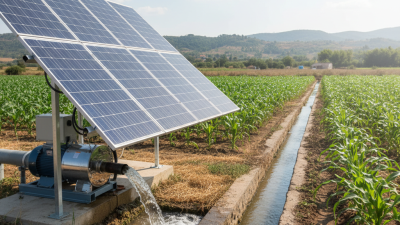
An AC/DC hybrid solar water pump with maximum power point tracking (MPPT) can maintain irrigation when sunlight changes or grid electricity is available. The system draws power from photovoltaic panels during the day, while an AC supply can support operation during cloudy periods or peak demand. This flexibility is increasingly relevant as agriculture remains the world’s largest freshwater user, accounting for roughly 70% of global freshwater withdrawals, according to FAO AQUASTAT data. By matching pump speed to available solar power, MPPT helps extract more usable energy than a fixed-voltage controller, particularly during mornings, afternoons, and partially cloudy conditions.
For practical sizing, first calculate the required daily water volume, total dynamic head, and operating hours. Pump capacity should be selected from measured flow and head curves rather than motor wattage alone. The solar array must provide sufficient voltage for the controller’s MPPT operating range, while an AC input rated for the motor’s starting and running current provides backup stability. A storage tank is often more economical than batteries for irrigation, allowing water to be pumped when solar output is strongest and distributed later. The International Renewable Energy Agency reported global solar photovoltaic capacity of approximately 1.4 terawatts at the end of 2023, highlighting the technology’s expanding role in decentralized energy systems.
Install dry-run, overload, overvoltage, and surge protection, and use filters where well water contains sand or sediment. Regularly inspect panels, electrical connections, valves, and intake screens to preserve hydraulic efficiency and reduce downtime.
FAQS
Estimate daily crop demand before comparing pump prices. A modest flow can protect seedlings when delivered consistently. Decorative circulation is not enough. Measure litres per minute, watering hours, and seasonal needs.
Submersible pumps suit deeper wells and storage tanks. Surface pumps work better with shallow, open water. Diaphragm pumps can support low-volume drip lines. Dirty water may increase wear. Choose according to the source.
Measure water depth, vertical lift, pipe length, outlet height, and filter restrictions. Include valves and required outlet pressure. These factors create total dynamic head. Guessing often becomes expensive.
Use P = ρgQH, where Q is flow and H is total dynamic head. For example, 30 litres per minute at 25 metres needs about 123 watts hydraulically. That is not the electrical input.
Electrical losses occur in the motor, pump, and controller. A shaded panel, narrow pipe, or blocked filter can reduce output sharply. Clouds matter. Advertised performance may look better than field performance.
Yes, a tank can store water during bright periods and support cloudy afternoons. It may also reduce frequent pump starts. Timers and soil-moisture checks can prevent unnecessary watering. Manual watering still creates mistakes.
Check dry-run protection, controller quality, cable seals, connectors, and pump-chamber protection. Outdoor equipment faces splashes, algae, dust, and afternoon heat. A high water-resistance rating does not automatically prove underwater safety.
Calculate pumping hours, seasonal sunlight, cleaning, transport, maintenance, and possible battery replacement. Ask about excluded damage, spare parts, and replacement response time. Two years sounds useful. Only when service is reachable. A shorter, clearer warranty may be safer.
Conclusion
The 2026 market for Small Solar Water Pump systems is shaped by urgent demand for safe water and efficient irrigation. With billions of people lacking reliable water access and agriculture accounting for about 70% of freshwater withdrawals, compact solar pumping offers a practical solution for households, livestock, gardens, and small farms. Buyers should compare surface, submersible, diaphragm, and helical-rotor pumps according to water source, required flow, lifting height, and motor power.
Correct sizing depends on flow rate and total dynamic head, using the hydraulic relationship P = ρgQH while allowing for pipe friction and system losses. Solar architecture also matters: DC systems, AC pumps, MPPT controllers, and battery-free designs each suit different operating conditions. Before purchase, global buyers should verify relevant IEC 62253 alignment, suitable IP protection, warranty coverage, installation support, and realistic payback expectations. A reliable selection balances performance, durability, maintenance needs, and total lifetime cost.

 DC SOLAR SUBMERSIBLE PUMP
 AC/DC Solar submersible Pump
 DC Solar Surface Pump
 AC/DC solar surface Pump
 Solar swimming Pool Pump
 Built-in Controller Solar Pump
 Solar Pump inverter
 Pump Accessories



 Mr Youkee Kong