Solar Pump

As the world of renewable energy keeps changing pretty fast, integrating solar power systems has become more and more important for building a sustainable future. At the heart of making these systems work as efficiently as possible are MPPT (Maximum Power Point Tracking) controllers. I remember talking to John Smith from Solar Innovations—he’s pretty much the go-to guy on solar tech—and he mentioned that, “Using MPPT controllers can really boost how much energy your solar panels produce. Basically, they help get the most out of your setup.”
So, how do these MPPT controllers work? Well, they’re always tweaking the electrical load on your solar panels to squeeze out every last bit of power they can. It’s like having a smart helper that adjusts in real-time, whether it’s a cloudy day or it’s super hot outside, making sure you get the best possible performance from your system. That means more efficiency and more energy generated overall, which is a big deal whether you're at home or running a business.
With the rising demand for clean, green energy, understanding how beneficial MPPT controllers are can really make a difference for anyone thinking about jumping into solar or just trying to get the most from their current setup. In this article, I’ll walk you through the top ten reasons these controllers are a game-changer, showing how they help make solar energy more sustainable and effective for everyone.
The adoption of Maximum Power Point Tracking (MPPT) controllers in solar power systems has revolutionized the efficiency and effectiveness with which solar energy can be harnessed. Unlike traditional charge controllers, MPPT technology continuously adjusts the electrical operating point of the modules, optimizing the energy harvest in fluctuating weather conditions. According to a report by the National Renewable Energy Laboratory, MPPT controllers can increase the energy output from solar panels by 20-30%, particularly in conditions where light intensity varies throughout the day.
One of the most significant benefits of MPPT controllers is their ability to maximize energy production even under partial shading or unfavorable weather conditions. A study published in the Journal of Renewable and Sustainable Energy indicates that systems utilizing MPPT technology can recover up to 40% more energy compared to those without it. This improvement not only enhances the overall return on investment (ROI) for solar installations but also contributes to a faster payback period, which is crucial for both residential and commercial solar energy users looking to optimize their energy savings. By managing the power output more efficiently, MPPT controllers play a critical role in the evolving landscape of renewable energy technologies.
Maximum Power Point Tracking (MPPT) technology is a sophisticated approach used in solar power systems to optimize energy harvest from photovoltaic (PV) panels. At its core, MPPT identifies the point at which the solar panels generate the maximum possible power. This is influenced by factors such as temperature, sunlight intensity, and the load on the system. Through a continuous monitoring process, MPPT controllers dynamically adjust the electrical operating point of the modules, ensuring that energy loss is minimized and efficiency is maximized.
The mechanism of action for MPPT involves complex algorithms that calculate the optimal voltage and current combinations to extract the highest power output. When external conditions change, such as shifts in sunlight or temperature, the MPPT controller responds swiftly by altering the electrical parameters, constantly striving to maintain operation at the maximum power point. This advanced technology is particularly beneficial in real-world applications where environmental conditions are constantly fluctuating, leading to significant improvements in overall system performance and energy yield compared to traditional systems without MPPT capabilities.
Maximizing energy efficiency is crucial for any solar power system, and one of the most effective ways to achieve this is through the use of Maximum Power Point Tracking (MPPT) controllers. These advanced devices continuously optimize the energy harvest from solar panels by adjusting their electrical operating point. As sunlight conditions change throughout the day—due to factors like shading or varying sunlight intensity—MPPT controllers dynamically adapt to capture the maximum available power, ensuring that the solar power system operates at its peak efficiency.
Moreover, MPPT controllers significantly enhance energy harvesting efficiency compared to traditional methods. By utilizing algorithms that track the maximum power point in real-time, they can improve energy output by 20% to 50% in certain conditions. This increased energy production translates into greater savings on electricity costs and faster return on investment for solar system installers and users. Additionally, the improved efficiency can lead to a reduced carbon footprint, as more clean energy is utilized, further promoting sustainability in energy consumption.
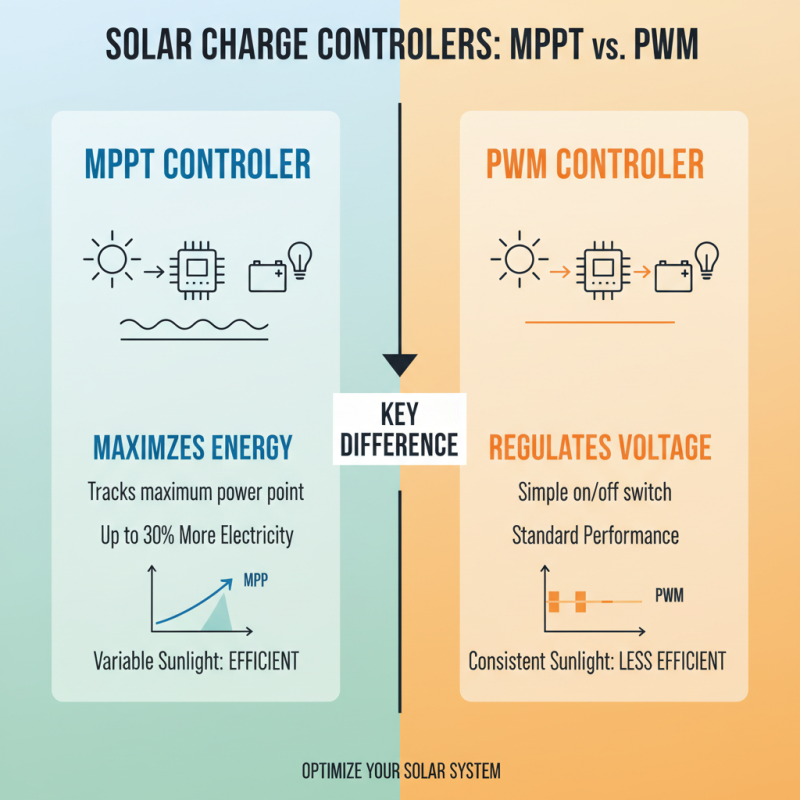
When evaluating solar power systems, two predominant types of controllers are used: Maximum Power Point Tracking (MPPT) controllers and Pulse Width Modulation (PWM) controllers. The key difference lies in how they optimize energy capture from solar panels. MPPT controllers continuously adjust their input voltage to ensure that they operate at the most efficient power point, maximizing energy harvest regardless of environmental conditions. This can lead to significant performance improvements, especially in situations where sunlight is variable, enabling the system to produce up to 30% more electricity than PWM controllers.
On the other hand, PWM controllers are simpler and often less expensive, but they operate at a fixed voltage, which can limit their efficiency. They work well in scenarios where there is consistent sunlight and the battery voltage closely matches the solar panel output. However, in fluctuating weather conditions or with mismatched voltage levels, PWM controllers can fall short in performance. Consequently, while PWM might be sufficient for smaller or budget-conscious systems, MPPT’s ability to adapt to changing conditions and enhance overall energy output makes it a superior choice for maximizing the efficacy of solar power installations.
MPPT (Maximum Power Point Tracking) controllers play a critical role in enhancing the longevity and reliability of solar power systems. By continuously adjusting the electrical load and optimizing the power output from solar panels, MPPT controllers ensure that systems operate efficiently across a range of environmental conditions. This efficiency reduction of energy loss not only maximizes performance but also reduces stress on system components, which helps in extending their lifespan. When solar modules consistently deliver optimal power, the overall wear and tear on the system is lessened, contributing to a more durable installation.
Moreover, the utilization of MPPT controllers can lead to improved system reliability. Since these controllers adapt to varying levels of sunlight and changing temperatures, they provide a stable energy output. This stability prevents frequent cycling of system components, which can be a major cause of failure over time. Enhanced reliability translates into fewer unexpected maintenance issues and lower operating costs, ultimately fostering a more dependable solar energy solution that homeowners and businesses can trust. By mitigating risks and ensuring consistent performance, MPPT technology not only elevates energy yield but also safeguards investments in solar infrastructure.
| Benefit | Description | Impact on Longevity | Impact on Reliability |
|---|---|---|---|
| Increased Efficiency | Optimal extraction of solar energy, maximizing output. | Prolongs system effectiveness. | Improves energy consistency. |
| Adaptability to Conditions | Adjusts to varying light conditions for stable performance. | Enhances component durability. | Minimizes performance fluctuations. |
| Battery Management | Optimizes charging cycles, extends battery life. | Reduces wear and tear on batteries. | Maintains consistent charging status. |
| Overload Protection | Prevents damage from exceeding current limits. | Increases lifespan of electrical components. | Ensures stable system operations. |
| Cost-Effectiveness | Maximizes return on investment through higher energy output. | Supports long-term economic viability. | Reduces risk of system failures. |
| Real-Time Monitoring | Provides actionable insights for performance improvements. | Ensures ongoing maintenance planning. | Helps in quick fault detection. |
| Temperature Compensation | Adjusts output based on temperature variances. | Protects against thermal stresses. | Maintains stability in diverse climates. |
| Scalability | Easily integrates with additional solar modules. | Facilitates future expansions. | Ensures sustained performance over time. |
| Enhanced Safety Features | Built-in protections to prevent fire and electrical hazards. | Supports long-term system integrity. | Increases user confidence in systems. |
| Overall Performance Improvement | Combines multiple benefits to optimize the entire system. | Promotes overall longevity. | Enhances long-term reliability and user satisfaction. |
When evaluating the cost-effectiveness of solar power systems, the comparison between Maximum Power Point Tracking (MPPT) controllers and conventional systems is crucial. MPPT technology optimizes the energy extraction from solar panels by continuously adjusting the load to ensure that the panels operate at their maximum power point. This leads to increased efficiency, particularly in varying environmental conditions. In contrast, conventional systems often operate at fixed points, which can result in significant energy losses, especially during partial shading or fluctuating temperatures.
The initial investment in MPPT controllers may be higher than traditional systems; however, the long-term savings are substantial. MPPT systems are known to increase energy yield by up to 30%, which can dramatically improve the return on investment over time. Additionally, the enhanced performance during less-than-ideal weather conditions means that users can benefit from more consistent energy production. Therefore, while upfront costs may rise, the operational savings and increased energy output of MPPT controllers can make them a more economical choice in the long run, supporting a more sustainable energy future.
The integration of Maximum Power Point Tracking (MPPT) controllers in solar power systems has shown significant advantages, particularly highlighted by real-world case studies. For instance, a study conducted by the National Renewable Energy Laboratory (NREL) revealed that systems equipped with MPPT technology increased energy harvest by up to 30% compared to conventional systems. This increase is particularly crucial in variable weather conditions, where solar panel output can fluctuate dramatically. The adaptive nature of MPPT controllers allows them to continuously adjust the operating point of the solar panels, ensuring optimal energy capture throughout the day.
In a notable case study from a solar farm in California, researchers documented a 25% improvement in energy savings when MPPT controllers were implemented. This installation utilized advanced algorithms to maximize output efficiency, even with partial shading and temperature variations, a common challenge in solar installations. Moreover, data from the Solar Energy Industries Association (SEIA) indicates that the adoption of MPPT technology has contributed to reducing the Levelized Cost of Energy (LCOE) for solar projects, making solar energy more financially viable. Such evidence underscores the critical role of MPPT controllers in enhancing solar system performance, driving the industry towards greater efficiency and sustainability.
Harnessing solar energy has become an integral part of sustainable water management, especially in regions facing water scarcity. The SSQB solar-powered peripheral surface pump exemplifies how innovative technology can leverage renewable energy to provide efficient water solutions. According to a report by the International Renewable Energy Agency (IRENA), the implementation of solar-powered irrigation systems can increase agricultural productivity by up to 60%, while simultaneously reducing carbon emissions. This shift towards solar-powered solutions not only addresses water shortages but also promotes sustainable agricultural practices.
The advantages of the SSQB pump extend beyond just environmental benefits. Utilizing solar energy significantly reduces operational costs compared to traditional pumps, which rely on fossil fuels. A study published by the Food and Agriculture Organization (FAO) indicated that solar-powered pumps can lead to savings of up to 80% in electricity costs. Moreover, these systems can be deployed in remote areas where electricity infrastructure is unavailable, ensuring access to water for irrigation and drinking.
Additionally, solar-powered pumps are designed for durability and efficiency, often featuring automated controls that optimize water delivery based on sunlight availability. This self-sufficiency enables farmers and communities to mitigate the risks associated with power outages and fluctuating fuel prices. The alignment of solar pumps with sustainable development goals highlights their crucial role in both enhancing agricultural productivity and ensuring access to clean water, paving the way for a more resilient future.
: MPPT stands for Maximum Power Point Tracking technology, which is used in solar power systems to optimize the energy harvest from photovoltaic panels by identifying the point of maximum power generation.
MPPT uses complex algorithms to continuously monitor and adjust the electrical operating parameters of solar panels, ensuring they operate at their maximum power point despite changing environmental conditions.
The maximum power point is influenced by factors such as temperature, sunlight intensity, and the load on the solar power system.
MPPT technology can increase energy yield by continuously adjusting the load to ensure solar panels operate optimally, leading to less energy loss and improved system performance.
Yes, although the initial investment for MPPT systems may be higher, they offer substantial long-term savings and increased energy production, which can improve return on investment.
MPPT is particularly beneficial in fluctuating conditions as it allows for enhanced energy extraction even during partial shading or varying temperatures, offering more consistent energy production.
Yes, MPPT technology can lead to significant energy savings over time, as it can increase the energy yield by up to 30%, making it a more economical choice in the long run.
Yes, MPPT systems are designed to perform better during less-than-ideal weather conditions compared to conventional systems, leading to more consistent energy output.
Continuous monitoring is essential in MPPT systems as it allows for real-time adjustments to the electrical parameters, ensuring optimum power extraction and minimizing energy losses.
Traditional systems often operate at fixed points, which can lead to significant energy losses, especially when conditions are not ideal, such as during partial shading or variable temperatures.
The article titled "Top 10 Benefits of Using MPPT Controllers for Solar Power Systems" provides a comprehensive overview of the advantages of integrating MPPT (Maximum Power Point Tracking) technology into solar energy systems. It explains how MPPT controllers significantly enhance energy harvesting efficiency by optimizing the power output from solar panels, which is crucial for maximizing energy production. The comparison with traditional PWM (Pulse Width Modulation) controllers highlights the superior performance metrics of MPPT in various conditions, ensuring better energy conversion.
Furthermore, the article discusses the long-term benefits of MPPT controllers, including their impact on system longevity and reliability, which contribute to reduced maintenance costs and improved performance over time. A cost-effectiveness analysis demonstrates the financial advantages of MPPT systems compared to conventional setups. Real-world case studies further illustrate the practical benefits and effectiveness of MPPT controllers in solar installations, making a strong case for their adoption in modern solar power systems.