You know, the demand for better energy management around the world is just growing like crazy. I saw a report from the International Energy Agency (IEA) that suggests by 2025, solar energy might actually make up about 30% of the world’s electricity. Pretty impressive, right? One key part of making the most out of solar power is the Solar Controller — it’s what keeps everything running smoothly and helps solar systems last longer.
Now, if you’re shopping around for a Solar Controller, you're probably overwhelmed with options. There’s a lot to consider — things like how efficient it is, whether it plays nice with your particular solar panels, and if it’s easy enough for anyone to use. Big names like Victron Energy and Morningstar Corporation are pretty much leading the pack, offering smart solutions for all sorts of needs.
But here’s the thing — it’s not always straightforward. Not all Solar Controllers perform well in every environment. Some might struggle in hot, humid weather while others excel in colder climates. That’s why it’s super important to think about your specific situation and to be a bit skeptical of all the marketing hype. Doing your homework and understanding the specs can really help you make a smarter choice — especially with how quickly this market is changing these days.

Overview of Solar Controllers and Their Importance in Energy Management
Solar Controller play a crucial role in managing energy from solar power systems. They regulate the flow of electricity from solar panels to batteries, optimizing energy storage. Without effective solar controllers, energy loss can occur, leading to inefficient systems. Understanding their importance can enhance system efficiency and lifespan.
In many installations, users overlook the need for reliable solar controllers. This often leads to underperformance. A good solar controller prevents overcharging and over-discharging. Both conditions can damage batteries and reduce their capacity. Users should carefully consider their specific needs before making a choice.
The market is evolving rapidly. New technologies emerge, offering better efficiency and reliability. However, not all solar controllers are created equal. Researching different options helps users make informed decisions. There are various features to consider, such as MPPT and PWM technologies. Each has its pros and cons, affecting overall performance in unique ways. Emphasizing such factors allows buyers to enhance energy management.
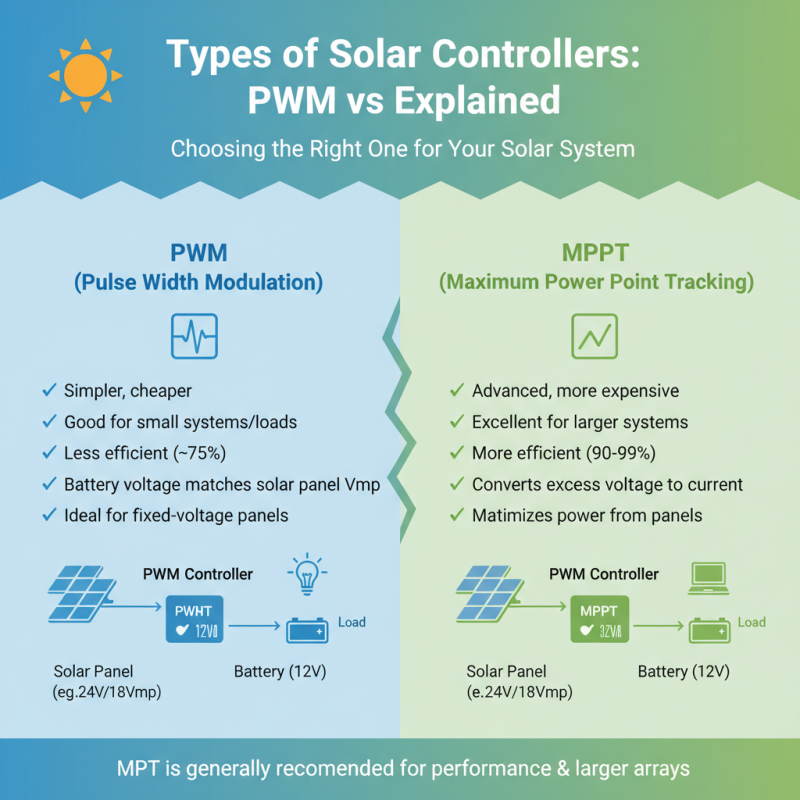
Types of Solar Controllers: PWM vs. MPPT Explained
When choosing a solar controller, understanding the types is crucial. Two primary options are PWM (Pulse Width Modulation) and MPPT (Maximum Power Point Tracking).
PWM controllers are simpler and more affordable. They regulate the voltage and current from solar panels efficiently. However, they are less effective in maximizing energy harvest. In contrast, MPPT controllers are more sophisticated. They adjust the electrical parameters to ensure the most efficient power transfer. This means they can generate more energy, especially under varying weather conditions.
Tips: Consider solar panel wattage when selecting a controller type. For residential setups, MPPT might yield better returns over time. If you're on a tight budget, PWM will get the job done but be aware of its limitations. Balance efficiency with your energy needs. Research real-world user experiences for insights on performance differences. Don't overlook the importance of installation quality, as it greatly affects system reliability.
Key Features to Consider When Choosing a Solar Controller
Choosing the right solar controller is crucial for efficient energy management. A good controller maximizes the performance of your solar panels. One key feature to consider is charging efficiency. Higher efficiency means better energy conversion from your panels. Look for models with MPPT (Maximum Power Point Tracking) technology, as they can optimize the power output.
Another essential aspect is compatibility. Ensure the controller can accommodate your battery type and solar panel voltage. Many controllers support multiple battery technologies, providing flexibility for future upgrades. Monitoring capabilities should not be overlooked. Some controllers offer Bluetooth or Wi-Fi connectivity for real-time performance tracking, which can enhance decision-making.
Heat management is also vital. Controllers with built-in thermal protection help prevent overheating, extending their lifespan. However, not all controllers handle heat well. You might find some struggle in high-temperature environments. Evaluate user reviews and expert opinions to gauge reliability. Understanding these features helps you make well-informed decisions.
2026 Best Solar Controller Solutions Comparison
This chart compares the efficiency ratings of different solar controller types based on their key features such as PWM (Pulse Width Modulation) and MPPT (Maximum Power Point Tracking) technologies. The data reflects the average efficiency percentages for different controller types.
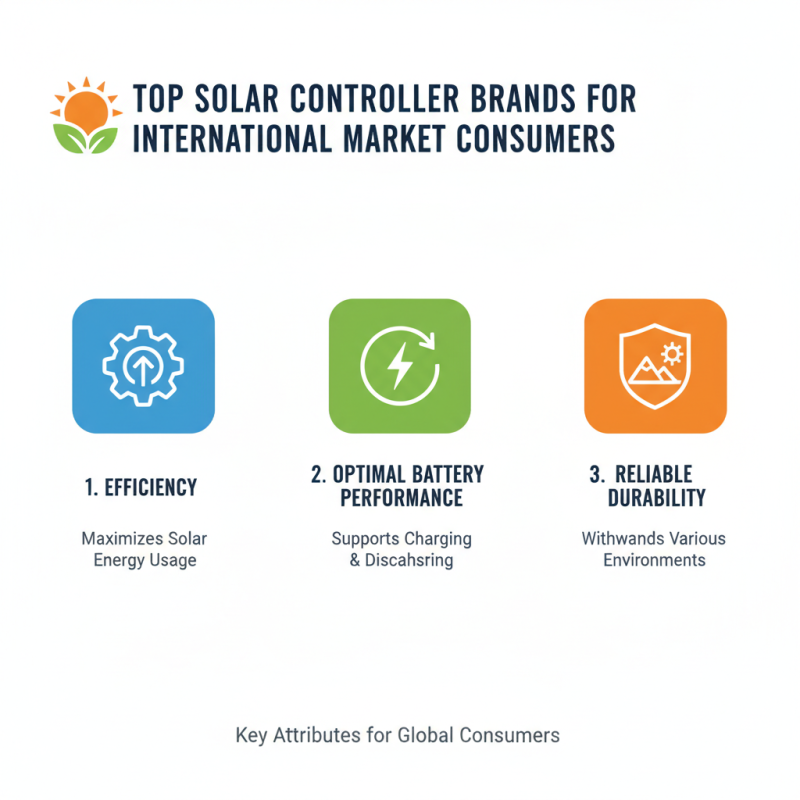
Top Solar Controller Brands for International Market Consumers
When selecting solar controllers for the international market, consumers should consider a few key attributes. Efficiency is paramount. A high-quality controller maximizes solar energy usage. Look for options that support both charging and discharging, ensuring optimal battery performance. Reliable durability is also vital. Products should withstand various environmental conditions.
Tips: Always check for customer reviews or ratings. This gives insight into product performance. Researching specifications can help identify the best quality.
Price is crucial, but don’t compromise on quality for savings. A cheaper controller might lead to long-term costs. Invest in a trusted model, as this can enhance your solar setup's overall efficiency. Another common oversight is compatibility; not all controllers work with every battery type. Ensure that the chosen controller is suited for your specific solar configuration.
Tips: Ask suppliers for compatibility details. Misalignment can result in wasted resources. Evaluate warranties too; they reflect a brand's confidence in their product.
Cost Comparison of Leading Solar Controllers in 2026
In 2026, the solar controller market presents various options for global buyers. Cost comparison is crucial for making informed choices. Reports indicate that the average price of solar controllers varies significantly due to features and technology. Basic models may start as low as $50, while advanced models can exceed $500. The growth of the solar energy sector drives competition, which, in turn, affects pricing dynamics.
It's essential to consider durability and warranty when evaluating costs. A cheaper solar controller might not last as long, leading to higher long-term expenditures. In contrast, investing in a more robust model often results in better performance. Features like smart technology integration and remote monitoring can enhance usability, but they generally come at a premium.
Tips: Always assess your actual needs before making a purchase. Think about your Solar Water Pump Controller requirements. Research maintenance costs and user reviews to gauge reliability. The right choice not only impacts your initial investment but also your energy efficiency over time. Seek professional advice when uncertain, ensuring your investment aligns with your energy goals.
Installation and Maintenance Tips for Optimal Solar Controller Performance
The efficiency of solar controllers directly affects overall solar system performance. Optimal installation and maintenance can greatly enhance this efficiency. Regular checks of wiring integrity and connections are vital. Corrosion or loose connections can degrade performance significantly, leading to energy losses.
When selecting a solar controller, consider factors like load capacity and input voltage. For example, a
40 Amp Mppt Solar Charge Controller
can handle larger systems, maximizing energy conversion during peak sunlight hours. It is essential to ensure that the controller’s specifications match the system’s capabilities to prevent
overheating or underperformance.
Occasional firmware updates can also optimize functionality. Many controllers may need software modifications for improved operation. Ignoring these updates can lead to missed features and decreased efficiency.
Furthermore, it is important to be cautious during maintenance. Overzealous cleaning or incorrect handling can cause damage. Always follow manufacturer guidelines and consult trusted professionals for complex tasks. This approach minimizes risks and ensures the longevity of the solar system.
Future Trends in Solar Controller Technology and User Preferences
The solar controller market is evolving rapidly. According to recent industry reports, the demand for smart solar controllers is increasing. These technologies can optimize energy usage and enhance system performance. User preferences are shifting towards smart features. Efficiency and user-friendliness are top priorities for many buyers.
As renewable energy grows, solar technology trends show significant improvements. A survey indicated that 72% of users prefer integrated solutions. This trend emphasizes the need for solar controllers that can communicate with other energy systems. Powertech Solar Controller offers examples of this integration trend. These innovations allow for better monitoring and control, which can save users money in the long run.
Tip: Before purchasing a solar controller, consider the compatibility with your existing system. Compatibility impacts efficiency and performance. Focus on features that allow for easy updates and upgrades as technology advances. Many users overlook the importance of future-proofing their investments.
Harnessing Solar Energy: The SSHF-H Solar-Powered Centrifugal Surface Pump for Efficient Agricultural Irrigation
Harnessing solar energy for agricultural applications has become increasingly important as farmers look for sustainable and efficient solutions to their irrigation needs. The SSHF-H solar-powered centrifugal surface pump exemplifies this innovation, providing an eco-friendly method to transfer water from surface sources for irrigation. Utilizing photovoltaic technology, this pump harnesses sunlight to power its operation, reducing dependency on conventional power sources and lowering operating costs.
This solar-powered pumping solution is particularly beneficial for remote farming areas where access to electricity is limited. By using renewable solar energy, farmers can ensure a consistent water supply for their crops, enhancing productivity and promoting sustainable agricultural practices. The centrifugal design allows for effective water movement, ensuring that water can be delivered to various parts of the farm efficiently, whether it be for crop irrigation or livestock watering. As farmers increasingly adopt renewable energy technologies, tools like the SSHF-H pump play a crucial role in transforming agricultural irrigation systems into more resilient and environmentally friendly processes.
FAQS
: Solar controllers manage electricity flow from solar panels to batteries, optimizing energy storage.
They prevent energy loss and enhance system efficiency and lifespan, avoiding underperformance.
Inefficient systems can occur, leading to energy loss and potential battery damage.
They prevent overcharging and over-discharging, which can harm battery capacity.
Users need to assess their specific needs and research different options.
MPPT and PWM are common technologies, each with unique advantages and disadvantages.
Yes, there's a growing demand for smart features that enhance energy usage and performance.
They enable better communication with other energy systems for improved monitoring and control.
Ensure the solar controller works well with existing systems to enhance efficiency.
Technology advances quickly; future-proofing allows for easy updates and upgrades.
Conclusion
The article "2026 Best Solar Controller Solutions for Global Buyers" provides a comprehensive overview of solar controllers and underscores their significance in efficient energy management. It differentiates between the two main types of solar controllers—Pulse Width Modulation (PWM) and Maximum Power Point Tracking (MPPT)—highlighting their unique benefits. Key features to consider when selecting a solar controller include compatibility, efficiency, and reliability, which are crucial for optimal solar power system performance.
Additionally, the article discusses the cost comparison of leading solar controllers for the year 2026, offering valuable insights for international consumers. It also shares practical installation and maintenance tips to ensure long-lasting performance, alongside anticipated future trends in solar controller technology that align with user preferences. Overall, this summary serves as a guide for buyers looking to enhance their solar energy systems through the smart selection of solar controllers.

 DC SOLAR SUBMERSIBLE PUMP
 AC/DC Solar submersible Pump
 DC Solar Surface Pump
 AC/DC solar surface Pump
 Solar swimming Pool Pump
 Built-in Controller Solar Pump
 Solar Pump inverter
 Pump Accessories




 Mr Youkee Kong