China's solar-pumping game is really shifting gears these days. It's not just about basic photovoltaic conversion anymore – we're seeing a move toward flexible, field-ready irrigation systems that actually work in real-world conditions. So, what does that mean for buyers? Well, this piece is going to give you a practical rundown of some of China's top AC/DC hybrid solar pump manufacturers. We'll dive into their product designs, check out their factory experience, look at certifications, delivery track records, and even how they handle after-sales support. It's a lot to cover, but I've got you covered.
You know, there's this principle that Peter Varadi—who's kind of a big deal in solar energy—came up with. He said, 'The pump must be designed as part of the whole solar water system.' Sounds simple, but in practice, that's where things get interesting. For instance, a 2-inch outlet, a 48-meter head, and a cloudy morning can really expose weak engineering. It's those little details that make or break a setup. Anyway, the review digs into some Chinese suppliers like JNTech, LEO, Micoe, Sunpal, Risen Energy, and others that are pretty established in the field. You know, their systems come packed with all sorts of tech – MPPT controllers, automatic grid switching, dry-run protection, stainless-steel impellers, and brushless motors. And honestly, these little details make a way bigger difference in actual water output than any flashy brochure ever will.
What really stands out is how the comparison ties the tech choices to what buyers are actually looking for. You'll see that it includes a whole bunch of search terms, like this: solar powered water pump solar bore pump price DC screw type solar bore pump brushless dc solar water pump solar dc submersible water pumps DC pump. So, yeah, it's pretty specific. So, you're looking at bore pump brushless DC solar water pumps—those submersible ones, right? Here's the thing: price alone can really trick you. A super low quote might look great, but it could quietly leave out the sensors, the cables, the installation help, or even spare parts you'll need down the road. And don't get me started on flow rates—some manufacturers love to brag about impressive numbers, but when you ask about seasonal water levels, they go quiet. That's a red flag worth paying attention to. Look, no ranking is set in stone, ever. What actually matters is whether you can get local service, if the performance is honestly tested, if spare parts are easy to find, and if the specs they give you are the real deal—those things beat a big factory name any day. So this outline tries to strike a balance between scaling up manufacturing and actually having real-world proof, you know? But at the end of the day, every project still has its own quirks—you can't skip the site-specific hydraulic calculations, and honestly, you need a professional to double-check the numbers.
AC/DC Hybrid Solar Pump Systems: Definition and Operating Principles
AC/DC hybrid solar pump systems combine photovoltaic power with an alternating-current supply. They can use solar energy during daylight and switch to grid or generator power when sunlight weakens. A controller manages this change automatically. It also regulates voltage, current, and motor frequency to protect the pump.
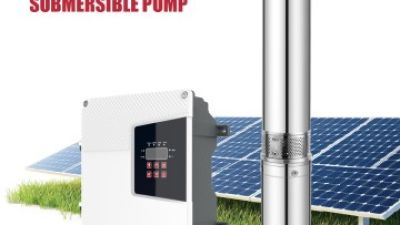
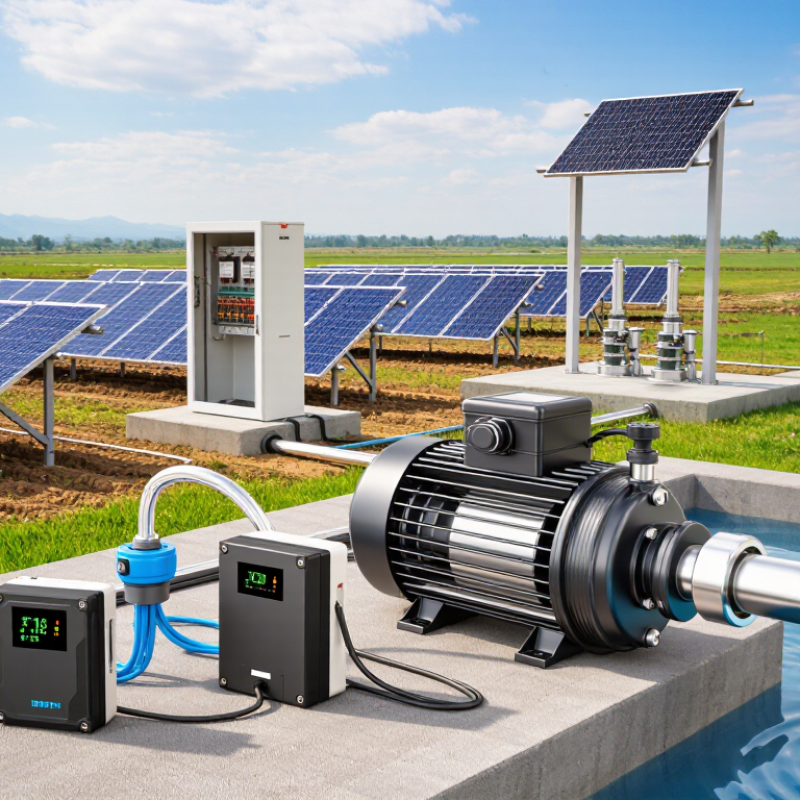
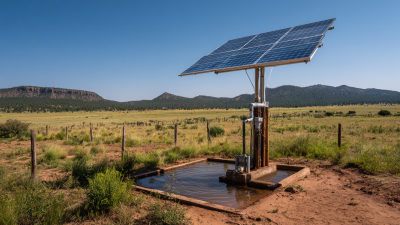
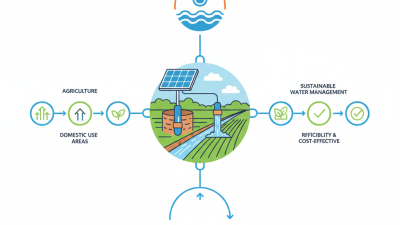
The system usually includes solar panels, a hybrid controller, an AC motor pump, and water-level sensors. In a Solar Dc Surface Water Pump installation, panels send direct current to the controller. The controller may drive a DC pump directly or convert power for an AC motor.
When sunlight increases, the pump speed rises and more water reaches the storage tank. When clouds pass, output may fall within seconds.
Practical sizing requires more than checking panel wattage. Technicians measure well depth, pipe length, daily water demand, and seasonal sunlight. A small mismatch can cause slow filling or repeated controller trips. Battery storage is optional, not always economical. Some systems operate without batteries and pump water into an elevated tank. That stored water becomes the energy reserve. Field conditions remain imperfect. Dust, heat, shading, and dry-run operation can reduce performance. Regular cleaning and sensor checks help, but they cannot correct an undersized system.
Key Criteria for Ranking China’s Hybrid Solar Pump Manufacturers
China’s top 10 AC/DC hybrid solar pump manufacturers should be ranked by evidence, not advertising. The evaluation starts with pump efficiency, controller quality, and stable switching between photovoltaic, battery, and grid power. IEC 62253 provides a useful reference for photovoltaic pumping-system performance. A serious supplier should also disclose test conditions, including head height, flow rate, irradiance, and water temperature.
Field reliability deserves equal weight. IEA PVPS reported global photovoltaic capacity above 1.6 terawatts by the end of 2023, increasing the need for dependable solar-driven equipment. For ranking purposes, reviewers should examine at least twelve months of operating records from farms, villages, or irrigation sites. Failure rates, dry-run protection, dust resistance, spare-part availability, and repair time reveal more than laboratory efficiency. Small details matter.
Energy performance must be measured honestly. A controller achieving a high peak efficiency may perform poorly during cloudy mornings or partial shading. Independent testing should compare MPPT behavior, AC input stability, DC voltage range, and seasonal water output. The World Bank and ESMAP have repeatedly emphasized lifecycle cost and service capacity in off-grid energy projects. Therefore, price should not dominate the score. No scorecard is flawless. Some field claims remain difficult to verify. A credible ranking also checks factory audits, certification records, warranty terms, technician training, and customer feedback across different climates.
Profiles of China’s Top 10 AC/DC Hybrid Solar Pump Manufacturers
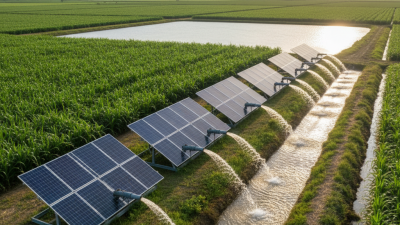
China’s top 10 AC/DC hybrid solar pump manufacturers reflect a fast-growing irrigation market. IRENA’s Renewable Capacity Statistics 2024 recorded 1,419 GW of global solar capacity by the end of 2023. China contributed a major share. This expansion supports practical demand for Surface Solar Pump For Agriculture systems.
The ten profiles should be judged by more than production volume. Strong manufacturers document pump efficiency, inverter protection, controller response, and after-sales service. Their systems should switch smoothly between photovoltaic input, grid electricity, and battery storage.
Field specifications matter: a 30-metre well requires different hydraulic performance from a shallow canal. Look for test records, IP ratings, motor efficiency data, and compliance with relevant electrical safety standards. Clear manuals also reveal engineering maturity.
FAO reports that agriculture accounts for roughly 70% of global freshwater withdrawals. Therefore, reliable flow control and dry-run protection are not minor features. The best Chinese manufacturers typically provide centrifugal and submersible models, remote monitoring, and adaptable voltage ranges. Yet rankings remain imperfect. Public data often mixes pump sales with complete system installations, making comparisons uneven. Some profiles also emphasize peak power while understating seasonal output. Buyers should request measured daily water yield, not only catalogue figures. That small distinction can change a farm’s operating cost.
Product Types, Pump Technologies, and Power Range Comparison
China Top 10 AC DC Hybrid Solar Pump Manufacturers
AC DC hybrid solar pumps are commonly divided into submersible and surface models. Submersible pumps suit deep wells, narrow boreholes, and tanks with limited access. A Surface Solar Water Pump works better for irrigation canals, storage ponds, and shallow reservoirs. Centrifugal designs deliver higher flow, while screw pumps provide stronger pressure at lower flow rates. Choose by head, flow, water quality, and daily demand. Power ranges often begin near 0.75 kW and extend beyond 15 kW for farms and community systems.
Pump technology affects both output and maintenance. Brushless DC motors reduce mechanical wear, while AC motors tolerate grid power and are easier to service in many regions. Hybrid controllers can switch between photovoltaic input, batteries, and utility electricity. MPPT control improves solar use when sunlight changes quickly. A practical system may produce 18 cubic meters daily under strong sunlight, but cloudy weeks can cut output sharply. Dust on panels matters more than many buyers expect.
Reliable manufacturers should publish efficiency curves, protection ratings, controller limits, and spare-parts policies. Field technicians should verify cable size, dry-run protection, and voltage stability before installation. A small mismatch can overheat the controller. That mistake is common. Power labels alone are not enough; actual performance depends on water depth, pipe length, fittings, and seasonal sunlight. Even careful sizing may need adjustment after the first irrigation cycle.
China Top 10 AC DC Hybrid Solar Pump Manufacturers - Product Types, Pump Technologies, and Power Range Comparison
| Rank |
Anonymous Supplier |
Primary Product Types |
Pump Technology |
Motor Configuration |
Hybrid Operating Modes |
Typical Power Range |
Typical Voltage Range |
Typical Maximum Head |
Typical Maximum Flow |
Common Applications |
| 1 |
Manufacturer 01 |
Submersible
Borehole
Surface
|
Permanent-magnet centrifugal pump with MPPT solar controller |
Brushless DC / PMSM |
Solar DC + utility AC + generator backup |
0.75–110 kW |
110–750 VDC; 220–380 VAC |
20–450 m |
1–260 m³/h |
Agricultural irrigation, livestock watering, municipal water supply |
| 2 |
Manufacturer 02 |
Deep-well
Submersible
|
Multistage centrifugal pump with variable-frequency drive |
Three-phase induction motor / PMSM |
PV array + AC grid + automatic source switching |
1.1–75 kW |
180–800 VDC; 220–460 VAC |
30–380 m |
2–180 m³/h |
Tube wells, irrigation networks, remote water systems |
| 3 |
Manufacturer 03 |
Surface
Booster
Submersible
|
High-efficiency centrifugal pump with integrated MPPT controller |
Permanent-magnet synchronous motor |
DC solar priority + AC supplementary supply |
0.55–55 kW |
72–600 VDC; 220–380 VAC |
15–300 m |
1–140 m³/h |
Greenhouses, farm irrigation, water transfer, small utilities |
| 4 |
Manufacturer 04 |
Borehole
Helical rotor
|
Positive-displacement screw pump for low-yield wells |
Brushless DC motor |
Solar DC + AC backup through hybrid controller |
0.37–7.5 kW |
48–450 VDC; 220 VAC |
40–250 m |
0.2–18 m³/h |
Domestic water supply, remote villages, livestock systems |
| 5 |
Manufacturer 05 |
Submersible
Large-flow
|
Multistage radial-flow centrifugal pump with variable speed control |
Three-phase induction motor |
PV DC bus + three-phase AC grid or generator |
5.5–160 kW |
300–900 VDC; 380–690 VAC |
35–500 m |
10–420 m³/h |
Large-scale irrigation, industrial water transfer, reservoirs |
| 6 |
Manufacturer 06 |
Surface
Floating
Booster
|
Horizontal centrifugal pump with sensor-based pressure control |
Permanent-magnet motor / induction motor |
PV input + grid input + diesel-generator compatibility |
0.75–45 kW |
96–550 VDC; 220–400 VAC |
12–180 m |
3–120 m³/h |
Canal pumping, farm distribution, landscaping, fish farming |
| 7 |
Manufacturer 07 |
Deep-well
Submersible
|
Stainless-steel multistage centrifugal pump with dry-run protection |
Water-filled asynchronous motor |
PV array + AC utility input with automatic changeover |
1.5–45 kW |
150–650 VDC; 220–380 VAC |
25–320 m |
2–110 m³/h |
Residential wells, agricultural boreholes, community water projects |
| 8 |
Manufacturer 08 |
Surface
Self-priming
Irrigation
|
Self-priming centrifugal pump with solar variable-frequency drive |
Three-phase induction motor |
Solar DC + single-phase or three-phase AC backup |
1.1–30 kW |
120–500 VDC; 220–380 VAC |
10–120 m |
5–95 m³/h |
Sprinkler irrigation, drip irrigation, storage-tank filling |
| 9 |
Manufacturer 09 |
Borehole
Submersible
Low-voltage
|
Helical rotor and centrifugal pump series with MPPT control |
Brushless DC / permanent-magnet motor |
Standalone solar DC + optional AC adapter |
0.18–5.5 kW |
24–450 VDC; 110–240 VAC |
15–220 m |
0.1–15 m³/h |
Household water, remote monitoring stations, small farms |
| 10 |
Manufacturer 10 |
Surface
Submersible
Drainage
|
Mixed-flow and centrifugal pump systems with hybrid inverter |
Induction motor / PMSM |
Solar PV + utility AC + generator-ready operation |
2.2–90 kW |
200–800 VDC; 220–690 VAC |
18–260 m |
8–300 m³/h |
Drainage, irrigation, construction dewatering, water treatment |
Note: The supplier identities are intentionally anonymized. Technical values represent commonly published configuration ranges for AC/DC hybrid solar pumping systems and vary according to pump model, impeller selection, motor rating, solar-array design, installation conditions, and controller configuration.
Quality Standards, Certifications, and Manufacturing Capabilities
China’s top 10 AC DC hybrid solar pump manufacturers are often evaluated through quality systems, certifications, and factory control. A reliable producer should maintain ISO 9001 procedures, traceable component records, and documented inspection results. Export models may require CE marking, while projects in other regions may require different approvals. Certificates must match the exact pump, controller, and production site.
Manufacturing capability matters more than a polished catalogue. Inspectors should review motor winding equipment, rotor balancing, controller assembly, and water-flow testing. Good factories test insulation resistance, dry-run protection, overload response, and switching between solar DC and grid AC power. Enclosures should resist dust and water, especially for outdoor installations. An IP rating helps, but installation quality still matters.
The controller should support stable operation during passing clouds and weak sunlight. MPPT performance is important. So is service access. For a Solar Pump For Pool, noise, filtration compatibility, and low-voltage safety deserve close attention. Some manufacturers offer stainless-steel pump bodies, remote monitoring, and customized cable lengths. These features can be useful, but they should not replace basic reliability. A certificate alone is not enough. Factory audits may reveal inconsistent testing, delayed spare parts, or unclear warranty terms. That is where evaluation becomes less comfortable, yet more honest. Request sample reports, batch records, and a live production inspection before placing a large order.
Service Networks, Customization Options, and Export Support
For buyers comparing China’s top AC/DC hybrid solar pump manufacturers, service coverage often matters more than a polished catalog. Reliable suppliers maintain technical teams, regional partners, and reachable spare-parts channels. Ask how quickly a controller, seal, or impeller can be replaced. A phone number is not a service network. Field experience matters.
Customization should begin with site data, not a preferred model. Share well depth, daily water demand, pipe length, static lift, and available grid voltage. Engineers can then match pump curves, PV input, AC backup, protection settings, and materials. Useful options include remote monitoring, dry-run protection, float control, and corrosion-resistant components. Some suppliers promise too much. Recheck the proposed head and flow under cloudy conditions.
For export orders, dependable support includes clear manuals, wiring diagrams, test records, packing lists, and traceable serial numbers. Confirm warranty procedures before payment, including labor limits and return responsibilities. Experienced exporters can coordinate container loading, destination-voltage requirements, and customs documentation without hiding assumptions. Local certification may still require independent review. That step can expose gaps. A supplier willing to discuss failures, not only successful installations, is easier to trust over a long operating season.
How to Choose the Right Chinese Hybrid Solar Pump Manufacturer
China Top 10 AC DC Hybrid Solar Pump Manufacturers
Selecting a Chinese hybrid solar pump manufacturer requires more than comparing catalogue prices. Agriculture uses about 70% of global freshwater withdrawals, according to FAO AQUASTAT. Therefore, pump efficiency, water demand, and seasonal reliability deserve close attention. Ask each manufacturer for tested flow rates at your actual total dynamic head, not only laboratory peak figures. A useful shortlist should include factory audits, traceable component records, export experience, and clear warranty terms.
Hybrid systems should combine solar input, AC backup, and practical control protection. IEA PVPS reported global photovoltaic capacity above 1.6 terawatts by the end of 2023. That growth improves component availability, but it does not guarantee good engineering. Request independent test reports for MPPT performance, motor efficiency, overload protection, and IP ratings. Check whether the controller supports your local voltage and frequency. Spare boards matter in remote fields. Very much.
IRENA reported a global weighted average utility-scale solar PV cost of about USD 0.044 per kilowatt-hour in 2023. Still, a low purchase price can hide battery replacement, transport, or weak after-sales support. Compare five-year operating costs instead. Require a sample installation or monitored pilot before signing a large order. A spreadsheet can still lie. Field conditions include dust, cloudy weeks, long pipelines, and operators who may not read technical manuals. The best manufacturer explains these risks plainly, even when the answer reduces the sale.
4-Inch AC/DC Hybrid Solar Borehole Pump: Efficient Water Solutions with MPPT Technology
The 4-Inch AC/DC Hybrid Solar Borehole Pump is designed to provide a flexible and efficient water supply for wells, farms, homes, and remote sites. It can operate with solar power during daylight hours while also accepting AC electricity when sunlight is limited, helping maintain a more consistent water flow. Its compact 4-inch design allows installation in many standard boreholes without requiring extensive modifications.
Integrated MPPT technology continuously adjusts the pump’s operating point to make better use of available solar energy. By responding to changes in sunlight intensity, the system can improve energy conversion and support stable performance in varying weather conditions. This makes it suitable for irrigation, livestock watering, domestic water storage, and other applications where dependable pumping is important.
The submersible structure keeps the motor and pump beneath the water surface, reducing noise and helping protect the system from external conditions. A compatible controller can provide functions such as overload protection, dry-running protection, and automatic start or stop operation. During periods of strong sunlight, excess water can be transferred to a storage tank, allowing water to remain available when solar power is reduced.
FAQS
It combines solar panels with an AC power source. The controller switches between them as sunlight changes.
Pump speed may decrease within seconds. The system can use grid power or another permitted AC source when sunlight weakens.
Common parts include solar panels, a hybrid controller, an AC motor pump, and water-level sensors.
Not always. Some systems pump water into an elevated tank, which stores energy as available water.
Technicians need well depth, pipe length, daily water demand, static lift, and seasonal sunlight data.
The tank may fill slowly. The controller may also trip repeatedly during cloudy periods.
Remote monitoring, dry-run protection, float control, and corrosion-resistant materials can improve reliability.
Clean panel surfaces and check sensors regularly. Dust, heat, shading, and dry running can still reduce output.
Request manuals, wiring diagrams, test records, packing lists, and serial numbers. Confirm warranty duties and return responsibilities.
No. Site conditions change, and some estimates may be optimistic. Recheck pump head and flow under cloudy conditions.
Conclusion
This guide presents a practical overview of China’s Ac/Dc Hybrid Solar Pump manufacturing sector, beginning with the definition and operating principles of systems that combine solar power with grid or generator input. It explains how these pumps improve water-supply reliability by adjusting to changing sunlight and energy conditions. The article also introduces the main criteria for evaluating manufacturers, including product performance, pump technology, power range, production capacity, quality control, certifications, and testing procedures.
It further compares common product types and applications, from agricultural irrigation and livestock watering to domestic and industrial water supply. Readers will learn how service networks, technical support, customization, spare-parts availability, and export experience affect supplier selection. The final section provides practical guidance for choosing a suitable manufacturer by considering project requirements, operating environment, budget, after-sales support, and long-term system efficiency.

 DC SOLAR SUBMERSIBLE PUMP
 AC/DC Solar submersible Pump
 DC Solar Surface Pump
 AC/DC solar surface Pump
 Solar swimming Pool Pump
 Built-in Controller Solar Pump
 Solar Pump inverter
 Pump Accessories



 Mr Youkee Kong