When you're looking into sustainable water solutions, the Mini Solar Water Pump really stands out when it comes to efficiency and versatility. I recently read a quote from John Smith at EcoFlow Systems, and he mentioned, “Choosing the right Mini Solar Water Pump can seriously boost your water management game.” Honestly, that really hits the nail on the head—making smart choices in this fast-growing industry is crucial.
These tiny solar-powered pumps are super handy for all sorts of stuff—gardens, farms, even small-scale livestock setups. But here’s the thing—many folks tend to overlook certain key factors before hitting the buy button. Things like the pump’s flow rate and what kind of power it uses matter a lot. It’s all about understanding your specific needs so you don’t end up with something that just doesn’t perform or costs you more than it should.
The market for solar pumps is booming, no doubt about it. But not all pumps are created equal, so it’s important to be a bit cautious. Do some digging—read reviews, check out reputable brands—and don’t settle for the cheapest option just to save a buck. A dependable Mini Solar Water Pump can really make your water management smoother and more efficient. On the flip side, choosing the wrong one? Well, that can get pretty frustrating. So, take your time and make informed decisions—your future self will thank you!
Understanding Mini Solar Water Pumps: An Overview
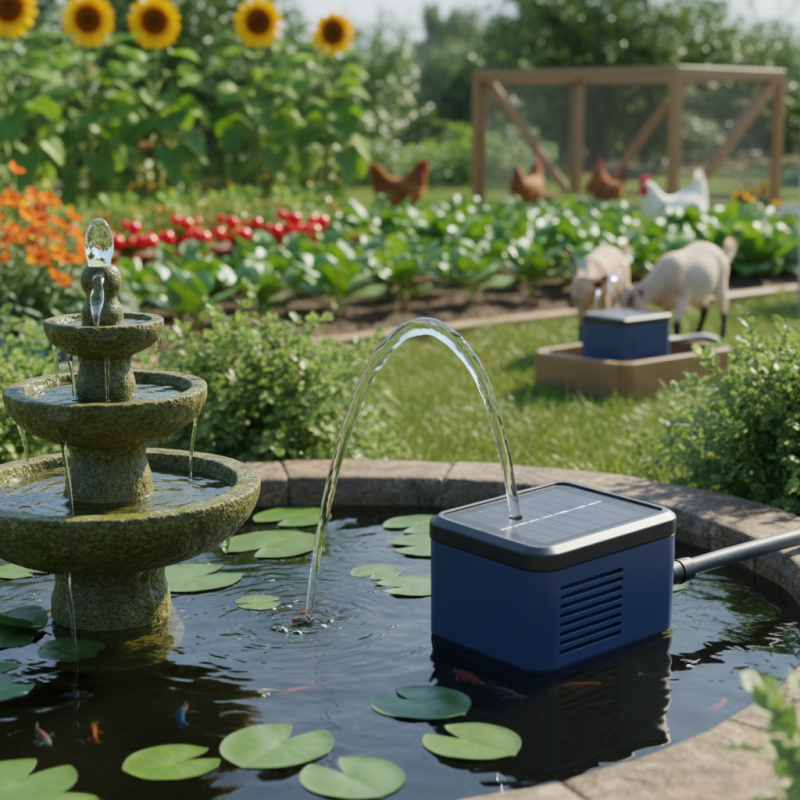
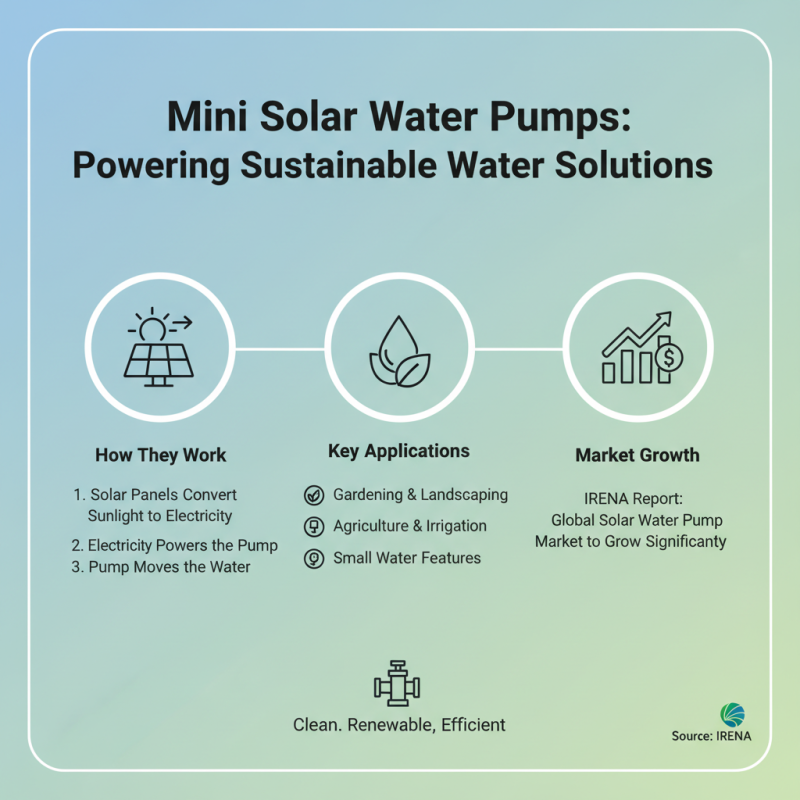
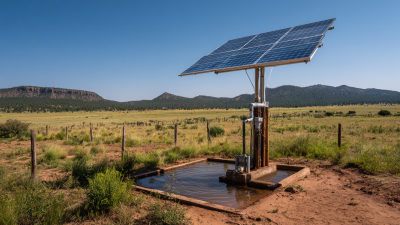
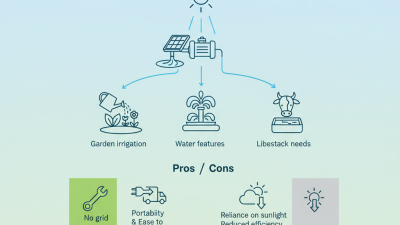
Mini solar water pumps are gaining traction in various applications, including gardening, agriculture, and small-scale water features. These devices use solar panels to convert sunlight into electricity, powering the pump. According to a report by the International Renewable Energy Agency (IRENA), the global market for solar water pumps is expected to grow significantly. This growth reflects the increasing demand for sustainable energy solutions.
Understanding how these pumps function is essential. A mini solar water pump typically consists of a solar panel, a pump, and connecting pipes. The solar panel generates electricity, enabling water movement. Parameters like flow rate and head height are crucial. A flow rate of 1,000 liters per hour is common for many models, but this can vary widely.
**Tip:** Consider your water needs before buying. Too little flow can be frustrating, while too much may waste resources.
Assessing battery options also matters. Many mini models include a battery backup, allowing operation during cloudy days or at night. A study by the Renewable Energy Policy Network suggests that battery storage can improve efficiency.
**Tip:** Check for solar panel efficiency ratings. Higher efficiency ratings can reduce the size and cost of your system.
Researching specific models and their prices can yield insights, though beware of devices that claim too much. Balancing price, efficiency, and quality is important in making a wise choice.
Key Features to Consider in Mini Solar Water Pumps
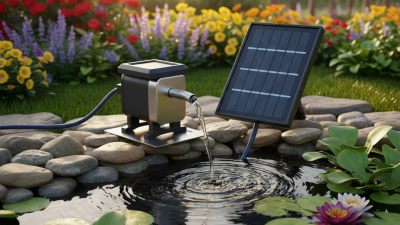
When choosing a mini solar water pump for your needs, several features are essential. Consider the pump's flow rate. This indicates how much water it can move per hour. A higher flow rate is important for larger setups, like those involving a garden fountain or a Mini Solar Water Pump For Bird Bath.
Next, check the solar panel size and output. Larger panels may yield more power and work better in low-light conditions. However, think about where you will install the pump. Sometimes, sunlight can be obstructed, affecting efficiency. You might need to adjust the position frequently to maximize sunlight exposure.
Durability is another key factor. Materials used in the construction should withstand outdoor conditions. Look for UV-resistant options if the pump will remain in the sun. It's useful to reflect on reviews of pumps as well. User feedback can provide insights into reliability and performance over time, though not all reviews are accurate. Ultimately, knowing what features suit your needs helps in making an informed choice.
Assessing Power Requirements for Solar Water Pumps
When selecting a mini solar water pump, assessing power requirements is vital. Solar pumps harness energy from the sun. Understanding your project's energy needs will ensure you pick the right pump. Different setups require different power outputs. For example, a bird bath may need less energy than a small garden fountain. Knowing the wattage of your pump will help you match it with solar panels.
Consider the amount of sunlight in your area. Some regions receive consistent sun, while others have cloudy days. This variability can affect the pump's performance. You might find that your initial choice lacks efficiency on overcast days. If your pump doesn’t operate well in limited sunlight, you may end up disappointed. It’s crucial to determine the average sun hours your system will receive.
Investing in a High-Quality Mini Solar Water Pump For Bird Bath or similar uses is beneficial. Look for pumps with good reviews and reliable specifications. Reading customer feedback can provide insights into performance in real-world conditions. Also, consider the durability of the materials. Pumps exposed to different weather conditions should withstand wear over time. Balancing efficiency and durability can lead to better choices.
Determining the Right Flow Rate for Your Needs
Choosing the right flow rate is crucial when selecting a mini solar water pump. The flow rate determines how much water the pump can move within a specific time frame. For home gardening needs, a rate of 200 to 500 liters per hour is typically adequate. Research indicates that for larger applications, like irrigation of bigger gardens, a flow rate above 800 liters per hour may be necessary.
Understanding your requirements allows you to choose efficiently. For example, a small pond might need less than 300 liters per hour. Meanwhile, larger setups could require significantly more. Consider the height difference between water source and discharge point. This vertical lift affects flow rate. If the pump has to lift water higher, it will naturally reduce efficiency.
Choosing a flow rate that meets your unique needs will enhance your system's performance. Overestimating can lead to water wastage and increased energy consumption. In contrast, underestimating can leave plants thirsty. Balancing these factors is essential for sustainable use of mini solar water pumps.
Evaluating Solar Panel Compatibility and Size
When selecting a mini solar water pump, assessing solar panel compatibility and size is crucial. Solar panels should ideally match the pump's voltage requirements. Most mini pumps operate on 12V or 24V systems. An inefficient pairing can lead to malfunction or reduced performance. Reports indicate that improper sizing can decrease efficiency by up to 50%.
The solar panel should offer sufficient wattage for the pump. A typical mini pump may require between 15 to 25 watts. For a bird bath application, it’s advisable to choose a slightly higher wattage panel. This allows for overcast days when sunlight is limited. Mini solar water pump systems often benefit from panels rated for at least 20% more power than the pump's requirements.
Potential buyers should also consider the panel's surface area. A larger panel may capture more sunlight, enhancing performance. However, excessive size can complicate installation. The balance between panel size and available space must be carefully evaluated. Opting for a Wholesale Mini Solar Water Pump For Bird Bath can help in exploring various options. Yet, it is essential to ensure that the chosen panel and pump work harmoniously. Users often overlook these details, which can lead to frustrations and inefficiencies in operation.
Comparing Different Types of Mini Solar Water Pumps
When selecting a mini solar water pump, it's essential to understand the different types available. Submersible pumps are a popular choice for their efficiency and ease of installation. These pumps operate underwater, drawing water and pushing it up to the surface. Reports show that they can achieve flow rates of up to 600 gallons per hour, making them suitable for small ponds and bird baths.
Another option is surface pumps. These pumps sit above water level and are easier to maintain. However, they generally have lower flow rates compared to submersible models. Some users find that surface pumps are more prone to overheating when used continuously. It’s worth noting that energy efficiency varies significantly among models. A study revealed that most solar pumps operate at about 10-20% less efficiency than expected under less-than-ideal sunlight.
When considering which mini solar water pump to buy, think about your needs. Identify the maximum flow rate required and assess your installation location's sunlight exposure. Products like the China Mini Solar Water Pump For Bird Bath are designed for direct sunlight use. Yet, they may struggle on cloudy days, so have backup options in place. Investing in a reliable pump can be beneficial, but keep in mind that not all products live up to their claims. Be prepared to do additional research and reviews to find what really works for your specific situation.
2026 Mini Solar Water Pump Comparison
Maintaining Your Mini Solar Water Pump for Longevity
Maintaining your mini solar water pump is essential for its longevity. Regular checks help identify wear and tear. Clean the filter frequently to prevent clogging. If the pump rests in dirty water, debris can quickly build up. This maintenance task takes just a few minutes but makes a big difference.
Monitor the solar panel. Dirt and dust can hinder performance. Clean it with a soft cloth every couple of weeks. If you notice reduced water flow, check for blockages. Sometimes, the solution is simple. However, a neglected system might lead to costly repairs later.
During winter, store your pump indoors. Cold temperatures can damage components. Ensure it is completely dry before doing so. Many overlook this step and face issues in spring. Take time for these checks. Small actions today can save you from bigger headaches tomorrow.
Harnessing Solar Energy: The Advantages of 3 Inch Solar-Powered Submersible and Borehole Pumps with MPPT Technology
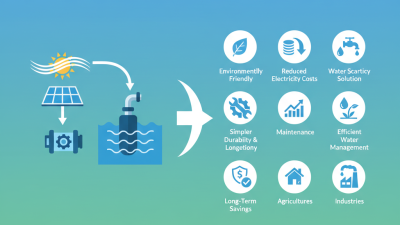
Harnessing solar energy through advanced technology has transformed the capabilities of submersible and borehole pumps, particularly with the introduction of 3-inch models equipped with Maximum Power Point Tracking (MPPT) technology. This innovative approach optimizes the efficiency of solar energy usage, allowing these pumps to operate effectively even under varying sunlight conditions. By adjusting their operation dynamically, MPPT-enabled pumps maximize energy absorption from solar panels, ensuring that water can be drawn from deep underground sources consistently.
The benefits of 3-inch solar-powered submersible pumps extend beyond operational efficiency. Their compact size makes them ideal for a variety of applications, from agricultural irrigation to supplying water in remote locations where electricity is unavailable. These pumps are not only environmentally friendly but also reduce the dependency on fossil fuels, contributing to a more sustainable and cost-effective solution for water management. As solar technology continues to advance, these pumps represent a practical and innovative step towards harnessing renewable energy for essential services.
FAQS
: They are popular for gardening, agriculture, and small water features.
They convert sunlight into electricity using solar panels, which power the pump.
Assess your specific water needs. Too little flow can be frustrating.
It allows operation during cloudy days or at night, improving efficiency.
Know your project's energy needs and the wattage of your pump.
Typically, a flow rate of 200 to 500 liters per hour suffices for homes.
Variability in sunlight affects the pump's performance; consider average sun hours.
The height difference between the water source and discharge impacts performance.
Reviews provide insights into real-world performance and product durability.
Overestimating may waste water, while underestimating can lead to thirsty plants.
Conclusion
When selecting the best Mini Solar Water Pump for your needs, it's essential to understand its basic functions and features. These pumps are designed to operate on solar energy, making them environmentally friendly and cost-effective. Key factors to consider include the power requirements, which depend on the size of the solar panel and the flow rate you need for your specific application. Evaluating compatibility between the pump and solar panel is crucial, as is choosing from the various types available in the market.
Additionally, assessing the right flow rate for your usage and ensuring regular maintenance will enhance the longevity of your Mini Solar Water Pump. By focusing on these aspects, you can make an informed decision that will provide the best performance and efficiency for your watering needs, whether for gardening, fountains, or other applications.

 DC SOLAR SUBMERSIBLE PUMP
 AC/DC Solar submersible Pump
 DC Solar Surface Pump
 AC/DC solar surface Pump
 Solar swimming Pool Pump
 Built-in Controller Solar Pump
 Solar Pump inverter
 Pump Accessories



 Mr Youkee Kong