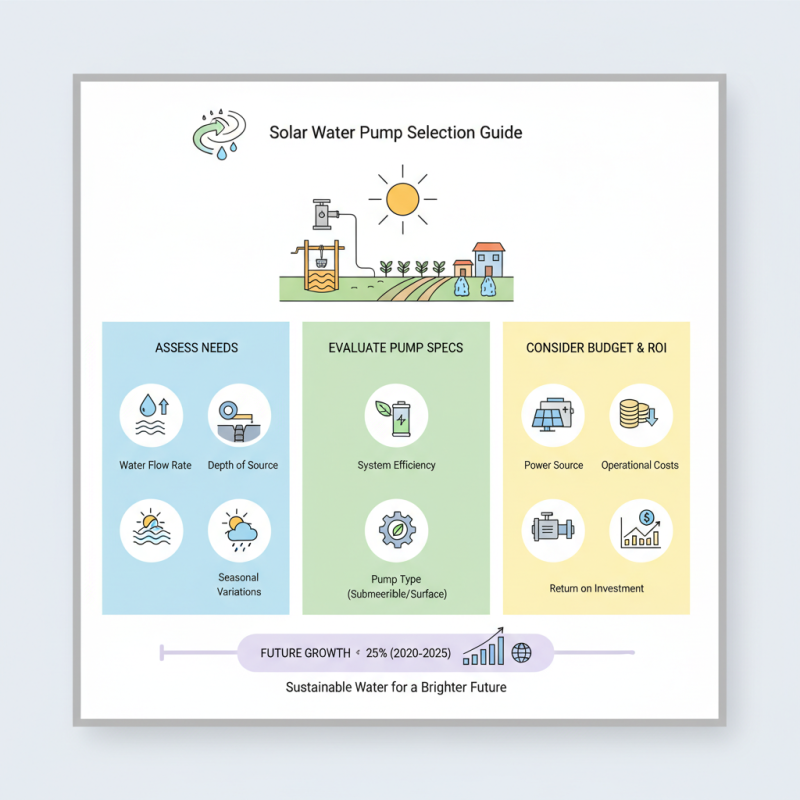
As more people and businesses start to really prioritize renewable energy, choosing the right solar water pump has become a pretty big deal — whether you're dealing with your home or running an farm. I recently read that according to the International Renewable Energy Agency (IRENA), the global market for solar water pumps is expected to grow by about 25% each year from 2020 to 2025. That’s a clear sign that more folks are turning to sustainable options to get water, especially in places where resources are getting tight.
Dr. Emily Carter, who’s a real expert in renewable energy tech, put it nicely when she said, “Picking the right solar water pump isn’t just about saving on costs — it’s also about helping the environment.” She emphasizes that it’s super important for users to really think about what they need, how efficient the system is, and how much they’re willing to spend. With so many options out there, understanding what different pumps can and can’t do is key to making sure you get the best bang for your buck and the performance you need.
And honestly, taking a good look at your water needs — like how much water you need to move, how deep your water source is, or if your needs change with the seasons — along with knowing the specs of the pump, will help you pick something that actually works well for you. As the market for solar power keeps growing, making smart, informed choices has become more important than ever — so taking the time to evaluate all that stuff really pays off.
Understanding Solar Water Pumps: Types and Applications
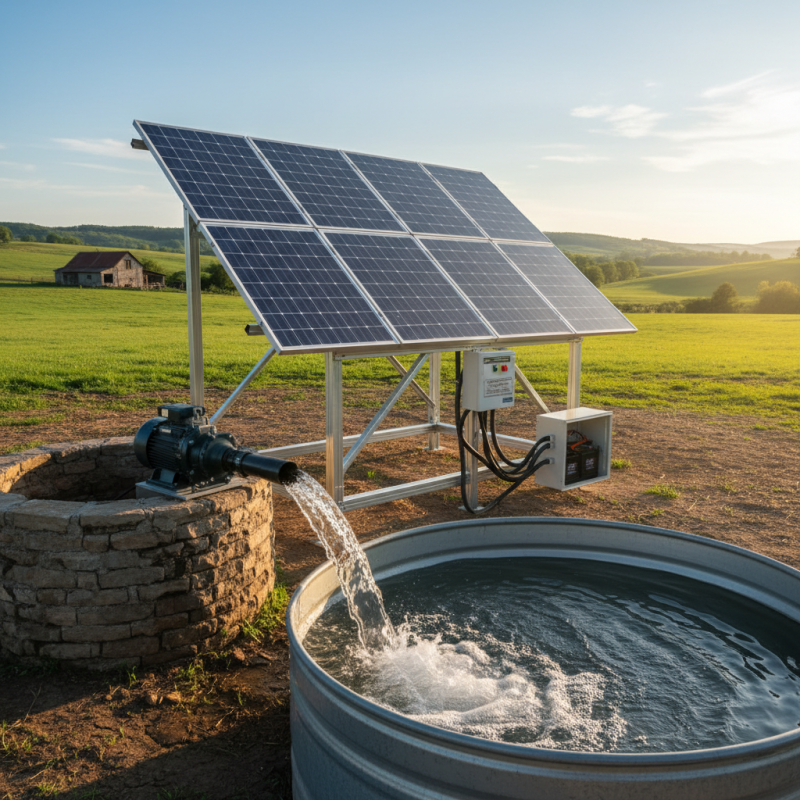
Solar water pumps are becoming increasingly essential, especially in agricultural applications and remote areas where access to electricity is limited. Understanding the types and applications of solar water pumps is crucial for making the right choice tailored to specific needs and budget constraints. Generally, there are three main types of solar water pumps: surface pumps, submersible pumps, and floating pumps. According to a report by the International Renewable Energy Agency (IRENA), solar pumps can potentially deliver water at a significantly lower cost per cubic meter than traditional diesel-powered pumps, providing a viable solution for sustainable water management.
Surface pumps are ideally suited for shallow water sources, extracting water from ponds or rivers, while submersible pumps are designed for deeper applications, ideal for wells. Floating pumps, on the other hand, can be used in larger bodies of water and are particularly useful in irrigation scenarios where water levels may fluctuate. The application of these pumps varies greatly; for instance, the agricultural sector can benefit from solar pumps for irrigation, reducing reliance on fossil fuels and lowering operational costs. A study from the Food and Agriculture Organization (FAO) highlighted that solar-powered irrigation systems could increase crop yields by up to 30% in certain regions, particularly in arid climates where water conservation is paramount.
Comparison of Solar Water Pump Types
Evaluating Your Water Needs: Flow Rate and Pressure Requirements
When selecting a solar water pump, it is crucial to evaluate your specific water needs, particularly concerning flow rate and pressure requirements. Flow rate refers to the volume of water delivered by the pump over a specific period, typically measured in gallons per minute (GPM) or liters per minute (LPM). Assessing the amount of water you need to move and how quickly you need it is essential. For instance, a garden that requires irrigation might have a different flow rate requirement than a livestock watering system. Understanding your daily water consumption will help you identify the appropriate flow rate for your pump, ensuring that it meets your needs efficiently.
Pressure requirements are equally important, as they determine how far and high the water will be delivered from the pump. The pressure is typically measured in pounds per square inch (PSI) and varies depending on the application. For example, if the water needs to be lifted to a higher elevation, you'll need a pump capable of generating sufficient pressure to overcome gravity. Conversely, a system that distributes water horizontally may require lower pressure. By accurately calculating both the required flow rate and the necessary pressure, you can select a solar water pump that effectively meets your operational demands while staying within your budget.
Budget Considerations: Costs of Solar Water Pumps and Installation
When choosing a solar water pump, understanding the budget considerations related to both costs and installation is essential. The price of solar water pumps can vary widely depending on their capacity and features. According to the Solar Energy Industries Association (SEIA), basic solar pump units can start around $500, while more advanced systems can exceed $5,000. Additionally, the installation costs can be anywhere from $1,000 to over $3,000, influenced by factors such as the complexity of the setup and local labor rates.
It is crucial to account for long-term savings when evaluating the initial investment. Many solar water pumps pay for themselves within a few years thanks to reduced energy bills and minimal maintenance costs, as highlighted by a report from the U.S. Department of Energy. The energy delivered by solar panels can also bring down operating costs to virtually zero, making them an economical option in the long run.
Tip: When planning your budget, be sure to include not only the purchase price of the pump and installation, but also ongoing maintenance costs that may arise over time. Additionally, consider the potential energy savings and tax incentives available in your region, which can significantly affect the overall affordability of your solar water pump system.
Choosing the Right Solar Panel System for Your Pump
When selecting a solar panel system for your water pump, the first consideration should be the specific needs of the pump in terms of energy consumption. Understand the wattage requirements of your pump and choose a solar panel configuration that can provide adequate power under varying sunlight conditions. It’s essential to calculate the daily energy needs based on the runtime and efficiency of the pump to ensure that the solar panel system can supply the required energy consistently.
Additionally, the placement and orientation of the solar panels play a critical role in efficiency. Panels should be installed in an area with maximum sunlight exposure throughout the day, which might involve considering seasonal changes in sunlight. A well-optimized solar panel system should not only meet the power needs of the pump but also have a margin for adjustments, allowing for increased efficiency or future upgrades. Remember to assess your budget alongside these factors, focusing on the long-term savings and reliability of a properly chosen solar panel system to maximize the return on your investment.
Assessing Environmental Factors: Location and Sunlight Availability
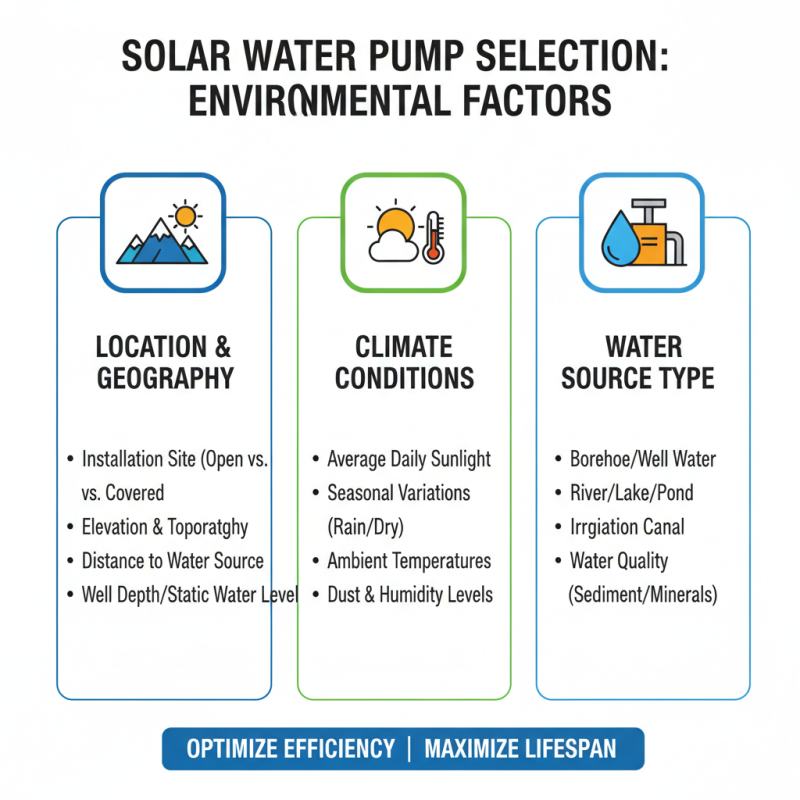
When selecting a solar water pump, it is crucial to assess the environmental factors related to its installation. The location plays a significant role in the pump’s efficiency and effectiveness. Understanding the specific climate conditions in your area, such as average temperatures, seasonal variations, and geographical features, can help determine the optimal type of pump for your needs. For instance, areas with consistent sunlight throughout the year may benefit from a solar pump with higher power output, while regions with intermittent sunshine may require a system designed for efficiency in low-light conditions.
Sunlight availability is another critical factor to consider. Evaluating the amount of direct sunlight your installation site receives daily will inform your decision on both the size and type of solar panels required. Ideally, a location with unobstructed sun exposure for the majority of the day will optimize the pump’s performance. Additionally, potential obstacles such as trees, buildings, or other structures should be assessed to predict how they might shade the panels. By carefully examining these environmental factors, you can select a solar water pump that aligns perfectly with your specific requirements and budget, ensuring a sustainable and efficient solution for your water supply needs.
Maintenance and Durability: Ensuring Long-term Performance
When selecting a solar water pump, maintenance and durability are critical factors that can determine the long-term performance and efficiency of the system. According to a report by the International Renewable Energy Agency (IRENA), well-maintained solar water pumps can have a lifespan of over 10 years, significantly reducing the overall cost of water supply in agricultural applications. Regular maintenance, including the cleaning of solar panels and timely inspection of the pump, can help sustain this longevity. It is essential to routinely check for any signs of wear and tear, such as leaks in the piping or blockages in the water source, which can drastically affect performance.
In terms of durability, the materials used in the solar water pump’s construction must withstand various environmental conditions. A study published by the Solar Energy Research Institute highlights that pumps made from high-quality stainless steel or corrosion-resistant plastics tend to perform better in harsh climates. These materials are less likely to degrade due to exposure to moisture and sunlight, ensuring that the pump operates efficiently over a longer period. To safeguard your investment, consider selecting pumps tested for durability in diverse weather patterns, which can ensure a reliable water supply regardless of external conditions.
How to Choose the Right Solar Water Pump for Your Needs and Budget - Maintenance and Durability: Ensuring Long-term Performance
| Pump Type |
Flow Rate (L/h) |
Max Head (m) |
Solar Panel Size (W) |
Battery Capacity (Ah) |
Price Range ($) |
Maintenance Frequency |
Expected Lifespan (Years) |
| Submersible Pump |
2000 |
30 |
100 |
100 |
300 - 500 |
Annual |
10 |
| Surface Pump |
1500 |
20 |
80 |
75 |
250 - 450 |
Biannual |
8 |
| Draining Pump |
1800 |
25 |
90 |
80 |
350 - 600 |
Quarterly |
7 |
Comparing Key Brands and Models: Finding the Best Fit for You
When selecting the right solar water pump, understanding the performance metrics of different brands and models is crucial. According to a report by the Solar Energy Industries Association (SEIA), the efficiency of solar pumps can vary widely, typically ranging from 15% to 50% depending on the technology and design. Consumers should focus on factors such as flow rate, head height, and power consumption when comparing models. Most modern solar water pumps are equipped with photovoltaic systems that can convert sunlight into sufficient electrical energy, ensuring reliable operation even in remote locations.
Moreover, recent market analyses indicate that variable speed pumps tend to be more efficient and versatile than traditional fixed-speed models, as they can adjust their performance based on water demand. A study by the American Society of Agricultural and Biological Engineers (ASABE) highlights that these variable-speed systems can enhance overall energy savings, with some models reported to use up to 30% less energy than conventional counterparts. It's also essential to consider the warranty and after-sales support provided with the pump, as this can significantly impact the long-term performance and maintenance costs. By carefully comparing these critical variables, consumers can identify a solar water pump that aligns with their specific needs and budget.
Maximizing Efficiency and Sustainability: The Impact of 6-Inch DC Stainless Steel Impeller Deep Well Solar Water Pumps in Modern Agriculture
The integration of 6-inch DC stainless steel impeller deep well solar water pumps into modern agriculture marks a significant shift towards maximizing efficiency and sustainability. These innovative pumps, designed specifically for off-grid applications, leverage solar energy to operate, thereby reducing reliance on fossil fuels and minimizing carbon footprints. According to industry reports, solar-powered irrigation systems can reduce water pumping costs by up to 70%, a significant saving for farmers operating in areas with high energy costs.
One of the most compelling attributes of these pumps is their low maintenance requirements. With no fuel to replace and fewer moving parts than traditional pumps, farmers can expect a substantial decrease in both operational downtime and maintenance expenses. The longevity of stainless steel components also plays a crucial role in their lifecycle value, allowing these pumps to function effectively for over 15 years under proper conditions. This resilience is particularly beneficial in regions where water scarcity makes reliable and efficient irrigation essential for crop yield.
Moreover, the ease of installation associated with these solar water pumps enhances their appeal to farmers. As they do not require extensive infrastructure or electrical grid connections, farmers can quickly set up these systems, making them accessible even in remote areas. Reports suggest that the adoption of solar pumping solutions not only increases water accessibility for irrigation but also improves overall water management practices, thus fostering a more sustainable agricultural model in the face of climate challenges.
FAQS
: The main types of solar water pumps are surface pumps, submersible pumps, and floating pumps. Surface pumps are used for shallow water sources, submersible pumps are designed for deeper applications like wells, and floating pumps can operate in larger bodies of water.
Solar water pumps help reduce reliance on fossil fuels and lower operational costs in agriculture. They can also increase crop yields by up to 30% in certain regions, particularly in arid climates where water conservation is crucial.
It is important to assess flow rate and pressure requirements. Flow rate indicates the volume of water needed over time, while pressure requirements determine how far and high the water can be delivered.
Flow rate refers to the volume of water delivered by the pump over a specific period, measured in gallons or liters per minute. It is important to align the flow rate with the water consumption needs of the application, such as irrigation or livestock watering.
Pressure measurement, typically in pounds per square inch (PSI), is important because it affects how effectively water can be transported to the desired location, especially if it needs to be lifted to a higher elevation.
The costs of solar water pumps can range from around $500 to over $5,000 depending on capacity and features. Installation costs can vary from $1,000 to over $3,000, influenced by complexity and local labor rates.
Solar water pumps can pay for themselves within a few years due to reduced energy bills and low maintenance costs, and using solar panels can bring operating costs to nearly zero.
The budget should encompass the purchase price of the pump, installation costs, ongoing maintenance expenses, and potential energy savings and tax incentives that may be available.
Conclusion
When selecting a Solar Water Pump, understanding the various types and their applications is crucial for meeting your specific needs. Evaluating factors such as flow rate and pressure requirements will help you determine the best pump for your situation. Budget considerations play a significant role, as the costs of solar water pumps and their installation can vary widely. Additionally, choosing a compatible solar panel system is essential to ensure optimal performance.
Environmental factors, such as your location and sunlight availability, can impact the efficiency of your solar water pump. It’s important to assess these elements to make an informed decision. Finally, considering maintenance and durability will help you secure long-term performance from your system. By carefully comparing key features and specifications, you can find the best Solar Water Pump that fits both your needs and budget.






 Mr Youkee Kong