Picking the right AC pump controller from China's top suppliers isn't just about eyeballing prices in a catalog. You really gotta think about whether the controller matches your pump motor, voltage requirements, starting current, control method, and the environment where it’ll be used. Like, a controller that works perfectly in a neat workshop might totally struggle if you slap it beside a dusty irrigation channel—that kind of stuff really matters.
The best way to evaluate is to ask for solid proof. Dig into factory testing reports, electrical diagrams, protection features, and traceable quality processes. Check if the controller has overload, dry-run, phase-loss, overvoltage, and overheating protections. And don’t hesitate to ask if they can send you samples for some real-world, continuous testing. Also, look closely at the enclosure ratings, terminal quality, cooling system design, and the brands used for components. Sure, certifications can help build confidence, but they’re not everything—seeing how it performs in actual conditions is what counts.
Don’t forget about the supplier’s experience either. Big names like INVT, Veichi, and MICNO are well-known for industrial drive solutions, but the specific product you need still depends on what exactly you’re working with. A small farm pump’s needs are totally different from a city’s water system. Make sure to check what communication options are available, how easy it will be to get spare parts, firmware support, warranty details, and how quick their response times are. If you’re thinking about adding solar power down the road, it’s better to compare the AC unit with a dedicated Solar Pump Controller platform rather than trying to make one system do everything. No supplier is perfect, and even seasoned buyers can miss small things like installation quirks, cable length issues, or local humidity conditions. Taking the time to compare and test before making a bigger order really pays off — it leaves room for questions, adjustments, and honest evaluation.
What Is an AC Pump Controller and How Does It Work?
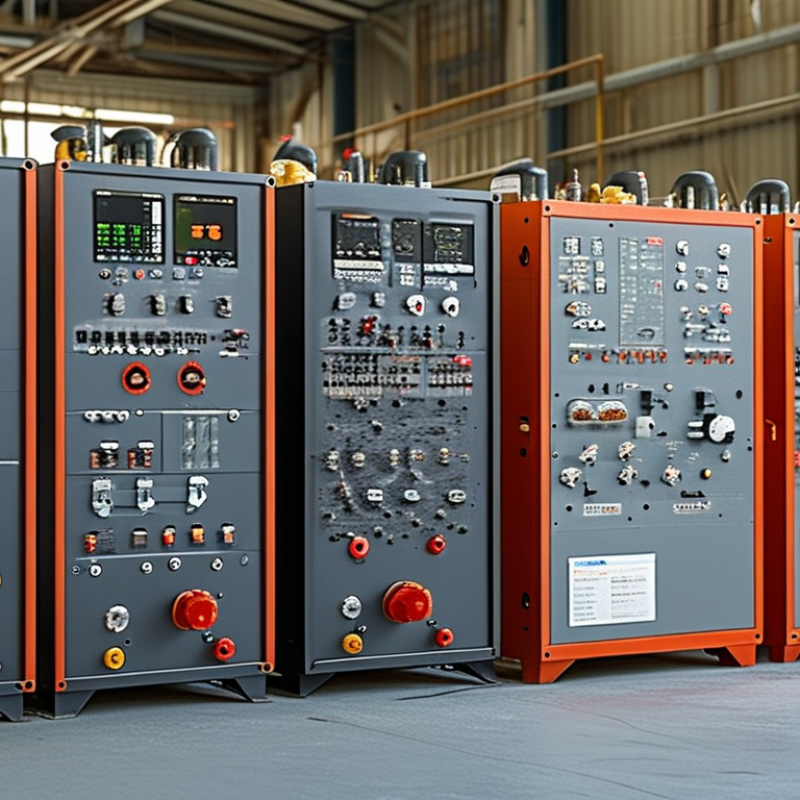
An AC pump controller manages an alternating-current pump’s operation, speed, and protection.
It receives power, then adjusts the motor’s electrical output to match water demand. Many units use variable-frequency control. A pressure sensor sends feedback, and the controller changes motor speed accordingly. When demand rises, the pump accelerates. When taps close, it slows down or stops.
This system can reduce energy use, pressure surges, and unnecessary motor starts. It may also protect against dry running, overload, overheating, and unstable voltage. However, installation is not always simple. Pump power, voltage, phase type, flow range, sensor signal, and pipe conditions must match. A supplier should provide wiring diagrams, test records, operating limits, and clear technical support. Field experience matters because a perfect specification can still fail with poor grounding or incorrect sensor placement.
Tips:
Check the pump nameplate first. Confirm the controller’s rated current, not only its advertised power. Ask for protection functions and restart behavior. Test pressure stability under real demand. Leave space for cooling. Some controllers appear affordable but require extra sensors or filters. I have found that hidden installation costs are easy to underestimate. A short trial run can reveal vibration, noise, or delayed pressure response before full deployment.
Why Choose a Reliable AC Pump Controller Supplier in China?
When a project depends on stable water flow, choosing a reliable AC pump controller supplier in China is more than comparing prices. The supplier should understand motor starting current, voltage variation, overload protection, and local operating conditions. A dependable Solar Water Pump Controller supplier can also explain how its controller performs under strong sunlight, dust, heat, and unstable grids.
Ask for test records, wiring diagrams, protection details, and traceable production information. Photos are not enough. A serious supplier should support factory audits, sample testing, and clear inspection procedures before shipment. Check whether engineers can answer practical questions about pump sizing, cable length, dry-run protection, and fault alarms. These details often reveal real technical experience.
Communication matters after delivery. Confirm spare-part availability, response times, installation guidance, and warranty terms in writing. I have seen low-cost controllers create higher expenses through repeated trips and unclear troubleshooting. No supplier is perfect. That is worth remembering. A reliable partner should admit product limits, suggest suitable alternatives, and improve designs after field feedback. This honest approach builds confidence and reduces unexpected downtime for farms, buildings, and remote water systems.
China Top AC Pump Controller Suppliers: How to Choose?
This reference scoring model ranks the practical factors buyers should assess when selecting a reliable AC pump controller supplier in China. Electrical safety and compliance, pump compatibility, protection functions, thermal performance, documentation, and technical support help reduce installation, downtime, and maintenance risks.
Which Technical Specifications Should Buyers Compare?
When comparing China’s top Ac Pump Controller suppliers, begin with electrical compatibility. Check rated voltage, frequency, phase, and allowable voltage variation. An Ac Pump Controller must match the motor’s full-load current, starting current, and rated power. Do not rely on horsepower alone. A 7.5 kW motor can behave differently under long cables, high temperatures, or unstable power.
Review the control functions in practical detail. Compare constant-pressure control, variable-frequency operation, soft starting, dry-run protection, overload response, and automatic restart settings. Ask for response times and test records, not only catalogue claims. Check whether the unit supports pressure sensors, float switches, flow meters, or remote alarms. I prefer clear terminal labels and adjustable parameters. Small details matter. A confusing display can delay fault diagnosis beside a noisy pump room.
Environmental specifications deserve equal attention. Compare IP protection, cooling method, operating temperature, humidity limits, and altitude ratings. Confirm whether the enclosure resists dust and water exposure at the installation site. Also examine communication options, spare-part availability, firmware control, and warranty procedures. Supplier documentation should include wiring diagrams, inspection reports, and real load-test data. I once saw a technically strong controller fail because its cooling fan clogged quickly. The specification looked complete, but the maintenance plan was weak. Buyers should question these gaps before approving samples.
How to Evaluate Supplier Quality, Certifications, and Experience?
Choosing a China AC pump controller supplier requires more than comparing prices. Quality appears in test records, traceability, and field experience. The IEA’s The Future of Cooling report estimates global space-cooling electricity demand could exceed 6,000 TWh annually by 2050, up from about 2,000 TWh in 2016. This growth increases pressure on controller reliability and energy performance. Ask suppliers for load-test data, failure rates, production photos, and references from similar climates.
Check whether the quality system follows ISO 9001:2015, then verify the certificate through an accredited certification database. For electrical safety and electromagnetic compatibility, review testing against relevant IEC 60335 and IEC 61000 requirements. A certificate alone proves little. Confirm its scope, expiry date, factory address, and tested product model. In my supplier audits, mismatched model numbers often reveal weak document control. I may be wrong sometimes, but vague paperwork deserves a second inspection. Experience also matters: request evidence of controller installations, firmware revision records, spare-part planning, and after-sales response times.
Tips:
Test a sample before bulk ordering. Run it under voltage variation, high humidity, and repeated starts. Request raw test data, not only a certificate copy. Confirm whether the supplier controls PCB assembly and final inspection internally. Short videos help, but independent inspection is stronger. Ask one uncomfortable question:
“What failed in your last batch?”
Their answer can show honesty, engineering maturity, and real quality ownership.
What Manufacturing and Customization Services Are Available?
Choosing China top AC pump controller suppliers requires more than comparing prices. Examine how each factory designs, assembles, and tests its controllers. Experienced Solar Water Pump Controller Manufacturers should explain motor compatibility, input voltage ranges, overload protection, and cooling methods clearly. Ask for wiring diagrams and sample test reports. A reliable supplier will also describe its inspection process, from incoming components to final load testing.
Manufacturing services may include PCB assembly, enclosure molding, cable preparation, keypad production, and firmware installation. Some factories provide private labeling, multilingual displays, and customized terminal layouts. Others can adjust acceleration time, dry-run protection, pressure control, and fault alarms for specific pumping systems. Request a working sample before approving mass production. Test it with your actual motor, cable length, water level, and operating temperature. Small differences can create unexpected faults.
Customization needs practical boundaries. A special enclosure may improve installation, but it can reduce airflow around heat-producing components. Custom firmware may solve one field problem and create another. I have seen projects delayed because a small connector change required new tooling and safety checks. Clarify minimum order quantities, prototype fees, spare-part support, and software revision control. The best supplier keeps written records, traces production batches, and accepts reasonable engineering feedback. Do not rely on polished factory photos alone.
How to Compare Prices, Warranty Terms, and After-Sales Support?
Choosing among China’s AC pump controller suppliers requires more than comparing the first quotation. I once treated the lowest price as the best value. That judgment failed after a controller overheated in a dusty pump room. Ask for a complete price breakdown, including programming, sensors, enclosure protection, freight, and commissioning. A High-Quality Solar Water Pump Controller should also show tested compatibility with the pump’s voltage, frequency, and starting current.
Industry data provides useful context. IEA PVPS Trends 2024 reports that global photovoltaic capacity exceeded 1.6 terawatts by the end of 2023. More solar installations mean stronger demand for dependable control equipment.
IRENA’s Renewable Power Generation Costs in 2023 reported a global weighted-average utility-scale solar PV cost of about 4.4 US cents per kilowatt-hour.
Therefore, small controller failures can undermine long-term savings. Compare efficiency, fault records, surge protection, and standby consumption, not only purchase price.
Warranty wording needs careful reading. Check whether coverage lasts two or three years, and whether labor, replacement freight, water damage, and lightning damage are included. Confirm the claim process in writing. After-sales support should specify response times, spare-parts availability, remote diagnosis, and technician coverage near the installation site. Ask for IEC test reports, service records, and two comparable project references. A cheap unit with no local support may cost more during irrigation season. I am still cautious about generic “lifetime support” promises; they sound reassuring, but they are difficult to measure.
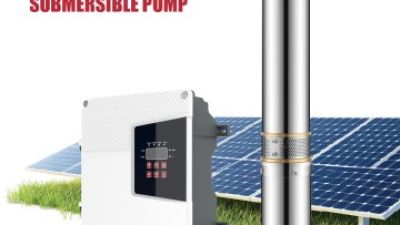
4 Inch 2HP DC Solar Submersible Water Pump: Efficient Borehole Water Solutions
A 4 Inch 2HP DC Solar Submersible Water Pump provides an efficient solution for borehole water extraction in farms, livestock facilities, irrigation projects, and remote communities without reliable grid electricity. According to FAO AQUASTAT, agriculture accounts for approximately 70% of global freshwater withdrawals, making energy-efficient pumping essential for reducing operational costs. By using solar panels and a high-efficiency MPPT controller, this system converts available sunlight into stable pumping power while minimizing dependence on diesel fuel and conventional electricity.
Designed for installation in 4-inch boreholes, the pump delivers dependable underground water access for daily irrigation and livestock supply. Its direct-current configuration helps simplify system design, while the MPPT controller continuously optimizes solar energy utilization under changing sunlight conditions. This is particularly valuable in off-grid regions, where fuel transportation, generator maintenance, and electricity expansion can create significant long-term expenses. Renewable-energy cost analyses from IRENA also show the continuing competitiveness of solar power, supporting its wider adoption in water infrastructure.
As a professional solar water pump manufacturer, we provide OEM and ODM services for distributors, wholesalers, and project contractors worldwide. Configurations can be adapted to different borehole depths, solar array capacities, water requirements, and installation environments, helping project partners develop practical and scalable water supply systems.
FAQS
C pump controller supplier?
Request wiring diagrams, load-test records, protection details, and traceable production information. Photos are not enough. The documents should match the exact controller model and factory address.
Review the supplier’s quality certification and verify its scope, expiry date, and issuing organization. Check whether the certificate covers the actual product. Paperwork can look complete while remaining unclear.
Test a sample with your actual motor, cable length, and operating conditions. Use voltage variation, repeated starts, high humidity, and elevated temperatures. Record alarms, heat, restart behavior, and dry-run protection.
Services may include circuit-board assembly, enclosure molding, cable preparation, keypad production, and software installation. Some suppliers also provide customized terminals, displays, and fault settings. Ask for a working sample.
Customization may cover acceleration time, pressure control, dry-run protection, cooling, and fault alarms. A special enclosure can improve installation. It may also reduce airflow and increase internal heat.
Ask about motor compatibility, pump sizing, cable distance, firmware revisions, and previous installations. Engineers should answer practical questions clearly. Vague answers deserve another inspection.
Confirm warranty terms, response times, installation guidance, spare parts, and troubleshooting procedures in writing. Ask how the supplier handles repeated faults. Support matters after shipment.
Ask, “What failed in your last production batch?” A mature supplier should describe the problem and its correction. No supplier is perfect. That matters.
Conclusion
Choosing the right Ac Pump Controller supplier in China requires more than comparing purchase prices. Buyers should first understand how the controller regulates motor speed, pressure, flow, and protection functions in different pumping applications. Important specifications include input and output voltage, rated power, frequency range, control method, overload protection, efficiency, enclosure rating, and compatibility with the pump and electrical system. A reliable supplier should provide clear technical documents, stable production capability, suitable certifications, quality inspection procedures, and proven experience in international projects.
It is also important to evaluate available manufacturing and customization services, such as software adjustment, housing design, interface options, and OEM production. When comparing quotations, buyers should review total value rather than focusing only on the lowest price. Warranty coverage, spare parts availability, response time, installation guidance, troubleshooting support, and long-term after-sales service can significantly affect operating costs. Careful supplier evaluation helps ensure dependable performance, safer operation, and a more efficient purchasing decision.

 DC SOLAR SUBMERSIBLE PUMP
 AC/DC Solar submersible Pump
 DC Solar Surface Pump
 AC/DC solar surface Pump
 Solar swimming Pool Pump
 Built-in Controller Solar Pump
 Solar Pump inverter
 Pump Accessories






 Mr Youkee Kong