Solar Pump

Picking out the right Battery Solar Water Pump can really make a difference when it comes to meeting your water needs. I mean, John Doe from EcoWater Solutions puts it perfectly: "Investing in a good quality pump is key for both efficiency and sustainability." His advice totally hits home these days as more folks are exploring these kinda innovative, eco-friendly options.
When you're on the hunt for a Battery Solar Water Pump, it’s a good idea to think about what you actually need. Things like how much water you use, how much sunlight you get, and how powerful the pump needs to be all come into play. What works great in one situation might not cut it in another, so it’s worth chatting with a few experts, plus doing some homework on your own.
And let’s be real—some pumps might sound super impressive with their efficiency claims but don’t quite live up to the hype once you put them to the test in real life. So, it’s really about balancing what features are essential for you with what’s actually practical. Take your time to figure out your specific needs and limits, and don’t rush the decision. With a bit of thoughtful planning, you’ll find the best Battery Solar Water Pump that fits your unique situation perfectly.
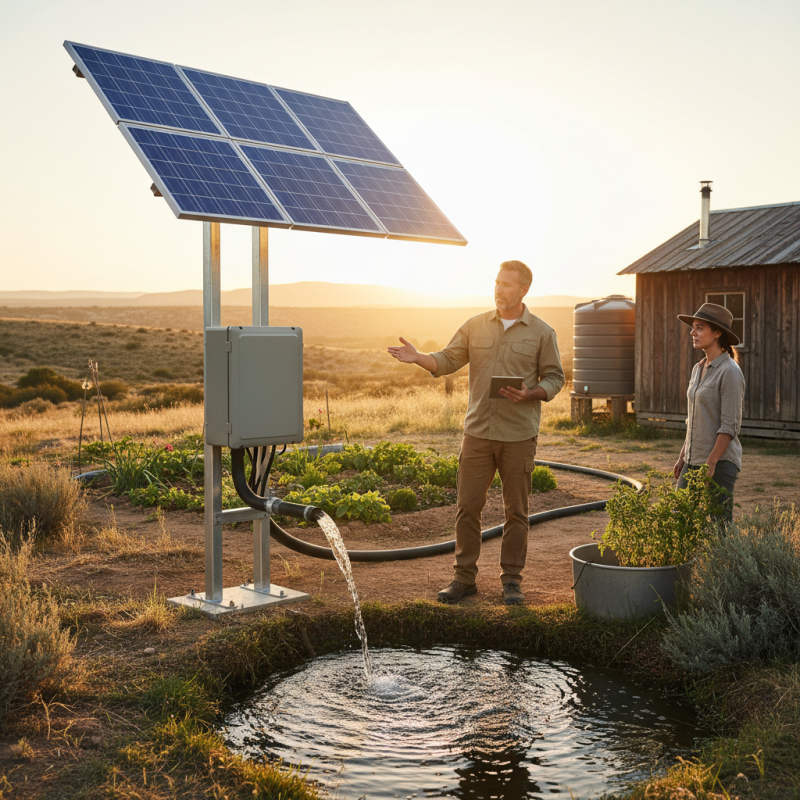
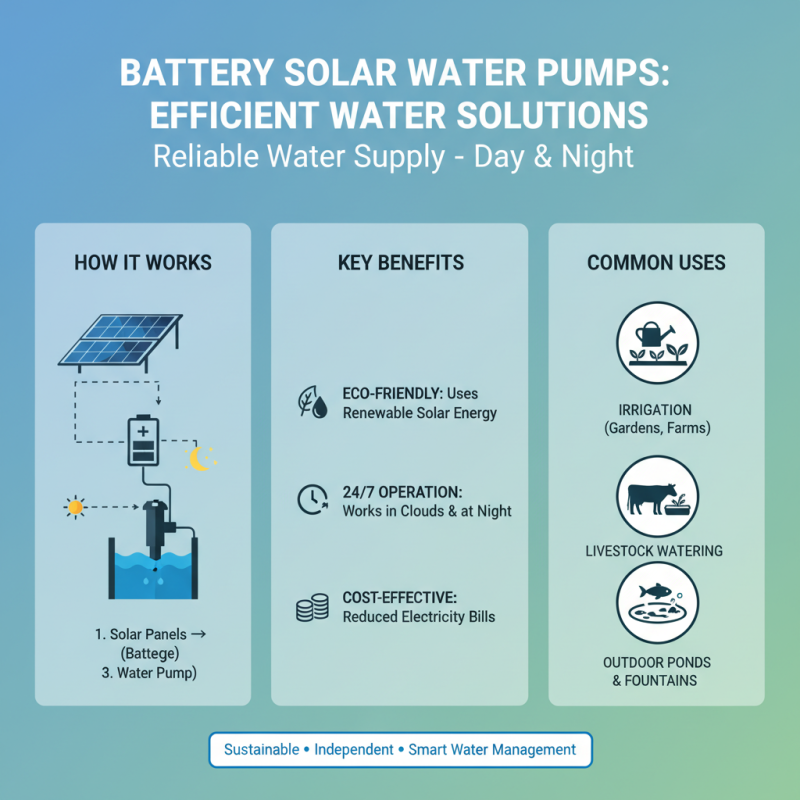
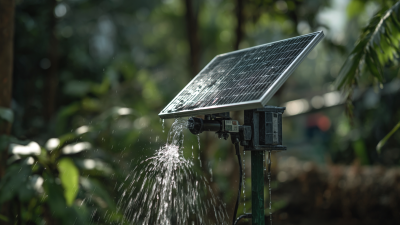
Battery solar water pumps are increasingly popular for various applications. They use solar panels to power a pump, storing energy in batteries for later use. This system allows for efficient operation even during cloudy days or at night. Many homeowners consider these pumps for irrigation, livestock watering, or outdoor ponds.
When choosing a battery solar water pump, understanding your specific needs is vital. For instance, consider the water flow rate and lift height required for your application. An excessive capacity may waste energy. On the other hand, an insufficient capacity could lead to disappointment. Investigating options from reputable Battery Solar Water Pump Manufacturers can help you find suitable products.
However, not every product is perfect. Some users have reported challenges with battery longevity and maintenance. It’s essential to weigh the initial investment against long-term savings. Faulty installations can lead to inefficiencies, requiring careful planning and perhaps professional advice. Also, consider your local climate; some regions may not get enough sunlight year-round.
When choosing a solar water pump, consider several key factors. First, assess your water needs. Are you using it for irrigation, livestock, or household purposes? This determines the required flow rate and pressure. A High-Quality Battery Solar Water Pump should meet these specifications effectively.
Next, look at the solar panel size and battery capacity. A larger panel can generate more energy. Ensure the battery can store enough energy for cloudy days. This feature is crucial for consistent performance. Don't overlook the pump’s durability. It should withstand various weather conditions and long-term use.
Cost is another important aspect. High-quality options might be pricier but often provide better efficiency and longevity. Cheaper models might save you money upfront, but may require more frequent replacements. Balance your budget with your needs to find the right solution.
| Feature | Description | Importance |
|---|---|---|
| Flow Rate | The volume of water the pump can move per minute, typically measured in gallons per minute (GPM). | Determines how quickly you can fill a tank or supply water. |
| Power Source | Type of solar panels and battery capacity used to power the pump. | Essential for ensuring reliable operation, especially in low sunlight conditions. |
| Head Height | The maximum vertical distance the pump can lift water. | Crucial for applications requiring water to be pumped uphill. |
| Build Quality | Materials used in the construction of the pump. | Affects longevity and durability, especially in outdoor conditions. |
| Ease of Installation | Time and complexity required to install the pump system. | Impacts startup time and user experience, especially for DIY installations. |
| Warranty | Length and coverage of manufacturer warranty. | Provides assurance of product reliability and support. |
Choosing the right battery solar water pump involves understanding
power requirements and battery capacity. It’s crucial to assess the pump’s
horsepower. A higher horsepower may be needed for larger water sources. Yet, more power means a greater
battery drain. Balancing these factors can be challenging.
Next, consider battery capacity. A larger capacity allows
for longer pump operation. However, it can also mean higher costs. Think about your typical water use. If you have
intermittent needs, a smaller capacity might suffice. Meanwhile, don’t overlook charging time. Some setups may take
longer to recharge, causing downtime.
It’s not always straightforward. Sometimes you might think you need more power, but smaller pumps can fulfill your
needs effectively. Reflect on your water source. Is it consistently available, or do you face fluctuations? Understanding
these aspects can lead to better choices. It’s important to remember that what
works for one situation might not work for another.
When selecting a solar water pump, assessing the solar panel size is crucial. A good rule of thumb is to have a solar panel generating at least 100 watts per 1,000 gallons of water pumped daily. Research shows that efficiency can vary significantly. Smaller panels may lack adequate power, leading to inconsistent performance.
The orientation and angle of the solar panels also impact efficiency. Ideally, panels should face south at a 30-degree tilt for maximum sunlight exposure. A study from the National Renewable Energy Laboratory indicates that panels can perform up to 25% better with optimal positioning. Even slight shading can reduce output significantly.
Consider local solar conditions. Areas with more sunlight will benefit from smaller panels. However, in less sunny regions, larger panels may be necessary. This may feel overwhelming, especially if variables change seasonally. It’s essential to gather data on local weather patterns and adapt your setup accordingly. Balancing these elements can be challenging, but it's vital for optimal pump performance.
Choosing the right type of solar water pump is essential. Surface pumps and submersible pumps serve different applications. Understanding these differences is key for optimal usage.
Surface pumps are placed above the water source. They rely on suction to draw water. These pumps are easy to install and maintain. However, they can struggle with deep wells, typically beyond 25 feet. According to industry reports, they are ideal for shallow applications, such as garden irrigation or pond filling. They can move larger volumes of water quickly, making them efficient for surface tasks.
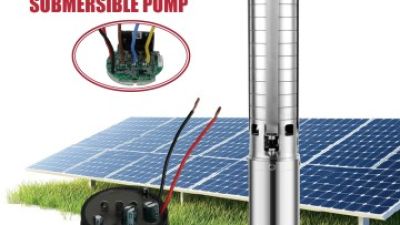
On the other hand, submersible pumps are designed to operate underwater. They push water to the surface, making them suitable for deeper installations. Data suggests they often outperform surface pumps in efficiency. Submersible pumps can handle varying water depths effectively. However, they tend to be pricier and more complex to install. When selecting a pump, consider your water source's depth and the purpose of use. Consulting a Battery Solar Water Pump Manufacturer can provide insight into which type fits your needs best.
When budgeting for a battery solar water pump, consider both the initial costs and long-term maintenance. A higher upfront cost might mean better quality and durability. Research various options to find what fits your budget. Don't forget to include installation fees. Sometimes, hidden costs arise during installation. This could affect your overall budget.
Tips: Always check if the suppliers offer warranties. Consider their reputation as well. Reading customer reviews can provide insights. You want a reliable supplier. Battery Solar Water Pump Suppliers should also have clear information about maintenance costs. These costs can vary significantly. Keep an eye on replacements and repairs needed over time.
Long-term maintenance is crucial. Regular check-ups can prevent larger issues later. Budgeting for these services ensures your system runs efficiently. It's wise to set aside a small percentage of your initial investment for upkeep. While solar pumps can be cost-effective in the long run, unexpected repairs can strain your finances. Reflect on past expenses as you plan your budget.
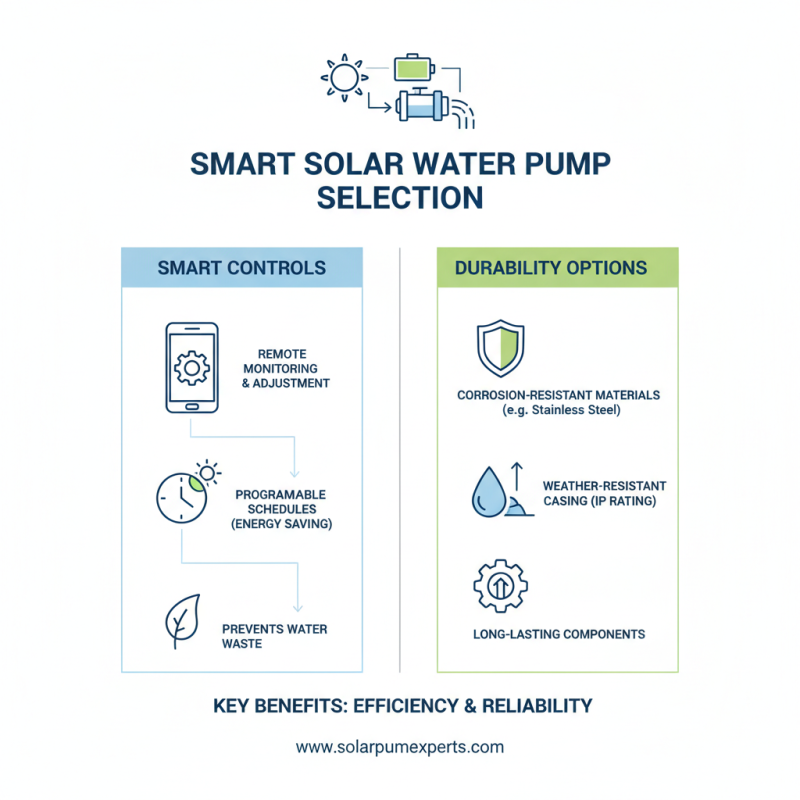
When choosing a battery solar water pump, it’s crucial to consider smart controls and durability options. Smart controls enhance usability. They allow you to monitor and adjust the pump's operation remotely. For example, some systems can be programmed to run only at specific times. This feature saves energy and can prevent potential water wastage.
Durability is another essential factor. Pumps exposed to harsh weather conditions must withstand UV rays and corrosion. It's wise to select models made from high-quality materials. Some pumps have protective coatings that extend their lifespan. However, cheaper options may lack such features and fail prematurely.
Reflecting on these elements is vital. You might find models with advanced controls but lacking in robustness. On the flip side, highly durable pumps may not have user-friendly features. Balancing these aspects can be challenging, but it’s necessary for long-term satisfaction.
The efficient harnessing of solar energy for water management is more important than ever, as sustainable practices become the norm in both agricultural and residential sectors. The I4SC MPPT (Maximum Power Point Tracking) Controlled Stainless Steel Centrifugal Borehole Pump exemplifies a significant advancement in this field, designed to optimize the conversion of solar energy into practical water solutions. This innovative pump system utilizes advanced MPPT technology, ensuring that it extracts the maximum available power throughout varying sunlight conditions, thus enhancing efficiency and performance during peak usage times.
Constructed from durable stainless steel, this borehole pump not only resists corrosion but also provides longevity and reliability in diverse environmental conditions—a critical factor for borehole applications. Its centrifugal design minimizes energy consumption while maximizing flow rates, making it a versatile choice for a range of water supply applications. Whether it's for irrigating crops, delivering water for livestock, or supplying clean drinking water in off-grid locations, the technology integrated into this pump system ensures a continuous supply of water without being dependent on traditional power grids. Such systems play a crucial role in promoting sustainable water management practices in regions where conventional electricity sources are unreliable or inaccessible.
: The product aims to enhance daily convenience for users. It offers practical solutions for everyday challenges.
Users can follow simple instructions for effective usage. There are step-by-step guides available.
Yes, always handle the product with care. Avoid exposure to extreme conditions.
The product is made from various durable materials. They contribute to its overall functionality and longevity.
Cleaning the product is generally straightforward. A damp cloth is often sufficient for maintenance.
Try troubleshooting common issues outlined in the manual. If problems persist, contact support for assistance.
The product may not be suitable for very young users. Check the recommended age guidance on the packaging.
Longevity can vary based on usage. Regular maintenance can enhance durability significantly.
A warranty may be provided, but terms differ. Always read the warranty information thoroughly.
Yes, the product is designed for repeated use. Over time, some wear and tear may occur.
Choosing the best Battery Solar Water Pump involves understanding its components and evaluating various factors to suit your specific needs. Begin with an overview of these pumps, focusing on key considerations such as pump power, battery capacity, and solar panel efficiency. Ensuring that the solar panel size aligns with your energy requirements is crucial for optimal performance.
Additionally, assess the types of pumps available, such as surface versus submersible, to determine which is best for your application. It’s also important to budget not only for the initial costs but for long-term maintenance as well. Lastly, consider additional features like smart controls and durability options to enhance the overall efficiency and lifespan of your Battery Solar Water Pump.