Leave Your Message
0%

Picking the right Deep Well Submersible Pump? Honestly, it starts below the surface. Water level, well depth, and pipe friction are the quiet details that shape how it performs. And yeah, a pump can look plenty powerful on paper—then struggle after it’s installed. So the real question is pretty simple: can it deliver the flow you need at your actual pumping depth?

Dr. Lev Nelik, a pump-industry consultant and author, puts it pretty well: “Select the pump for the system, not the system for the pump.” That idea is basically the backbone of a reliable selection process. So start by measuring the static water level, then note the dynamic level while the pump is actually running. Check the well diameter, what shape the casing is in, water temperature, and how much sand you expect. From there, figure out total dynamic head—don’t forget vertical lift, elbows, valves, and discharge piping. And hey, don’t just pick a pump based on horsepower alone; that’s rarely the whole story.

You know, it's the small stuff that really matters. If your well is only 4 inches, a pump with the wrong outside diameter just won't fit — no way around that. Run the cable too far, and you can lose voltage. And in a sandy well, impellers can get chewed up faster than you'd expect. So before you commit, check the pump curve, motor cooling requirements, control box, and overload protection. And don't just match the pump to max flow — match it to what the well can actually sustain.

You know, experience also has a way of teaching humility. Field measurements can be incomplete, and old well records may be wrong—sometimes they really are. That uncertainty is worth paying attention to. A careful installer should double-check assumptions before buying, then test pressure, flow, and current after commissioning. The best Deep Well Submersible Pump isn't simply the strongest model. It's the one that performs steadily, efficiently, and safely within the complete well system.
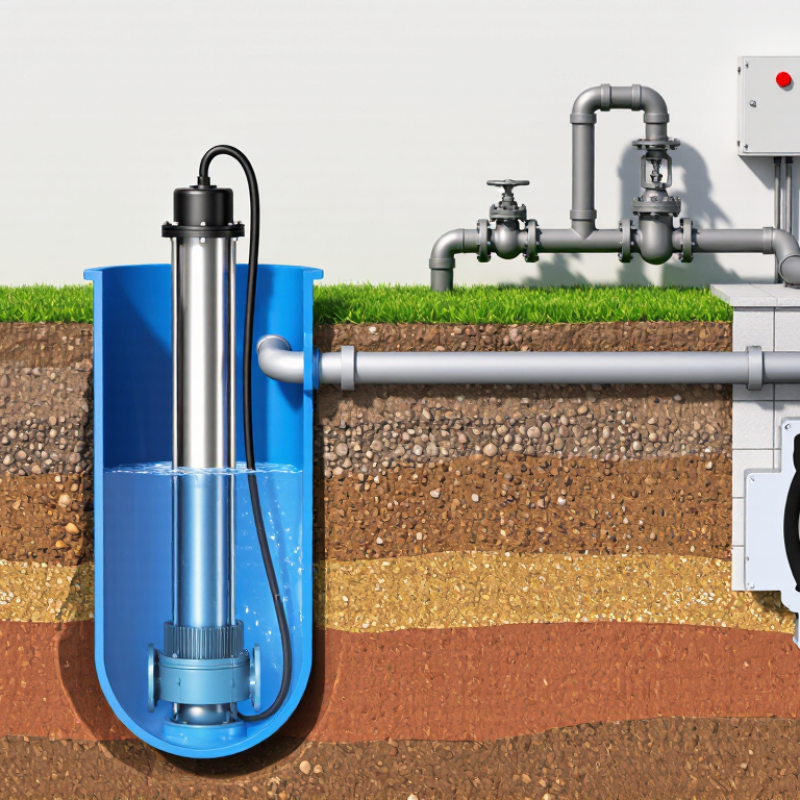
How to Choose the Best Deep Well Submersible Pump?

Define the Water Source and Well Conditions

How to Choose the Best Deep Well Submersible Pump?

Define the Water Source and Well Conditions

Begin by identifying where the water comes from. A drilled well, borehole, spring-fed reservoir, or storage tank creates different pumping demands. Record the well’s static water level before pumping. Then measure the dynamic level after steady use. This difference, called drawdown, shows how quickly the aquifer responds.

Check the well depth, casing diameter, and available water volume. A narrow casing may reject a pump that appears suitable on paper. Measure the distance from the water surface to the delivery point. Include pipe length, bends, filters, and elevation changes when estimating total head. A pump must overcome all of them, not just the well depth.

Water quality also affects the selection. Sand, silt, iron, or aggressive minerals can damage internal parts and restrict flow. Ask for a recent laboratory test when the water looks cloudy or leaves orange stains. Clear water can still contain harmful minerals. That is easy to overlook. During field checks, a short test pump can reveal falling water levels, unstable flow, or unexpected sediment. I have seen clean installation plans fail because seasonal recharge was assumed rather than measured. Rainy-season performance may hide a dry-season shortage. Leave room for that uncertainty, and verify the well’s recovery rate before matching pump capacity.

Calculate Flow Rate and Total Head Requirements

Choosing the best deep well submersible pump starts with two numbers: required flow rate and total dynamic head. Flow rate describes how much water the system needs, usually in gallons per minute. Measure household demand, irrigation zones, or storage-tank refill time. For example, delivering 600 gallons in 30 minutes requires 20 gallons per minute. Add a practical margin, but avoid excessive oversizing. A larger pump may cycle more often and waste energy.

Total head includes static lift, water-level drawdown, pressure demand, and pipe friction. If the well pump sits 180 feet below the pressure tank, drawdown adds 25 feet, and the system needs 45 psi, convert pressure to head: 45 psi equals about 104 feet of water. Add estimated friction losses, perhaps 18 feet. The required total head is therefore about 327 feet. Pump curves must show this duty point, not merely the pump’s maximum head. The U.S. Department of Energy’s Improving Pumping System Performance sourcebook estimates that pumping systems consume about 27% of industrial motor electricity, so small calculation errors can become expensive.

Tips: Record the static water level during a dry period. Check the dynamic level while pumping. Use pipe length, diameter, fittings, and elevation in the friction estimate. A field measurement is better than a confident guess. I have seen otherwise careful selections fail because well recovery was ignored. That part still deserves more attention. Verify motor voltage, cable sizing, and minimum flow requirements with a qualified installer.

Choose the Appropriate Pump Type and Size

Choosing a Deep Well Submersible Water Pump starts with the water source, not the price.

Measure the well’s casing diameter, static water level, and expected drawdown. A narrow casing may reject an otherwise powerful pump. Confirm whether the water contains sand, iron, or corrosive minerals. These details affect pump materials and impeller design. For clean household water, a multistage submersible pump often provides steady pressure. High-sand wells need a more tolerant design and careful filtration. Do not guess. A field measurement is worth more than a catalogue promise.

Size the pump around required flow and total dynamic head. Flow depends on occupants, irrigation zones, and peak demand. Head includes vertical lift, pressure needs, pipe friction, valves, and filters. For example, a pump lifting water 60 metres may need extra head to deliver useful tank pressure. Check the pump curve at the actual operating point. Avoid selecting the maximum rated flow. Oversizing can cause cycling, wasted energy, and faster wear. Undersizing causes weak pressure. I have seen neat calculations fail when old pipes were partly blocked, so inspect the complete system.

Tips: Leave enough clearance around the pump for installation and service. Match the outlet size with the rising pipe. Use a properly rated cable and control box. Ask a qualified technician to verify voltage, grounding, and overload protection. Test the water level during dry periods, not only after rainfall. Small details matter.

Match Pump Materials to Water Quality

Water chemistry should guide every deep well pump decision. Appearance is not enough. Clear water can still carry chloride, sand, iron, or dissolved gases that attack pump components. The U.S. Environmental Protection Agency lists 250 mg/L as the secondary standard for chloride, and 500 mg/L for total dissolved solids. These values are not absolute pump limits, but they warn of corrosion, taste, and scaling risks.

Request a laboratory water test before choosing materials. Check pH, chloride, hardness, iron, manganese, conductivity, and suspended solids. The World Health Organization recommends a maximum arsenic value of 0.01 mg/L and nitrate value of 50 mg/L in drinking water. These figures describe health protection, not pump construction, but they reveal why untreated well water needs careful evaluation. A sample taken after heavy rain may also differ from normal conditions.

For mildly corrosive water, stainless steel wetted parts may offer better durability than standard carbon steel. High chloride levels require greater caution, because even stainless steel can suffer pitting. Abrasive sand demands hardened wear components and a screened well, not just a stronger motor. EPDM and other elastomers must match temperature and chemical exposure. Deep Well Submersible Water Pump Manufacturers should provide material certificates, compatibility guidance, and tested operating limits. I would not accept a generic “stainless steel” claim. The grade matters. So does the water.

Check Power Supply, Controls, and Installation Needs

How to Choose the Best Deep Well Submersible Pump?

Power supply and controls deserve attention before pump flow rate. The U.S. Department of Energy’s Pumping System Sourcebook identifies pumping as a major industrial electricity load. Its guidance favors system assessment, not motor selection alone. Confirm available voltage, phase, frequency, and generator capacity. A long cable run can create voltage drop, causing overheating and poor starting performance. Check the motor’s rated current against the control panel and overload protection. A Deep Well Submersible Water Pump Manufacturer should provide starting-current data, wiring limits, and control recommendations.

Controls also affect reliability underground. A pressure switch may suit a simple tank system, while a variable-frequency drive can adjust speed as demand changes. However, incorrect settings may cause rapid cycling or unstable pressure. Include dry-run protection, surge protection, and phase-loss monitoring where appropriate. Field installers often measure the dynamic water level, not only the static level. That detail matters when nearby users draw water.

Tips: Measure first. Record voltage at the panel and pump terminals. Select a cable for well depth, current, temperature, and local installation rules. Confirm the casing diameter leaves enough clearance for cooling flow. Review the pump curve at the actual lift, friction loss, and required flow. The U.S. DOE also recommends checking efficiency across operating conditions. A pump that looks efficient on paper may perform poorly after seasonal water-level changes. Recheck the assumptions.

How to Choose the Best Deep Well Submersible Pump? - Check Power Supply, Controls, and Installation Needs

Selection Dimension What to Check Typical Guidance Why It Matters Installation or Control Note
Required Flow Rate Determine the water demand in gallons per minute (GPM) or liters per minute (L/min). Size the pump for the actual demand rather than choosing the largest available model. Residential demand is often estimated from fixtures and irrigation requirements. An oversized pump can cause frequent cycling, higher energy use, and excessive stress on pipes and fittings. Confirm the desired flow at the required total head, not only the pump’s maximum flow rating.
Total Dynamic Head Add static lift, required outlet pressure, pipe friction, valves, filters, and other elevation changes. Use the pump curve to verify that the pump delivers the target flow at the calculated total head. A pump that meets flow only at low head may provide poor pressure or insufficient water at the outlet. Include friction losses from long or narrow discharge piping and losses through check valves and treatment equipment.
Well Depth and Pump Setting Check the total well depth, normal and seasonal water levels, casing diameter, and recommended pump setting depth. The pump must remain submerged during operation and should be installed within the well’s allowable setting range. Insufficient submergence can cause overheating, loss of cooling, air intake, or unstable operation. Keep the pump clear of sediment at the bottom and follow the well installer’s recommended clearance.
Power Supply Voltage Verify available voltage, phase, frequency, service capacity, and the motor’s rated electrical requirements. Common installations use single-phase or three-phase AC power at the voltage specified on the motor nameplate. Incorrect voltage or phase can cause overheating, low performance, nuisance tripping, or motor failure. Have a qualified electrician verify voltage under load and provide correctly sized overcurrent protection.
Motor Power and Efficiency Compare rated horsepower or kilowatts, full-load current, efficiency, and the duty point on the pump curve. Choose a motor that can meet the duty point without operating continuously beyond its rated load. A properly matched motor reduces energy consumption and improves service life. Do not select motor size using horsepower alone; hydraulic performance and operating conditions are equally important.
Cable Size and Voltage Drop Check cable length, conductor material, installation temperature, current rating, and allowable voltage drop. Longer cable runs generally require larger conductors to keep voltage drop within the motor manufacturer’s limits. Excessive voltage drop may reduce starting torque and increase motor heating. Use submersible-rated cable, waterproof splices, and installation methods approved for wet locations.
Control Box and Starting Method Determine whether the motor requires a control box, capacitor, soft starter, or variable-frequency drive. Use only controls compatible with the motor type, voltage, phase, current, and starting requirements. Incorrect controls can prevent starting or damage the motor and electrical system. Install controls in a dry, accessible location and provide ventilation where required.
Protection Features Look for overload, short-circuit, dry-run, under-voltage, over-voltage, and surge protection as appropriate. Protection should match the motor instructions and local electrical regulations. Protection helps reduce damage from abnormal electrical conditions, blocked flow, or low water levels. A low-water sensor or properly configured dry-run protection is especially important for wells with variable yield.
Tank and Pressure Control Check pressure-switch settings, tank volume, cut-in and cut-out pressures, and expected cycling frequency. A pressure tank and correctly adjusted switch can reduce short cycling in conventional constant-pressure systems. Frequent starts place additional electrical and mechanical stress on the pump motor. Set pressure values within the limits of the pump, tank, plumbing, and household fixtures.
Discharge Pipe and Check Valves Confirm pipe diameter, pressure rating, fittings, and the need for one or more check valves. Use pipe rated for the system pressure and select a diameter that limits friction loss at the planned flow. A restricted or leaking discharge line can reduce flow and cause water hammer or reverse rotation. Secure the drop pipe and electrical cable without crushing or sharply bending either component.
Water Quality and Abrasion Evaluate sand, sediment, iron, mineral content, temperature, and any corrosive conditions. Select materials and clearances suitable for the well water and use a sediment-control plan where necessary. Sand and corrosive water can accelerate wear, clogging, and component failure. Test the water when quality is uncertain and avoid operating a new well pump before excessive sediment is cleared.
Well Casing Fit Measure the inside diameter and check for obstructions, damaged casing, or restrictions. The pump must fit with adequate clearance for installation and motor cooling water movement. An oversized pump may not fit, while poor clearance may limit cooling and complicate servicing. Confirm the pump dimensions, cable guard requirements, and well construction details before purchase.
Grounding and Electrical Safety Verify grounding, bonding, disconnect location, circuit protection, and compliance with local electrical codes. Use a dedicated, correctly protected circuit where required by the installation design and applicable regulations. Proper grounding and disconnection reduce shock, fire, and equipment risks. Electrical work and pump installation should be completed or inspected by qualified professionals.
Serviceability and Lifecycle Cost Compare energy use, control complexity, replacement parts, inspection access, and expected operating hours. Evaluate total cost of ownership instead of comparing purchase price alone. A more efficient and correctly matched system may reduce long-term electricity and maintenance costs. Keep installation records, pump data, electrical readings, and maintenance dates for future troubleshooting.

Compare Efficiency, Reliability, and Maintenance Requirements

Choosing a deep well pump is not only about lifting water. Efficiency, reliability, and maintenance costs can change the result after installation.

A High-Quality Deep Well Submersible Water Pump should match the well’s depth, water demand, and pipe size. Check the pump curve, not just the advertised horsepower. A pump operating near its best efficiency point usually uses less electricity and produces steadier pressure. Oversizing can cause short cycling and wasted power. Undersizing may run continuously. That is expensive. Measure the static water level and expected drawdown before selecting a model. Pipe friction also matters, especially in long or narrow lines.

Reliability depends on more than a sealed motor. During field inspections, I have seen sand wear impellers, unstable voltage overheat motors, and poor cable joints cause early failures. A protective control box, correct grounding, and a dry-run sensor can reduce these risks. Maintenance remains necessary. Test insulation resistance periodically, inspect pressure behavior, and check for unusual vibration or cloudy water. Clean the intake area when sediment builds up. Many buyers overlook start frequency. Frequent starts place stress on the motor and control equipment. I once treated a pump as “maintenance-free,” and that assumption proved careless. Water chemistry can also attack metal parts, so material selection should follow a laboratory water test, not guesswork.

How to Choose the Best Deep Well Submersible Pump

Typical engineering benchmarks show that larger, correctly sized pump classes can provide higher hydraulic efficiency and reliability, while requiring less frequent routine maintenance. Actual results depend on well depth, flow rate, water quality, motor loading, and installation quality.

The maintenance score is expressed on a 0–100 scale, where a higher value indicates simpler routine maintenance and lower service requirements. Choose a pump based on the required flow and head first, then compare efficiency, reliability, and maintenance needs.

A Practical Guide to the 6SC Solar Powered Water Well Pump for Agricultural Irrigation

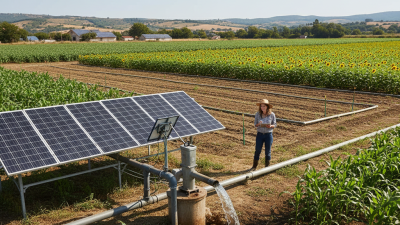
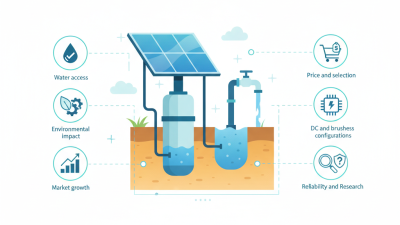
A 6SC solar-powered water well pump can provide a practical irrigation solution for farms located beyond reliable grid infrastructure. In this designation, “6SC” generally refers to a six-inch submersible centrifugal pump designed for deep wells and relatively high flow rates. Before installation, calculate the required daily water volume, well yield, total dynamic head, and pipeline losses. The solar array, controller, and pump should be matched to these conditions rather than selected by horsepower alone. A float switch, dry-run protection, surge protection, and a properly sized storage tank can help maintain reliable operation during cloudy periods or changing irrigation demand.

Efficient water management is increasingly important: FAO AQUASTAT reports that agriculture accounts for approximately 70% of global freshwater withdrawals. For this reason, the pump should be paired with drip irrigation, low-pressure sprinklers, or zoned field distribution to reduce unnecessary pumping. Install the pump above the well bottom to limit sand intake, use an appropriate non-return valve, and confirm that the borehole casing can accommodate the six-inch unit. Solar pumping is most productive when irrigation is scheduled during strong sunlight, allowing direct daytime pumping into an elevated tank.

Economic conditions also support solar adoption. IRENA’s *Renewable Power Generation Costs* reports that utility-scale solar photovoltaic electricity costs have fallen dramatically since 2010, improving the appeal of fuel-free water pumping. Farmers should still compare the array size, controller efficiency, storage requirements, maintenance access, and seasonal sunlight before purchasing. Regularly inspect cables, filters, electrical connections, and well-water quality to protect the pump and sustain dependable agricultural output.

FAQS

What should I measure before choosing a deep well submersible pump?

Measure casing diameter, static water level, and expected drawdown. Check the water during dry periods, not only after rain. Measure twice.

How does water quality affect pump selection?

Sand, iron, and corrosive minerals can affect materials and impeller design. High-sand wells need tolerant construction and careful filtration. Clean water often suits multistage designs.

How do I determine the correct pump size?

Match the pump to required flow and total dynamic head. Flow depends on household use, irrigation, and peak demand. Head includes lift, pressure, pipes, valves, and filters.

Why can an oversized pump create problems?

An oversized pump may cycle frequently, waste energy, and wear faster. Avoid choosing the maximum rated flow without checking the operating point.

What happens if the pump is too small?

An undersized pump may produce weak pressure or insufficient flow. Recheck blocked pipes, old valves, and filter resistance before changing the pump.

What power supply details should I confirm?

Confirm voltage, phase, frequency, and available generator capacity. Check voltage at both the control panel and pump terminals. Long cables can cause voltage drop.

Which controls and protections can improve reliability?

A pressure switch may suit a simple tank system. Speed control can match changing demand, but poor settings may cause unstable pressure. Consider dry-run, surge, and phase-loss protection.

What installation details deserve attention?

Leave enough clearance for cooling, installation, and servicing. Match the outlet with the rising pipe. Use correctly rated cable, grounding, overload protection, and control equipment.

How can I verify the pump will perform as expected?

Check the pump curve at actual lift, friction loss, and required flow. Include seasonal water-level changes. A neat calculation can still fail. Recheck the assumptions.

Conclusion

Choosing the best Deep Well Submersible Pump begins with a clear understanding of the water source and well conditions. Consider the well depth, diameter, static and dynamic water levels, expected water quality, and the presence of sand or sediment. Next, calculate the required flow rate and total head, including vertical lifting height, pipe length, pressure demands, and friction losses. These details will help determine the correct pump type, motor capacity, and size without overloading the system or wasting energy.

Pump materials should match the water’s chemical characteristics to reduce corrosion and wear. Before purchasing, verify the available power supply, control equipment, cable requirements, and installation space. It is also important to compare energy efficiency, construction quality, protection features, expected service life, and maintenance needs. A suitable pump should provide reliable performance under actual operating conditions while remaining practical to install, inspect, and maintain over time.
Sophie

Sophie

Sophie is a dedicated marketing professional at Zhejiang Lanbo Intelligent Technology Co., Ltd., where her expertise significantly enhances the company's reach and engagement. With a profound understanding of the company's innovative products, she excels in crafting informative and captivating blog......
Previous 7 Tips to Choose the Best Solar Water Pump?