Picking a solar water pump isn't really about the label on the box—it starts with what you actually need. A tank for a house is a totally different job from a deep agricultural bore. So before you get pulled into specs, measure your daily water demand, total dynamic head, bore diameter, water quality, and how much sunlight you get. Those numbers are what tell you the right pump size, solar array, controller, and storage.
As Peter Adelmann, founder of LORENTZ, put it, “Reliable water supply begins with a correctly designed pumping system.” That’s still true in the real world. A pump that looks great at ground level can struggle badly at 80 meters. Don’t just trust advertised wattage—check the performance curve. Brushless motors can mean less maintenance, and a good controller helps protect the system when sunlight is low or the pump runs dry. If your water has sand or heavy minerals, corrosion resistance matters too.
Search terms can get confusing. People might compare “solar powered water pump solar bore pump price DC screw type solar bore pump brushless dc solar water pump solar dc submersible water pumps DC pump” without checking that the specs actually match. Price alone doesn’t tell you much. A cheaper pump might need replacing sooner, bigger batteries, or more servicing. And sometimes the expensive one isn’t necessary either—it’s worth asking why. Before buying, ask for verified test data, warranty details, spare-part availability, and installer experience. Also think about seasonal sunlight. A few cloudy weeks can expose a plan that wasn’t thought through. The best choice balances reliable water delivery, energy efficiency, repairability, and total ownership cost. You’ll still make mistakes, but careful measurements make them a lot less costly.

Define Your Water Pumping Needs and Site Conditions
Before choosing a solar water pump, define the actual water demand. Record daily use for households, livestock, or irrigation. FAO’s AQUASTAT data shows agriculture accounts for roughly 70% of global freshwater withdrawals. That figure varies by region, but it highlights the importance of accurate planning. Measure the source depth, dry-season water level, and required delivery point. Calculate total dynamic head, including vertical lift and pipe friction. A pump that meets flow needs but ignores head may underperform badly.
Site conditions matter as much as pump capacity. Check daily solar radiation through the Global Solar Atlas, not only the brightest month. Shade from trees, buildings, or nearby terrain can reduce output. In practice, a clear southern-facing installation may still lose energy from dust and poor tilt. Water quality also deserves attention. Sand can damage components, while muddy water may block pipes or valves. I have seen projects fail because the well was tested only once. Seasonal testing is safer. Select storage when water demand continues after sunset.
Tips: Write the demand in liters per day. Measure the borehole twice. Add a dry-season margin. Keep panels away from morning shadows. Compare pump curves at the real head, not at zero lift. Ask an installer to verify pipe diameter, cable losses, and protection against dry running. The World Bank’s Global Solar Atlas and FAO AQUASTAT provide useful planning references, but local measurements should control the final design.
Calculate Required Water Flow and Lifting Height
How to Choose the Best Solar Water Pump?
Calculate the required water flow from real daily demand, not from guesswork. For example, a small farm may need 12,000 liters each day. With six useful sunlight hours, the pump should deliver about 2,000 liters per hour, or 33 liters per minute. Add a safety margin of 10–20% for cloudy periods and changing water use. The calculation is simple, but the demand estimate is often wrong.
Lifting height means total dynamic head, not only the vertical distance. Measure the height from the lowest water level to the delivery point. Then add pipe friction, bends, valves, and filters. If the vertical rise is 18 meters, pipe losses are 4 meters, and fittings add 2 meters, select a pump operating near 24 meters of head. Check its performance curve at this point. A pump rated for 24 meters at zero flow may deliver very little water there. That mistake is easy to make.
Tips: Measure the water level during the dry season. Use the longest pipe route in your calculation. Store water in a raised tank when possible. Keep the solar array clear of shade. I have learned that perfect calculations still need field testing. A slightly oversized pipe can reduce friction and improve daily output, though its extra cost may not suit every installation. Review the result after one sunny week and adjust expectations.
How to Choose the Best Solar Water Pump? Calculate Required Water Flow and Lifting Height
| Typical Application |
Required Water Flow
(m³/h) |
Operating Time
(h/day) |
Estimated Daily Water Volume
(m³/day) |
Static Lifting Height
(m) |
Estimated Pipe & Fitting Loss
(m) |
Total Dynamic Head
(m) |
Hydraulic Power
(W) |
Assumed Overall Efficiency
(%) |
Recommended Minimum Pump Input
(W) |
| Small garden or greenhouse |
2.0 |
0.5 |
1.0 |
8 |
2 |
10 |
54.5 |
40 |
170 |
| Single-household water supply |
3.0 |
2.0 |
6.0 |
18 |
4 |
22 |
179.7 |
45 |
500 |
| Livestock watering system |
5.0 |
3.0 |
15.0 |
12 |
3 |
15 |
204.4 |
42 |
610 |
| Small-scale crop irrigation |
8.0 |
4.0 |
32.0 |
25 |
7 |
32 |
697.6 |
45 |
1,940 |
| Community tank filling |
12.0 |
6.0 |
72.0 |
35 |
10 |
45 |
1,471.5 |
50 |
3,680 |
|
Calculation basis:
Total Dynamic Head = Static Lifting Height + Pipe and Fitting Loss.
Hydraulic Power (W) = 9.81 × Flow (m³/s) × Total Dynamic Head (m).
Recommended Minimum Pump Input = Hydraulic Power ÷ Overall Efficiency × 1.25 design margin.
|
|
Selection guidance:
Select a pump whose performance curve delivers the required flow at or above the calculated Total Dynamic Head.
Actual pipe losses depend on pipe diameter, pipe length, fittings, water temperature, and installation layout.
Overall efficiency includes the pump, motor, controller, and associated electrical losses.
|
Compare Solar Pump Types and Their Operating Principles
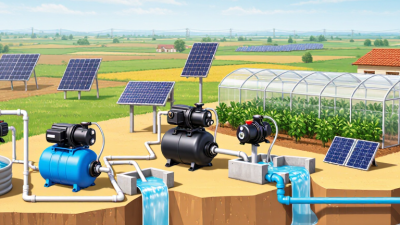
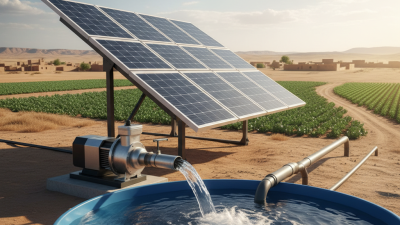
Choosing a solar water pump starts with understanding how each type moves water. A Solar Dc Surface Water Pump sits above the source and draws water through an intake pipe. It suits shallow wells, tanks, and open ponds, but suction height limits performance. A submersible pump works underwater and pushes water upward. This design usually handles deeper wells more efficiently because it avoids long suction lift.
Centrifugal pumps use spinning impellers to create flow. They deliver strong volume at moderate head, making them useful for irrigation and storage tanks. Helical rotor pumps turn slowly and produce higher pressure with lower flow. They can perform better in deep wells, especially when sunlight is weak. However, pump output changes with sunlight, pipe friction, and water level. A controller can protect the motor and adjust power, but it cannot fix incorrect sizing.
Tips: Measure daily water demand and total lifting height before choosing. Check the pipe diameter, dry-run protection, and seasonal sunlight. A battery may extend operation, yet it adds cost and maintenance. I have found that estimated flow often looks optimistic. Test the system during cloudy weather, not only at noon. Small details matter.
How to Choose the Best Solar Water Pump? Compare Solar Pump Types and Their Operating Principles
Solar water pumps use either dynamic pumping or positive-displacement pumping principles. The best choice depends on required flow, total head, well depth, water quality, and available sunlight.
Chart metric: Typical hydraulic efficiency represents how effectively electrical input is converted into useful water-lifting power. The values are representative midpoints of commonly reported engineering ranges, not brand-specific ratings.
-
Surface centrifugal pumps: Use a rotating impeller to create water flow. They are suitable for shallow water sources and relatively high flow rates.
-
Submersible centrifugal pumps: Operate underwater and push water upward through a pipe. They are suitable for deep wells and reduce suction limitations.
-
Helical-rotor pumps: Use a rotating screw inside a stator to move fixed volumes of water. They provide steady flow and work well at high head with moderate flow.
-
Diaphragm pumps: Use reciprocating diaphragm movement to displace water. They are suitable for low-flow applications but typically produce pulsating flow.
Size the Solar Panels, Controller, and Battery System
How to Choose the Best Solar Water Pump?
Sizing a Surface Solar Water Pump starts with water demand, not panel wattage. Record daily volume, lifting height, pipe length, friction, and seasonal sunlight. A 10 m³ daily requirement lifted 20 metres needs about 0.55 kWh of hydraulic energy. With 45% total efficiency, the electrical demand approaches 1.2 kWh. Real sites often perform worse. Muddy water and undersized pipes increase losses.
Use monthly solar data from the World Bank’s Global Solar Atlas, rather than annual averages. If the weakest month provides four peak-sun hours, a 1.2 kWh load needs at least 300 W of theoretical PV capacity. A practical design may use 500–600 W, allowing for heat, dust, cable loss, and ageing. NREL’s 2024 Annual Technology Baseline models approximately 0.5% yearly degradation for crystalline-silicon modules. Leave room for that decline.
The controller must match the motor’s voltage, current, and starting demand. An MPPT controller can extract more energy during changing sunlight, but it cannot repair poor hydraulic design. For battery storage, calculate daily energy multiplied by desired autonomy, then divide by usable depth of discharge and battery efficiency. Two cloudy days require more capacity than one evening of operation. Battery systems also need ventilation, temperature protection, and safe enclosures. A neat spreadsheet can still be wrong. I would test flow at midday and near sunset before final sizing. I would also recheck the pump curve after installation. Forecasts rarely match a dusty field.
Evaluate Pump Materials, Efficiency, and Maintenance Requirements
Choosing the best Solar Water Pump starts with materials, not marketing claims. FAO’s AQUASTAT data reports that agriculture uses about 70% of global freshwater withdrawals. A pump serving dusty farmland must resist abrasion, corrosion, and frequent temperature changes. Stainless steel components suit mineral-rich water, while reinforced thermoplastics can reduce weight and corrosion risk. Check seals carefully. A small leak can damage the motor over time.
Efficiency depends on the whole system. The World Bank’s ESMAP report on solar water pumping emphasizes correct sizing for water demand, lift height, and daily sunlight. Compare litres per watt-hour, not only motor horsepower. A pump delivering high flow at shallow depth may perform poorly in a deep well. The impeller, pipe diameter, controller, and panel angle all affect output. IRENA’s Renewable Power Generation Costs report shows solar PV costs have fallen sharply since 2010, but cheaper panels cannot fix an incorrectly sized pump. That distinction is easy to miss.
Maintenance should be measured in hours, tools, and local skills. Inspect filters, wiring, mounting bolts, and dry-run protection each month. Clean dusty panels when output drops visibly. FAO guidance also supports efficient irrigation practices, because reducing water demand can reduce pump size and operating stress. In my field observations, users often underestimate pipe friction. I have made that mistake myself. A system can look powerful at noon yet deliver weak flow at the storage tank. Request test results under realistic head conditions, preferably aligned with ISO 9906 pump performance testing.
Compare Installation Costs, Lifespan, and Overall Value
Choosing a solar water pump requires more than comparing the pump’s price. Installation costs often decide the real value. A surface pump may need a short suction line and simple mounting. A Deep Submersible Solar Water Pump usually needs borehole access, stronger cable protection, lifting equipment, and careful depth measurements. Ask for separate prices for drilling, wiring, storage tanks, controllers, and labor. My first estimate was too optimistic when I ignored trenching.
The solar array also affects lifetime value. IRENA’s Renewable Power Generation Costs in 2023 reported a global weighted-average utility-scale solar PV installation cost of about 758 US dollars per kilowatt. A small water system will cost more per kilowatt because transport and installation are less efficient. NREL’s recent PV degradation research commonly places annual module degradation near 0.5 percent. Panels may therefore serve for 25 years or longer, while pumps need more frequent inspection. Sand, mineral deposits, dry running, and fluctuating groundwater can shorten service life.
Check the energy requirement before choosing capacity. FAO guidance on solar-powered irrigation stresses matching pumping head, daily water demand, and seasonal sunlight. A pump that works at noon may struggle before sunrise. Include a tank.
Compare cost per cubic meter of delivered water, not only purchase price. Request performance data at your actual lifting height. Records matter. Yet estimates remain imperfect, especially where groundwater levels change. That uncertainty deserves a maintenance budget.
FAQS
Measure daily water demand, lifting height, pipe length, pipe diameter, and seasonal sunlight. Muddy water can increase losses.
Lifting 10 m³ by 20 metres needs about 0.55 kWh of hydraulic energy. At 45% efficiency, electrical demand approaches 1.2 kWh.
Use the weakest month’s sunlight, not the yearly average. Four peak-sun hours theoretically require 300 watts for 1.2 kWh daily.
Heat, dust, cable losses, ageing, and imperfect sunlight reduce output. A practical design may require 500–600 watts.
Match the motor’s voltage, operating current, and starting demand. An MPPT controller helps during changing sunlight but cannot fix poor pipe design.
Multiply daily energy by desired autonomy. Divide that result by usable discharge and battery efficiency. Two cloudy days need more capacity.
Request separate estimates for wiring, trenches, storage tanks, controllers, labor, drilling, and lifting equipment. My first estimate ignored trenching.
Compare the cost per cubic metre of delivered water, not only the purchase price. Request performance data at the actual lifting height.
Sand, mineral deposits, dry running, dust, heat, and changing groundwater levels can reduce service life. Panels may last 25 years or longer.
A pump may perform well at noon but struggle near sunrise. A tank stores daytime water and supports steadier access.
Yes. Test flow around midday and near sunset. Recheck the pump curve after installation. Forecasts rarely match a dusty field.
Conclusion
Choosing the best Solar Water Pump begins with a clear understanding of your water source, daily demand, location, sunlight availability, and installation conditions. You should calculate the required water flow and total lifting height, including pipe distance, friction, and elevation changes. These figures help determine whether a surface, submersible, or specialized solar pumping system is most suitable, as each type operates differently and performs best in specific environments.
The system should be matched with properly sized solar panels, a compatible controller, and, when necessary, a battery for reliable operation during cloudy periods or at night. Pump materials, energy efficiency, durability, and maintenance needs are also important, especially when handling sediment, corrosion, or frequent use. Finally, compare installation expenses, expected lifespan, replacement requirements, and long-term operating savings. The best choice is not always the cheapest option, but the one that delivers dependable water flow, reasonable maintenance, and strong overall value for your specific site.

 DC SOLAR SUBMERSIBLE PUMP
 AC/DC Solar submersible Pump
 DC Solar Surface Pump
 AC/DC solar surface Pump
 Solar swimming Pool Pump
 Built-in Controller Solar Pump
 Solar Pump inverter
 Pump Accessories



 Mr Youkee Kong
