Leave Your Message
0%

So here's the thing about picking a submersible water pump: you've got to start with your actual setup, not the flashy label on the box. Think about the water source, how much flow you really need, and the total lift involved. Get out there and measure the depth of your well or tank, roughly figure out the height to the outlet, and jot down the pipe length and diameter too. Because a pump that has to push water up 40 metres? That's a totally different beast from one just draining a shallow rainwater tank. The little details can trip you up if you're not careful.

Full disclosure: that Alex Morgan quote? It’s an editorially written example, not a real person talking. So take it as a handy reminder, not as the final word. Basically, match the pump to the duty point, then double-check that the motor and materials are fine for your water. For the real details, though, you still want the manufacturer’s performance chart or proper sizing advice from someone who knows. And when you compare pumps, a practical checklist should cover flow at the required head, outlet size, power supply, installation depth, and dry-run protection. You know, sediment can really wear down impellers over time. And if your cable's undersized, you'll likely see a voltage drop—honestly, that's a pretty common one.

Solar setups really need the same kind of careful sizing as anything else. When you're choosing between a solar-powered water pump and a solar bore pump, look at your daily water demand and how much sunlight you actually get—don't just compare price tags. The cost of a solar bore pump can swing quite a bit depending on depth, controls, panels, and installation. For some deep, lower-flow wells, a DC screw-type solar bore pump might be a better fit; and if you want fewer maintenance headaches, a brushless DC solar water pump could be worth considering. Before buying, always double-check the specs for the solar DC submersible pumps and the specific DC pump you're looking at. And watch out—labels can be misleading. Look into the curve, warranty, and service support before you decide. And hey, a little skepticism goes a long way.
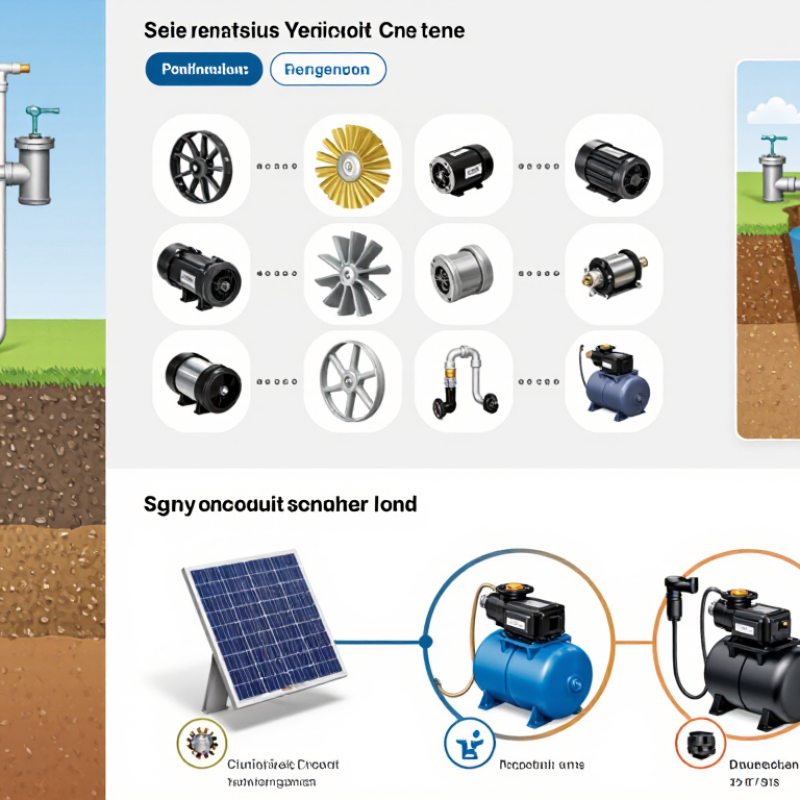
How to Choose a Submersible Water Pump

Identify the Pumping Task and Intended Application

Before comparing pump specifications, define the job clearly. A basement seepage problem is different from emptying a pond or moving wastewater. Note whether the water is clean, muddy, or mixed with leaves and other solids. A pump designed for clear water may clog when debris reaches its intake. Check the pit or tank, too: measure its width and depth, and note how quickly water enters. Details matter.

Next, map the discharge route. Measure the vertical lift from the water surface to the outlet, then estimate the pipe length and number of bends. These affect the pump’s workload and delivered flow. A long, narrow hose can reduce output, even when the pump’s rating looks adequate. Compare the expected flow with the time available for draining. If the figures are only estimates, say so; false precision can lead to a poor choice.

Consider how often the pump will run and who will maintain it. Occasional storm cleanup may call for a different setup than regular drainage in a low-lying area. Check the available power source, installation space, and access for cleaning. A float switch can help control water levels, but its movement must not be blocked by a tight pit. It is easy to overlook that small detail. Recheck your measurements before choosing; the first plan is often imperfect, especially when water levels change during use.

How to Choose a Submersible Water Pump

Identify the Pumping Task and Intended Application

Example planning flow rates for common pumping tasks. Actual requirements vary with the site and pump conditions. Before choosing a pump, check the required total dynamic head, including vertical lift and pipe losses, as well as the water’s solids content and the pump’s intended use.

Estimate Required Flow Rate and Total Pumping Head

Estimate flow from the water you need, not the pump’s advertised maximum. A Water Pump Submersible serving a household tank might need to deliver 30 litres per minute during peak use; check the fixtures likely to run together. Then compare that demand with the pump curve at your calculated head. A pump’s flow usually falls as head rises. The label alone can mislead.

Total dynamic head includes vertical lift from the pumping water level to the discharge point, pipe friction, fittings, and any required outlet pressure. For example, an 8-metre lift, 4 metres of estimated pipe and fitting losses, and 5 metres of pressure head require about 17 metres of head. Use the lowest expected water level, not just the level seen during a quick inspection. Small pipes, elbows, and long runs can add more loss than expected. I would recheck those assumptions.

The U.S. Department of Energy’s 2006 Improving Pumping System Performance sourcebook reports that pumping systems use nearly 20% of global electrical energy. That figure covers pumping broadly, not submersible pumps alone, but it shows why oversizing matters: excess capacity can waste energy and encourage throttling. For friction estimates, consult recognized pump-system guidance, such as Hydraulic Institute publications, and verify the selected operating point against the manufacturer’s curve.

Assess Water Quality, Temperature, and Solids Content

A submersible pump should match the water it will actually handle, not an idealized sample. Check for grit, rust flakes, oils, and biological growth; each can affect wear or clogging. Measure suspended-solids concentration and particle size, since a low average concentration can still hide a few oversized particles. One sample can mislead, so test during the dirtiest expected operating period.

Temperature matters too. The IAPWS water-viscosity formulation reports about 1.00 mPa·s at 20°C and 0.47 mPa·s at 60°C. That change can affect flow losses, while heat also tests motor, cable, and seal limits. Verify the pump’s stated maximum liquid temperature and cooling requirements. Small details count.

Use turbidity as a clue, not a solids measurement. The U.S. EPA’s Surface Water Treatment Rules set filtered-water turbidity at 0.3 NTU or less for at least 95% of readings, with a 1 NTU maximum for conventional or direct filtration. Those are treatment limits, not pump-selection thresholds. Compare the sample’s particle size with the pump’s published free-passage capacity, and ask about abrasive solids. I would check the figures twice; field water is rarely consistent.

Compare Pump Types, Materials, and Construction

A submersible pump works underwater, so compare more than its advertised flow rate. A clean-water model may suit a rainwater tank, while a solids-handling model is better for water carrying grit or small debris. Check the pump curve: flow usually drops as water must travel higher or farther through a narrow pipe. Measure the lift and pipe route before choosing. A mistake here is easy to make. For a Deep Submersible Solar Water Pump, also match the pump’s voltage and operating range to the solar controller and available power; sunlight changes through the day.

Tips: Check the manual’s maximum particle size, immersion depth, and duty rating. Rinse the intake screen regularly, especially after muddy water enters the tank. Small checks matter.

Material affects service life. Stainless steel resists corrosion in many water settings, while engineered plastics can be lighter and suitable for less demanding applications. Neither material is automatically right for every water source. Ask what seals, bearings, and cable jacket are made for, and inspect how the housing joins together. A sealed motor protects internal parts, but damaged cable insulation or worn seals can still cause failure. Leave room to lift the pump for inspection. That practical detail is often overlooked.

Check Power Supply, Controls, and Safety Features

When choosing a submersible water pump, match its rated voltage and current to the available supply. For solar setups, confirm that the panel output and controller suit the pump’s start-up demand, not just its running wattage. An Acdc Solar Submersible Water Pump still needs compatible controls and wiring. Check the manual before connecting anything.

Controls help prevent common failures. A float switch can stop a tank from overflowing, while dry-run and thermal overload protection can reduce damage when water levels fall or the pump works too hard. The U.S. Department of Energy’s Pumping Systems Tip Sheet reports that pumping systems account for nearly 20% of global electricity demand. Efficient operation matters. Yet the right safeguards depend on the site, water depth, and pump design; a tidy control box alone proves little.

Tips: Before installation, inspect cable insulation and seals, then test the float switch in a bucket. Use a suitable residual-current protective device, and have a qualified electrician check supply connections. Keep the control unit dry and accessible. It is easy to overlook the start-up surge, especially when choosing a solar system from panel wattage alone. Verify the pump’s rated operating range and protection features in its technical documentation.

Confirm Installation Requirements and Maintenance Needs

Before choosing a submersible pump, measure the water level, total lift, pipe length, and required flow rate. Check the casing diameter, discharge connection, water temperature, and whether the water contains sand or debris. A 220v Submersible Water Pump also needs a compatible supply, correctly rated wiring, and suitable overload protection. Confirm these details with a qualified installer; voltage alone does not determine whether a pump will perform safely. The U.S. Department of Energy’s Improving Pumping System Performance sourcebook estimates that pumping systems use nearly 20% of global electricity. Correct sizing and sound installation can help avoid needless energy use.

Plan maintenance before installation. Leave enough access to lift the pump without pulling against its cable, and fit a check valve where the system design requires one. Keep a record of flow, pressure, and motor current after commissioning; later changes can reveal wear or a blocked intake. Inspect the cable, seals, float switch, and discharge line at intervals recommended by the manufacturer. A tidy installation helps. Still, sediment can return after heavy rain, so one inspection schedule may not fit every site.

Tips: Confirm the pump’s minimum submergence and cooling requirements. Test the float switch and alarm before relying on automatic operation. Keep the intake clear of the tank floor, where grit can collect. Don’t guess at the lift height.

FAQS

How do I choose between a clean-water pump and a solids-handling pump?

Choose based on the water, not just the advertised flow rate. A rainwater tank may need a clean-water model, while gritty water may require solids handling. Check the manual’s maximum particle size.

Why should I measure lift and pipe length before choosing a pump?

Flow usually decreases as water travels higher or through a longer, narrower pipe. Measure the vertical lift and pipe route, then compare them with the pump curve. Measure first.

What should I check when choosing a pump for a solar setup?

Match the pump’s voltage and operating range to the controller and available power. Check start-up demand, not only running wattage. Sunlight changes during the day.

Which pump materials are suitable for different water conditions?

Stainless steel resists corrosion in many settings. Engineered plastics may be lighter and suitable for less demanding applications. Neither is right for every water source, so check the seals, bearings, and cable jacket too.

Which safety features can help protect a submersible pump?

A float switch can help prevent tank overflow. Dry-run and thermal overload protection can reduce damage in certain conditions. Test the float switch in a bucket before relying on it.

What measurements should I confirm before installation?

Check water level, total lift, pipe length, required flow, casing diameter, and discharge connection. Also confirm water temperature, debris levels, minimum submergence, and cooling requirements. Don’t guess at lift height.

How can I make pump maintenance easier?

Leave room to lift the pump without pulling its cable. Keep the intake clear of grit near the tank floor, and rinse the screen after muddy water enters. Small checks matter.

What should I record after the pump is installed?

Record flow, pressure, and motor current after commissioning. Compare later readings to spot possible wear or a blocked intake. I might still overlook a changing sediment level, so adjust inspection intervals to site conditions.

Conclusion

Choosing a Water Pump Submersible starts with understanding the job it needs to perform, such as draining a tank, supplying water, or handling wastewater. Estimate the required flow rate and total pumping head, including the vertical lift and resistance from pipes or fittings. These figures help narrow the options and avoid choosing a pump that cannot meet the task or uses more capacity than necessary.

Next, consider the water’s temperature, cleanliness, and solid-particle content, then compare pump types, construction materials, and durability for those conditions. Check that the available power supply matches the pump and review its controls and safety features. Before purchasing, confirm that the pump will fit the installation space, can be positioned and connected correctly, and is accessible for routine inspection and maintenance. A careful assessment of these factors supports reliable operation and a suitable choice for the intended application.
Ethan

Ethan

Ethan is a dedicated marketing professional at Zhejiang Lambo Intelligent Technology Co., Ltd., where he leverages his deep expertise in the industry to drive innovative marketing strategies. With a strong focus on enhancing brand visibility, Ethan regularly contributes to the company’s......
Previous China Top 10 AC DC Hybrid Solar Pump Manufacturers