Lately, there's been a real push in the farming world to adopt more sustainable practices. It’s exciting because one of the coolest innovations leading the charge is the use of solar water pumps. According to the International Energy Agency (IEA), switching to solar pumping can slash water costs by up to 90%. That’s a huge difference, and honestly, it’s what’s making these pumps so appealing to farmers who want to be more efficient and environmentally friendly.
Did you know that over 70% of the world’s freshwater is used in agriculture? It’s a massive chunk, so finding smarter ways to use water really matters. Reports from the Food and Agriculture Organization (FAO) suggest that solar-powered systems could be a game-changer when it comes to tackling water scarcity. Not only do they cut back on fossil fuel use, but they also provide a reliable water supply, especially in remote areas where getting electricity isn’t easy.
Of course, choosing the right solar water pump isn’t always straightforward. There are tons of options out there, and it can get pretty overwhelming. Not every pump fits every situation, and some might not be ideal for your specific needs — whether that’s your location, the type of crops you grow, or your budget. Getting a good understanding of the different choices can really help farmers make smarter decisions. Picking the right Solar Water Pump For Agriculture could be a real game-changer, boosting both your productivity and your sustainability efforts in the long run.
Understanding the Basics of OEM Wholesale Agriculture Solar Water Pumps
When considering OEM wholesale agriculture solar water pumps, it's vital to grasp the different types available. Many factors determine efficiency. For instance, pumps designed for irrigation often have varying power capacities. According to industry studies, efficient solar water pumps can reduce energy consumption by up to 80%. This reduction is crucial for farmers in remote areas where electricity is unreliable.
Solar water pumps are not just about solar panels. Components like the motor and controller also impact performance. Users should examine specifications closely. A mismatch in these components can lead to inefficiency. It’s been reported that up to 30% of users face operational issues. Sometimes, a lack of understanding of these systems leads to poor investment choices.
Another essential consideration is the pump's application. Different crops demand specific watering techniques. For instance, drip irrigation may require different pump characteristics than flood irrigation. Reports show that effective irrigation can enhance crop yields by nearly 50%. Thus, understanding the relationship between irrigation solar water pumps and agricultural needs is crucial for maximizing productivity.
Choosing OEM Wholesale Agriculture Solar Water Pumps
Key Features to Consider in Solar Water Pumps for Agriculture
When selecting an Agriculture Solar Water Pump, certain key features will significantly influence your choice. Begin by evaluating the pump's power efficiency. Some models can maximize solar energy conversion, providing reliable water flow. Consider the pump's discharge capacity too. This determines how much water can be supplied to your fields per hour. A higher capacity ensures you meet your agricultural demands.
Durability is crucial for any outdoor equipment. Look for pumps made from high-quality materials. Corrosion-resistant components extend lifespan and reduce maintenance needs. Also, pay attention to warranty details. A robust warranty can offer peace of mind and signifies confidence in the product's durability. Check whether the pump performs well under various conditions, such as extreme temperatures or different water levels.
Compatibility is another critical aspect. Make sure the pump matches your existing irrigation system. Not all pumps fit every setup. In some cases, modifications may be necessary. This could lead to unexpected expenses and time delays. Reflecting on these features can guide you toward a suitable Agriculture Solar Water Pump. Finding the right balance between performance, durability, and compatibility is essential for maximizing water efficiency in your agricultural operations.
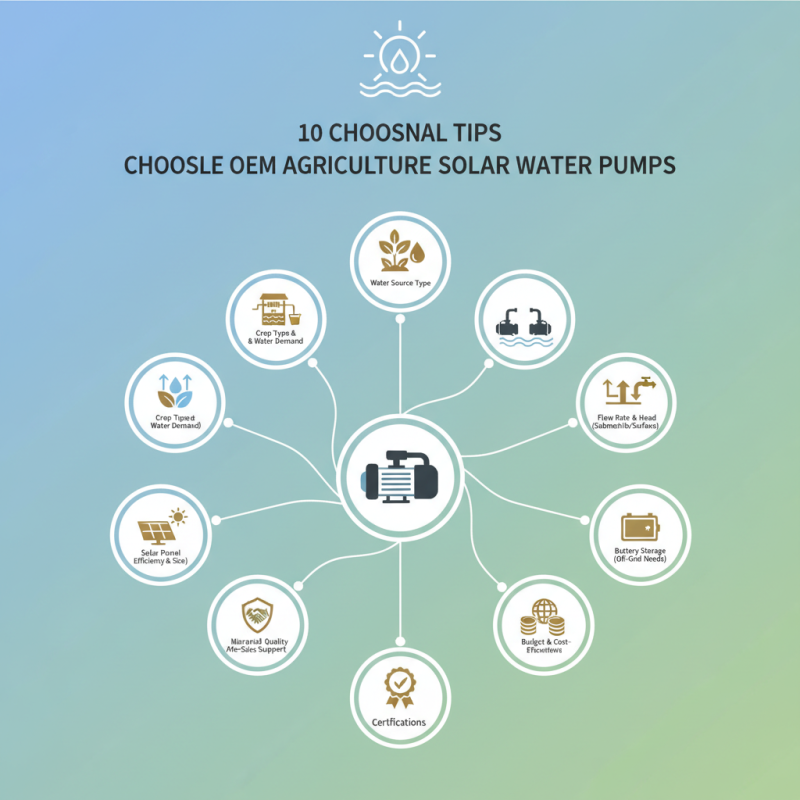
10 Essential Tips for Choosing OEM Wholesale Agriculture Solar Water Pump ZRI - Key Features to Consider in Solar Water Pumps for Agriculture
| Feature |
Description |
Importance Level |
| Power Source |
Ensure reliable solar panel performance based on local sunlight availability. |
High |
| Pump Efficiency |
Check the flow rate and energy consumption to maximize output and minimize costs. |
High |
| Durability |
Select materials that can withstand harsh agricultural environments. |
Medium |
| Maintenance |
Opt for models that require minimal maintenance and offer user-friendly servicing options. |
Medium |
| Cost |
Evaluate total cost of ownership, including purchase price, installation, and operational costs. |
High |
| Solar Panel Type |
Consider mono- or polycrystalline options based on efficiency and cost. |
Medium |
| Warranty |
Look for extended warranty periods that reflect durability and reliability. |
Medium |
| Technical Support |
Assess the availability of customer support and technical assistance. |
High |
| Size/Capacity |
Match pump capacity with the specific needs of agricultural applications. |
High |
| Compatibility |
Ensure compatibility with existing irrigation systems and infrastructure. |
Medium |
Evaluating the Efficiency of Solar Water Pumps for Agricultural Use
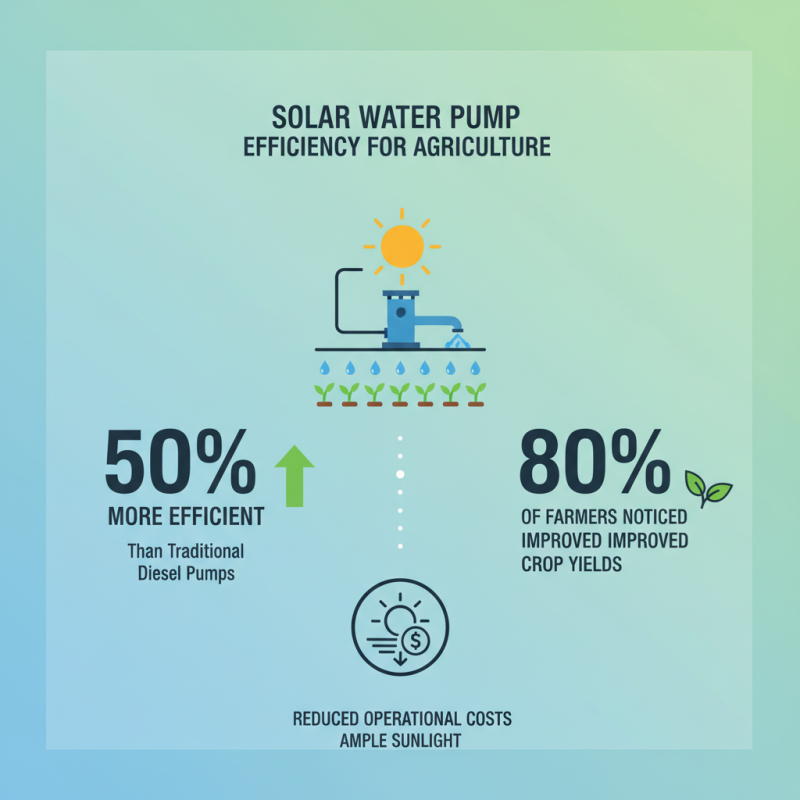
When evaluating solar water pumps for agricultural use, efficiency is a key concern. Researchers have found that solar water pumps can be up to 50% more efficient than traditional diesel pumps. In regions with ample sunlight, these pumps can significantly reduce operational costs. A recent report indicates that about 80% of farmers noticed improved crop yields after installing solar water pumps.
However, not all systems perform equally well. Performance can vary based on design, installation, and local weather conditions. In areas with inconsistent sunlight, the efficiency can drop significantly. Farmers should consider their specific needs and local climate when selecting a system. It’s vital to review data and user feedback before purchasing.
The initial cost of solar water pumps can be high, leading to hesitation. Yet, many farmers report long-term savings that outweigh these costs. The choice of the right solar water pump depends on evaluating both immediate needs and future agricultural goals. Balancing efficiency with budget constraints is crucial for a sustainable investment.
Comparing Different OEM Suppliers for Quality Assurance
When choosing an OEM supplier for agriculture solar water pumps, quality assurance is paramount. A recent industry report highlighted that over 30% of solar pump failures are linked to subpar manufacturing practices. This emphasizes the importance of thorough supplier evaluation before making a purchasing decision. Buyers should analyze the supplier's production process, materials, and certifications to ensure durability.
Tip: Always request product samples. This allows you to evaluate performance and build quality firsthand. Compare these samples across different suppliers. Quality control measures can differ significantly among OEMs, which may affect long-term reliability.
Another consideration is the supplier's track record. A reputable OEM should have verifiable references and positive feedback from previous clients. Industry standards indicate that suppliers with a history of compliance to ISO 9001 report fewer defect rates. Be cautious of suppliers with vague histories, as they may undermine your investment.
Tip: Engage in audits and site visits. Observing the production facilities can provide insights into operational practices. This step often reveals essential details that documents cannot convey, enhancing your confidence in the supplier's capabilities.
Assessing Cost vs. Value in Choosing Solar Water Pumps
When evaluating cost versus value in selecting OEM wholesale agriculture solar water pumps, it's crucial to understand your specific needs. Research indicates that proper sizing and features can significantly impact performance and longevity. For example, a study from the International Water Management Institute highlights that efficient pump design can save up to 40% in energy costs over five years.
It's important to assess both upfront costs and long-term savings. Look for manufacturers that offer high-quality components. This enhances durability and reduces maintenance. Ensure your chosen pump system matches your irrigation needs. Talking with experts in Irrigation Solar Water Pump Agriculture Manufacturers can provide insight into the best options available.
Consider the efficiency ratings of various pumps. A pump with a higher efficiency may initially cost more but will provide better value over time. Pay attention to warranty options as well. An extended warranty often reflects a manufacturer’s confidence in their product. Incorporating these details into your decision-making process will help you find the right pump that fits both your budget and irrigation needs.
Understanding Warranty and Support for Agricultural Solar Water Pumps
When selecting an OEM wholesale agricultural solar water pump, warranty and support are key considerations. A robust warranty indicates a manufacturer’s confidence in their product quality. Look for warranties that cover both parts and labor. This coverage can save farmers money on repairs. Short warranties might hint at inferior reliability. Always read the fine print to understand what is covered.
Support is just as crucial as warranty terms. A responsive customer service team can make a difference. Quick assistance can prevent operational downtime. Whether it’s troubleshooting or needing spare parts, check the communication channel offered by the manufacturer. Some may promise support but falter when you actually need help.
Consider the availability of local support too. Access to local service can minimize repair time. It’s frustrating when you’re unable to get immediate assistance. Ask potential suppliers for references or testimonials about their support services. This can provide insights into their reliability. An informed choice ensures better productivity during peak agricultural seasons.
Tips for Installation and Maintenance of Solar Water Pumps in Agriculture
When installing solar water pumps for agricultural purposes, careful planning is vital. Proper placement can significantly affect performance. Ensure that the pump is positioned to receive maximum sunlight throughout the day. Consider the surrounding landscape and how it might cast shadows during different times of the year. Adjustments may be necessary to optimize sunlight exposure.
Maintenance is equally crucial for the longevity of your system. Regularly check for debris in the pump and filtration system. Clean any obstructions to maintain efficiency. Batteries should also be monitored, as they can degrade over time. This is an area where many farmers overlook, leading to unexpected breakdowns. An efficiently maintained High-Quality Irrigation Solar Water Pump Agriculture system can drastically reduce water costs.
Document your maintenance routines. This practice helps identify recurring issues. It may highlight certain components that need replacement more frequently. Always be open to learning from each installation and maintenance cycle. Small improvements over time can lead to significant gains in efficiency and reliability.
Maximizing Water Efficiency: Insights from Industry Reports on S4HS 4 Inch Solar-Powered Borehole Screw Pumps with MPPT Technology
In the quest for sustainable water management, solar-powered borehole screw pumps are emerging as a pivotal technology, particularly those equipped with Maximum Power Point Tracking (MPPT) technology. Industry reports indicate that such systems can significantly enhance water efficiency in agricultural and municipal applications. Utilizing solar energy not only reduces reliance on conventional power sources but also lowers operational costs, making them an attractive solution for resource-constrained environments.
Data reveals that borehole screw pumps featuring MPPT technology can improve operational efficiency by up to 30% compared to traditional pumps. This is largely because MPPT technology optimizes the power output from solar panels, ensuring that the pump operates at peak efficiency regardless of varying sunlight conditions. Reports suggest that regions implementing these systems have witnessed an increase in irrigation efficiency, resulting in higher crop yields without the need for additional water resources. Moreover, the environmental benefits are substantial, as these pumps contribute to a reduction in the carbon footprint associated with water extraction.
The adoption of 4-inch solar-powered borehole screw pumps is on the rise, especially in areas facing water scarcity. With the global water crisis becoming more pressing, investing in innovative technologies like these pumps is essential for achieving long-term sustainability goals. As industry insights continue to highlight the effectiveness of these systems, stakeholders are encouraged to consider their implementation for improved water management strategies.
FAQS
: Understand your specific needs, and research sizing and features for better performance.
Efficient pumps can save up to 40% in energy costs over five years.
Upfront costs matter, but long-term savings lead to better value over time.
A solid warranty shows the manufacturer's confidence and can save you repair costs.
Check the manufacturer's support channels and response times for efficiency.
Read the fine print to understand coverage for parts and labor.
Local access can minimize downtime and speed up repairs during busy seasons.
High-efficiency pumps may cost more initially but offer better long-term savings.
Short warranties might indicate potential reliability issues with the product.
Ask for references or testimonials to gauge their support and reliability.
Conclusion
When selecting an Agriculture Solar Water Pump through OEM wholesale channels, it’s crucial to first grasp the foundational aspects of these systems. Key features such as pump efficiency, power output, and durability should be evaluated to ensure that the solution meets agricultural needs effectively. Comparing different OEM suppliers will aid in determining quality assurance, while a thorough assessment of cost versus value will help in making a financially sound decision.
Moreover, understanding the warranty and support offered for Agriculture Solar Water Pumps is essential for long-term satisfaction and reliability. Proper installation and regular maintenance tips can significantly enhance the performance and lifespan of these pumps, ensuring that they cater to agricultural irrigation demands effectively. By considering these essential factors, farmers can make informed choices that enhance irrigation efficiency and contribute to sustainable farming practices.

 DC SOLAR SUBMERSIBLE PUMP
 AC/DC Solar submersible Pump
 DC Solar Surface Pump
 AC/DC solar surface Pump
 Solar swimming Pool Pump
 Built-in Controller Solar Pump
 Solar Pump inverter
 Pump Accessories





 Mr Youkee Kong