Leave Your Message
0%

Choosing a dependable MPPT controller supplier in China isn’t just about comparing prices or shiny efficiency numbers. Trust me, product quality can really vary a lot—even between models from the same brand. So, in this guide, I’ll walk you through ten well-known suppliers, focusing on practical buying factors like conversion efficiency, stability in charging, thermal protection, warranty details, certifications, and after-sales support.

We’re looking at companies like EPEVER, SRNE, MUST, PowMr, Victron Energy China, Mecer, Renogy China, Lersion, Y-Solar, and Felicity Solar. Each one caters to different needs—some are perfect for small off-grid cabins, while others are geared towards bigger commercial solar setups. Some of these controllers are pretty straightforward, featuring simple LCD displays, while others offer cool extras like remote monitoring, lithium battery compatibility, or higher current capacity. Also, keep in mind, installation details matter. A controller installed inside a hot metal cabinet will face totally different challenges than one used in a ventilated home system.

Honestly, no list is perfect. The rankings might change over time as manufacturers update firmware, upgrade their components, or tweak warranty policies. Plus, it’s really important to double-check technical specs. Something like a claimed tracking efficiency can vary based on sunlight, battery voltage, temperature, and testing conditions. Before you drop serious cash on a large order, don’t hesitate to ask for datasheets, test reports, samples, and clear info about after-sales support.

This intro is meant to give you a practical outlook. I’m all about focusing on real evidence rather than just flashy slogans. But let’s be honest—online info isn’t always consistent. What works in lab conditions might perform differently out in the field. So, think of this guide as a starting point. Make sure to verify things like compatibility, certifications, manufacturing capacity, and how responsive the supplier is before making any final decisions.
What Are the Top 10 MPPT Controller Suppliers in China?

What Is an MPPT Solar Charge Controller?

An MPPT solar charge controller is the electrical bridge between photovoltaic panels and a battery bank. MPPT means Maximum Power Point Tracking. It continuously adjusts panel voltage and current to harvest more usable energy. A PWM controller pulls panel voltage closer to battery voltage. MPPT technology usually performs better, especially on cold mornings or when panel voltage exceeds battery voltage.

In field installations, I watch the controller display during changing sunlight. A 40 Amp Mppt Solar Charge Controller may accept roughly 40 amps of charging current, but its panel input limit still matters. Check maximum PV voltage, battery chemistry settings, conversion efficiency, and heat dissipation before purchase. A shaded panel string can reduce output sharply. Cable length matters too. Thin cables quietly waste energy. Small details matter.

When comparing Chinese suppliers, request test reports, wiring diagrams, protection details, and warranty procedures. Reliable manufacturers explain overcurrent, reverse-polarity, overheating, and low-voltage safeguards clearly. Ask whether ratings apply at a stated ambient temperature, because laboratory figures can mislead. Remote monitoring can help, but software quality varies. I have seen attractive specifications fail under poor ventilation. That result deserves more skepticism. Supplier experience, traceable quality control, and responsive technical support often matter more than a low quotation.

How to Evaluate Chinese MPPT Controller Suppliers

When evaluating Chinese MPPT controller suppliers, start with evidence rather than catalog claims. Ask for efficiency curves at different battery voltages, not only a peak figure. A controller rated at 98% may perform differently in a hot cabinet. Check tracking behavior under passing clouds, partial shading, and low morning irradiance.

Real conditions matter.

Request a sample before discussing large-volume purchasing. Record charging voltage, conversion efficiency, fan noise, and temperature after several hours under load. I also inspect terminal torque, enclosure seals, cable labels, and firmware update procedures. These small details often reveal manufacturing discipline.

Ask whether tests are performed on every unit or only on random batches. The answer should be documented, not casually promised.

Review factory capability through audit records, calibration certificates, traceable component data, and a clear warranty process. Verify relevant safety and electromagnetic compliance for your target market, because certificates may cover only a specific model. Discuss minimum order quantities, spare parts, response times, and software support in writing.

A responsive engineer is valuable, but one conversation is not proof. My own evaluations have sometimes favored a lower-priced supplier too quickly; later, inconsistent thermal testing exposed the mistake. Leave room for doubt, and repeat the tests.

Key Features That Define Reliable MPPT Controllers

Reliable MPPT controllers begin with measurable conversion performance, not attractive displays. The IEA PVPS Trends in Photovoltaic Applications 2024 report recorded about 456 GW of new solar capacity in 2023. That growth increases demand for controllers that handle changing irradiance without unstable tracking. A dependable unit should maintain high tracking efficiency, limit night-time consumption, and support clear battery charging stages.

Heat matters. During testing, technicians should inspect output ripple, terminal temperature, and recovery after a sudden cloud event. IEC 62509 defines performance principles for photovoltaic battery charge controllers, while IEC 62109 addresses power-converter safety. These references help buyers compare 40 Amp Mppt Solar Charge Controller Manufacturers beyond catalogue claims. Look for documented efficiency curves, rated current under realistic ambient temperatures, and protection against reverse polarity, overcurrent, and excessive temperature.

Communication quality also defines reliability. A controller should record daily energy, charging voltage, fault history, and sensor readings without confusing error codes. Installers often prefer replaceable terminals and coated circuit boards in humid environments. However, remote monitoring can fail when cellular coverage is weak. That weakness is easy to overlook. I would also question any efficiency figure measured only at one voltage and low temperature. Field validation across partial shade, battery aging, and repeated thermal cycling gives stronger evidence than a single laboratory result. Cost still matters, but a cheap controller with poor heat dissipation may quietly reduce harvest for years.

What Are the Top 10 MPPT Controller Suppliers in China? - Key Features That Define Reliable MPPT Controllers

Anonymized comparison of representative Chinese MPPT controller supplier profiles based on commonly specified technical, compliance, and service capabilities.

Rank Supplier Profile Typical MPPT Efficiency MPPT Voltage Range Maximum PV Input Voltage Common Output Voltage Rated Charge Current Protection Functions Communication Options Compliance Coverage Operating Temperature Enclosure Rating Warranty Term Best-Fit Applications
01 Supplier Profile A 99% Battery voltage + 2 V to 150 V 150 V DC 12 V / 24 V / 48 V 20–100 A Overcharge, over-discharge, reverse polarity, short circuit, over-temperature RS485, CAN, Bluetooth option CE, RoHS, IEC-based testing -35°C to +55°C IP32–IP43 2 years Residential solar storage and small commercial systems
02 Supplier Profile B 98% 20–150 V DC 150 V DC 12 V / 24 V / 48 V 30–80 A PV overvoltage, battery temperature compensation, reverse current, thermal protection RS485, Ethernet gateway option CE, RoHS, EMC testing -20°C to +50°C IP30–IP41 2 years Off-grid homes, telecom backup, and remote monitoring projects
03 Supplier Profile C 99% 30–200 V DC 200 V DC 24 V / 48 V / 96 V 60–120 A Surge protection, current limiting, over-temperature, battery fault alarm RS485, CAN, dry contact CE, RoHS, IEC 62109-oriented design -30°C to +60°C IP43–IP65 3 years Industrial battery banks and microgrid installations
04 Supplier Profile D 98% 18–100 V DC 100 V DC 12 V / 24 V / 48 V 10–60 A Reverse connection, load short circuit, overcurrent, low-temperature charging control RS485, Bluetooth option CE, RoHS -20°C to +55°C IP32–IP65 2 years Portable power, cabins, RVs, and agricultural systems
05 Supplier Profile E 99% 40–250 V DC 250 V DC 48 V / 96 V / 192 V 80–200 A DC surge protection, isolation monitoring, overvoltage, overcurrent, thermal shutdown RS485, CAN, Ethernet, Modbus option CE, RoHS, EMC and safety verification -25°C to +60°C IP54–IP65 3 years Commercial energy storage and high-voltage battery systems
06 Supplier Profile F 98% 20–120 V DC 150 V DC 12 V / 24 V / 48 V 20–80 A Overcharge, reverse polarity, short circuit, lightning surge, heat protection RS485, USB service port CE, RoHS, FCC-oriented EMC design -35°C to +50°C IP32–IP54 2 years Distributed solar, street lighting, and backup power
07 Supplier Profile G 99% 50–300 V DC 300 V DC 48 V / 96 V / 192 V 100–300 A String fault detection, surge protection, overcurrent, thermal derating, battery isolation alarm CAN, RS485, Ethernet, Modbus TCP CE, RoHS, IEC-based safety testing -20°C to +55°C IP54–IP65 3 years Commercial and utility-scale solar-plus-storage systems
08 Supplier Profile H 98% 15–100 V DC 100 V DC 12 V / 24 V / 48 V 15–60 A Battery temperature sensing, reverse polarity, over-discharge, load protection RS485, Bluetooth option CE, RoHS -20°C to +60°C IP32–IP67 2 years Marine, outdoor, mobile, and small off-grid applications
09 Supplier Profile I 99% 30–200 V DC 200 V DC 24 V / 48 V / 96 V 40–150 A PV and battery overvoltage, reverse polarity, overcurrent, short circuit, thermal protection RS485, CAN, Wi-Fi gateway option CE, RoHS, EMC testing -30°C to +55°C IP43–IP65 2 years Hybrid inverter systems and small microgrids
10 Supplier Profile J 98% 20–150 V DC 150 V DC 12 V / 24 V / 48 V 30–100 A Overcharge, over-discharge, reverse current, short circuit, over-temperature, surge protection RS485, CAN, LCD monitoring CE, RoHS, IEC-oriented design -25°C to +55°C IP32–IP54 2 years OEM projects, rural electrification, and standard solar installations
Technical note: Values are representative specification ranges commonly available from Chinese MPPT controller suppliers. Actual performance depends on the selected model, battery chemistry, system voltage, installation conditions, and certification scope.

Top 10 MPPT Controller Suppliers in China

China’s top 10 MPPT controller suppliers are often judged by engineering depth, not catalog size. Reliable suppliers publish tracking efficiency, standby loss, thermal limits, and protection data. Buyers should request test records for low-voltage startup and sudden cloud changes. A controller that recovers smoothly protects batteries during unstable weather. Small details matter.

Among leading Chinese suppliers, some specialize in compact off-grid units, while others build high-current systems for telecom and commercial arrays. A High-Quality 40 Amp Mppt Solar Charge Controller should support accurate battery charging, clear fault codes, and stable operation near its rated current. Ask whether the 40-amp rating applies at the stated ambient temperature. It often does not. Check terminal heating, enclosure sealing, firmware updates, and replacement parts before signing a purchase agreement.

Factory experience becomes visible during inspection. Look for calibrated test benches, traceable component records, burn-in procedures, and technicians who explain failures without vague promises. Independent sampling can verify efficiency, electromagnetic performance, and temperature behavior. Communication quality also matters when firmware or wiring problems appear. No supplier is perfect. A careful buyer should compare warranty terms, response times, and field references from similar climates.

Product Range, Certifications, and Manufacturing Strengths

China’s leading MPPT controller suppliers usually cover small off-grid units, residential systems, and commercial solar arrays. Their ranges may include 10A to 100A controllers, 12V to 48V battery support, and PWM alternatives for budget projects. Some suppliers also offer lithium battery profiles, remote monitoring, LCD displays, and communication ports. Product depth matters because one project may need several controller sizes.

Certifications separate serious manufacturers from simple assemblers. Look for CE, RoHS, ISO 9001, and relevant IEC testing, such as IEC 62509 where applicable. Certification should match the exact model, not only the factory. Check test reports, label details, protection ratings, and regional compliance documents. A supplier with clear documentation appears more reliable during procurement. Still, paperwork can hide gaps.

Manufacturing strength is visible on the factory floor. Useful signs include automated PCB assembly, firmware testing, thermal cycling, load testing, and serial-number traceability. Ask whether each controller receives a recorded final inspection. Large suppliers may provide private labeling, firmware changes, and stable monthly output. Smaller factories may respond faster to technical requests. That advantage can disappear during peak seasons. My practical concern is efficiency claims. A controller advertised at 99% may perform differently under heat, weak sunlight, or unstable battery voltage. Request samples and test them under realistic conditions before approving a large order.

Top 10 MPPT Controller Suppliers in China: Product Range, Certifications, and Manufacturing Strengths

Nominal battery-voltage classes are a practical way to compare MPPT controller product ranges without displaying company or brand data. The chart covers widely used 12V, 24V, 36V, 48V, 96V, and 120V system classes. When evaluating suppliers, buyers should also verify IEC 62109 safety compliance, CE and RoHS conformity, ISO 9001 quality management, photovoltaic input-voltage limits, thermal design, production testing, and customization capability.

How to Select the Right Supplier for Your Solar Project

Selecting the right Chinese MPPT supplier requires more than comparing prices. IRENA’s Renewable Capacity Statistics 2024 reports nearly 346 GW of solar capacity added worldwide in 2023. This growth increases demand for controllers that remain stable under heat, dust, and changing battery conditions. Match the controller’s voltage window, charging current, battery chemistry, and load profile with your project. A supplier offering a 40 Amp Mppt Solar Charge Controller Manufacturer solution should provide clear efficiency curves, temperature derating data, and protection thresholds.

Ask for test reports linked to recognized IEC requirements, not just marketing certificates. Check whether the factory performs burn-in testing, component traceability, and batch-level inspection. Request samples before signing a large order. Measure charging behavior at different irradiance levels, cable lengths, and ambient temperatures. Small details matter. A controller may perform well in a cool laboratory but reduce output inside a hot enclosure.

Supplier reliability also depends on service. Review warranty terms, spare-part availability, firmware procedures, and response times in writing. IEA’s Renewables 2024 analysis expects solar PV to remain the leading source of new renewable capacity through 2030, so long-term support deserves serious attention. I would still question unusually high efficiency claims without independent evidence. No datasheet replaces a site test. A lower-cost unit can become expensive when communication faults, unstable charging, or delayed replacements interrupt project operation.

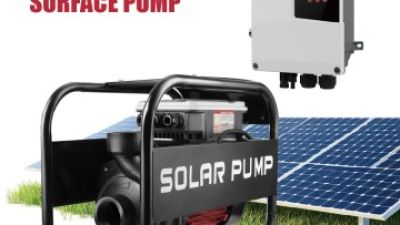
SSHF-H Solar-Powered Centrifugal Surface Pump: Efficient Agricultural Irrigation with MPPT Technology

The SSHF-H solar-powered centrifugal surface pump is designed to support efficient agricultural irrigation in areas where grid electricity is limited or unavailable. Powered by solar energy, it draws water from sources such as storage tanks, canals, and shallow reservoirs, then delivers a steady flow for sprinklers, drip systems, and field distribution networks. Its surface-mounted structure allows convenient installation, inspection, and routine maintenance without the need for deep-well equipment.

A key feature is its MPPT technology, which continuously adjusts the operating point to make better use of changing solar conditions. By tracking the available power from the solar array, the pump can maintain efficient performance during variations in sunlight caused by clouds, morning and afternoon transitions, or seasonal changes. This helps reduce energy waste while supporting reliable irrigation throughout the day.

The centrifugal design provides smooth water transfer and is suitable for farms, nurseries, greenhouse cultivation, and small-scale water management projects. With an appropriately sized solar array and irrigation layout, the system can help lower operating costs, reduce dependence on conventional power sources, and provide a practical solution for sustainable agricultural water delivery.

FAQS

What evidence should I request from an MPPT controller supplier?

Request efficiency curves at several battery voltages. Peak efficiency alone is insufficient. Ask for tracking data during clouds, partial shading, and weak morning sunlight. Real conditions expose weaknesses.

Why should I test a sample before placing a large order?

A sample reveals practical behavior. Measure charging voltage, conversion efficiency, fan noise, and temperature after several hours. Inspect terminals, cable labels, enclosure seals, and firmware procedures. Catalog claims can look better than real performance.

How can I check whether a current rating is realistic?

Ask whether the rating applies at the stated ambient temperature. Test the controller near its rated current. Check terminal heating and enclosure temperature. A 40-amp rating may change in a hot cabinet.

What factory records indicate strong manufacturing control?

Look for calibrated test benches and traceable component records. Review burn-in procedures, thermal cycling, load testing, and serial-number tracking. Ask whether every unit receives a recorded final inspection. Random testing may leave hidden defects.

Which certifications and documents should buyers verify?

Confirm that certificates match the exact controller model. Review CE, RoHS, ISO 9001, and applicable IEC testing documents. Check report numbers, product labels, protection ratings, and regional requirements. Paperwork can still contain gaps.

What product features should different solar projects consider?

Product ranges may cover 10A to 100A controllers and 12V to 48V batteries. Some projects need lithium profiles, remote monitoring, displays, or communication ports. Others only need basic charging. Choose features that match the installation, not the brochure.

How should I evaluate warranty and technical support?

Put warranty terms, spare parts, response times, and software support in writing. Ask how firmware and wiring problems are handled. One helpful engineer is not proof of long-term support. Request references from similar climates when possible.

What should an independent inspection focus on?

Inspect thermal behavior, charging accuracy, electromagnetic performance, and recovery after sudden cloud changes. Check low-voltage startup and fault-code clarity. Repeat important tests. My earlier evaluations sometimes trusted low prices too quickly. That mistake was expensive in time.

Conclusion

This guide explains what an Mppt Controller is and how it improves solar energy harvesting by continuously adjusting the operating point of photovoltaic panels. It outlines the main factors for evaluating Chinese suppliers, including conversion efficiency, tracking performance, load compatibility, thermal management, protective functions, product consistency, technical support, and delivery capability. Reliable controllers should also demonstrate stable operation under changing weather and system conditions.

The article introduces ten leading supplier types in China without focusing on brand names, comparing their product ranges, certifications, manufacturing capacity, customization options, and quality-control practices. It also explains how to select the right supplier according to project size, battery chemistry, voltage requirements, communication features, installation environment, budget, and after-sales service. By combining technical specifications with supplier reliability and compliance considerations, solar project developers can make a practical and informed purchasing decision.
Isabelle

Isabelle

Isabelle is a dedicated marketing professional at Zhejiang Lanbo Intelligent Technology Co., Ltd., where her expertise in the field shines through her work. With a deep understanding of the company's innovative products, she plays a pivotal role in conveying the brand's message and values to a......
Previous China Top AC Pump Controller Suppliers How to Choose?