China’s borehole pump market is pretty diverse, featuring big export companies, regional specialists, and brands with their own unique strengths. Honestly, comparing them isn’t just about flipping through a catalog — there’s more to think about. Things like how deep the well is, the size of the bore, how much water you need to move, the water quality, and your power supply all play a role in choosing the right pump. A model that works great in a clear, steady water well might not perform well in a place with more sand or variable demand. Little details really do matter here.
Pump engineer Igor J. Karassik once said something that’s a good reminder for anyone buying a pump: “Match the pump to the well, not just to the price tag.” Just a heads-up — that’s a paraphrase, not a direct quote. But it hits the point home: when it comes to purchasing, it’s all about making sure the pump fits the conditions of the well and the installation environment.
In this article, we take a look at Chinese manufacturers like Shimge, LEO Group, Dayuan Pump, and CNP. We’re going through their product ranges, how much experience they have in manufacturing, the quality of their technical info, support services, and how clearly they display performance data. All of these things help buyers compare different brands without assuming that any one company is automatically the best. Don’t forget to ask for a pump curve, info about materials, and advice on how to install and maintain the pump. And then, double-check if the model you’re looking at really fits the site conditions.
Of course, specs might look perfect on paper, but real wells are often way less predictable. Also, always be cautious of what suppliers claim — it’s a good idea to verify everything with a proper site assessment. This guide’s goal isn’t to give you all the answers but to give you a solid starting point for evaluating Chinese-made borehole pumps — real-world stuff that helps you make smarter choices.
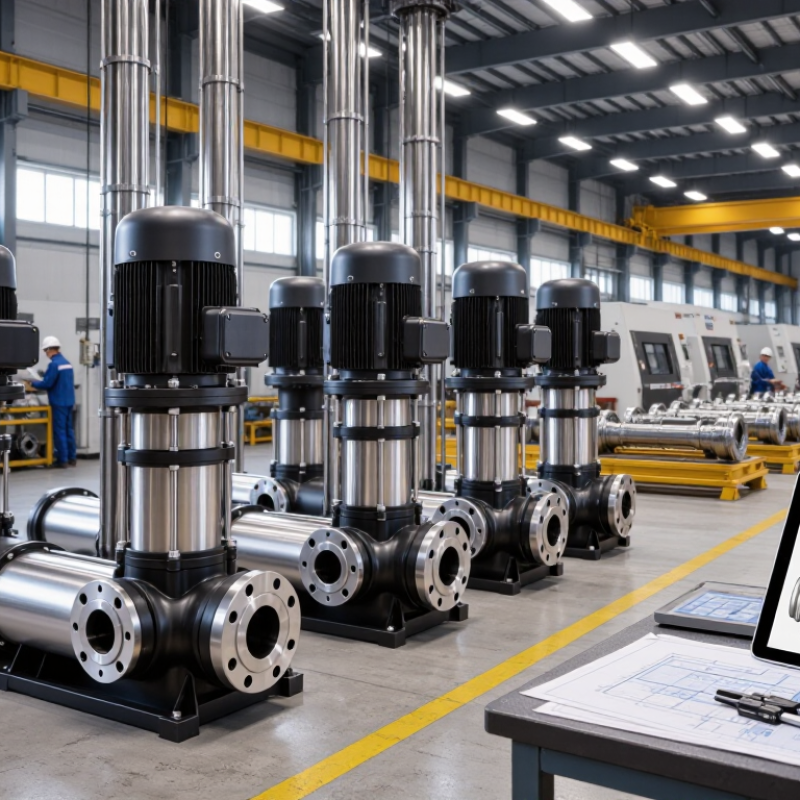
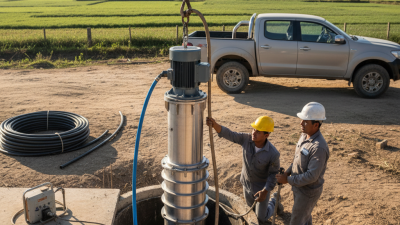
A borehole pump lifts groundwater through a narrow, deep well. Its pump unit sits below the water level, while a rising pipe carries water to a tank or irrigation line. In many systems, an electric motor spins impellers, creating pressure that pushes water upward. The pump must match the borehole’s depth, water yield, and required flow. A powerful model is not automatically the right one.
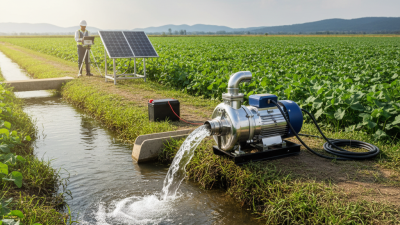
A controller can protect the motor from dry running and unstable voltage. Solar Borehole Pumps use photovoltaic panels to supply electricity, often through a controller that adjusts pump speed as sunlight changes.
The FAO AQUASTAT database reports that agriculture accounts for about 70% of global freshwater withdrawals, making efficient pumping and careful water use important.
Still, a pump’s performance depends on site conditions, not just its label.
Tips: Measure the borehole’s static and pumping water levels before choosing equipment. Check the manufacturer’s flow curve against the lift height, and include pipe friction in the estimate. Keep the intake clear of sediment. Small details matter. One common mistake is sizing for peak demand alone; a smaller, well-matched pump may run more reliably, though actual results should be verified on site.
China’s borehole pump industry is organized around a layered supply chain, not just finished-pump factories. Specialist suppliers make motors, cast iron or stainless-steel casings, impellers, cables, and control panels. Pump manufacturers then assemble and test units for different well depths, water conditions, and flow rates. Some firms focus on components; others integrate pumps with sensors, drives, or solar power systems. The boundaries can blur.
Regional clusters help shape this structure. Manufacturing and export businesses are concentrated in eastern and coastal provinces, where component suppliers, ports, and engineering services are easier to access. Smaller workshops may offer flexible machining, while larger production lines can support repeat orders and standardized testing. That distinction matters, though a factory’s size alone does not prove reliability.
Demand is tied to agriculture, rural water supply, and infrastructure projects. China’s Ministry of Water Resources reported completed water conservancy investment of 1.1996 trillion yuan in 2023. This is not a borehole-pump sales figure, but it shows the scale of the wider water sector. Solar Borehole Pumps Manufacturers form a more specialized segment, combining pump assembly with photovoltaic controls and system design. Buyers should still check materials, head-flow curves, and endurance-test records. Paper specifications can look reassuring; field conditions are less tidy.
Chinese borehole-pump manufacturers are notable for different strengths, not one universal ranking. Some focus on deep-well submersible units, with stainless-steel pump bodies and compact motor assemblies. Others emphasize casting, machining, export production, or solar-compatible systems. These capabilities matter because a pump operating hundreds of metres underground is costly to retrieve when seals, bearings, or motor protection fail. The World Bank report The Hidden Wealth of Nations notes that groundwater supplies nearly half of global drinking water and about 43% of irrigation water. That demand makes dependable performance more important than a low purchase price. High-Quality Solar Borehole Pumps can suit remote sites, but output still depends on sunlight, well yield, and correct system sizing.
For a practical shortlist, compare documented head and flow curves, motor efficiency, cable and seal materials, and dry-run protection. Ask manufacturers for test records tied to the exact model, not a similar product family. Check whether spare parts are available and whether warranty terms cover the motor, control unit, and pump separately. A factory visit can reveal assembly and inspection practices, though one polished production line does not prove every batch is consistent. Public information rarely supports a reliable “top manufacturers” ranking, so treat broad market claims cautiously.
Tips: Match the pump curve to a measured well test. Request corrosion details for the actual water chemistry. Confirm the local service route before ordering. A small omission here can become a very expensive retrieval job.
Rated head is a useful specification for comparing borehole pumps. The chart shows the ideal pressure equivalent of selected head values; it does not rank manufacturers or represent product-specific performance.
Calculated using fresh water and the hydrostatic relation between head and pressure (1 m of water ≈ 0.0981 bar). Actual operating pressure depends on flow, pipe friction, elevation, and the specific pump curve. Compare verified manufacturer specifications when evaluating products.
Chinese borehole-pump manufacturers commonly offer submersible pumps, motors, control panels, and installation accessories. Product choices often include stainless-steel or cast-iron construction, different flow rates, and options for varying well depths. These pumps serve farm irrigation, livestock watering, rural drinking-water systems, and industrial water supply. Some suppliers also provide solar-powered configurations. A Solar Borehole Pumps Manufacturer may pair a pump with photovoltaic panels and a controller, but output still depends on sunlight, well yield, and storage capacity.
The FAO AQUASTAT database attributes roughly 70% of global freshwater withdrawals to agriculture, helping explain the demand for irrigation pumps. The WHO/UNICEF Joint Monitoring Programme reported that 2.2 billion people lacked safely managed drinking-water services in 2022; reliable borehole equipment can support supply projects where groundwater is suitable. Check rated flow, total dynamic head, motor protection, and water quality before selecting a model. A catalog can still mislead. Rated performance may change with installation depth, pipe losses, and seasonal groundwater levels. Manufacturer coverage is broad, but suitability is site-specific.
When comparing leading borehole pump manufacturers in China, look beyond catalog capacity and polished product photos. Strong engineering shows in clear pump curves, stable efficiency near the stated duty point, and motor designs suited to continuous submersion. Ask for test data tied to a specific model, including flow, head, power draw, and vibration. Numbers should match the pump’s nameplate and operating manual. Small details matter.
Tips: Compare stainless-steel grades, shaft alignment, cable entry sealing, and impeller wear resistance. Request material specifications and sample inspection records. A smooth test run is useful, but one run cannot prove years of service. Check how quality checks are documented across production batches.
Technology claims deserve practical questions. Can the manufacturer explain how the pump handles changing water levels, fine sand, or frequent starts? Are thermal protection and insulation ratings stated plainly? Reliable suppliers usually provide traceable test reports, installation guidance, and realistic maintenance intervals. Response quality matters, too. Vague answers may signal weak process control, though they are not proof of poor products. I would also compare warranty terms with local service access; a technically advanced pump is less useful if replacement parts take weeks to arrive.
A company-by-company ranking requires comparable, model-specific test reports and verified factory records. The table below provides evidence-based criteria for evaluating manufacturers without assigning unsupported performance claims to unnamed companies.
| Comparison dimension | Evidence to request | What strong evidence demonstrates | How to compare fairly |
|---|---|---|---|
| Hydraulic performance | A pump curve and test report showing flow, head, power, and efficiency for the exact model and impeller configuration. | Measured performance can be checked against the published duty point rather than inferred from a catalogue description. | Compare models at the same flow and head. Check whether testing follows ISO 9906, which specifies acceptance tests for rotodynamic pump hydraulic performance. |
| Motor design and protection | Motor data sheet, rated operating conditions, insulation details, protection arrangements, and applicable test records. | Documentation clarifies the intended electrical supply and the conditions under which the motor is designed to operate. | Compare equivalent voltage, frequency, power, and installation conditions. Do not treat a general motor specification as proof of the complete pump's efficiency. |
| Materials and corrosion resistance | A bill of materials identifying wetted components, material grades, and any coating or corrosion-resistance test information. | The buyer can assess whether materials suit the water chemistry and operating environment. Stainless-steel grade alone does not guarantee corrosion-free service. | Compare the same components and stated material grades, then assess suitability for the actual water quality, including chloride content where relevant. |
| Manufacturing quality control | Documented inspection and test procedures, production traceability, calibration records, and sample quality-control reports. | Records show how checks are applied and whether test results can be linked to a specific production batch or unit. | Review recent, model-specific records and confirm the scope and validity of any claimed management-system certification. |
| Ingress protection | The declared IP rating and documentation identifying which component or enclosure the rating covers. | An IP code classifies protection provided by an enclosure against access, solid objects, and water under defined test conditions. | Compare ratings only for equivalent parts and installation conditions; an IP rating is not a general measure of pump durability or hydraulic quality. |
| Reliability and service support | Written warranty terms, spare-parts availability, repair guidance, and documented service or failure data where available. | Clear support terms help establish the expected response process and the practical cost of maintaining the equipment. | Compare warranty exclusions, coverage period, local service access, and parts lead times rather than relying on general reliability claims. |
| Overall technology and quality assessment | A matched set of model-specific documents: performance curve, test report, materials list, motor data, and quality records. | A complete evidence set supports a more meaningful technical comparison than broad claims such as “high efficiency” or “premium quality.” | Rank suppliers only after comparing products at the same duty point and installation requirements, and independently verifying critical claims. |
Note: Borehole pump performance and service life depend on the specific model, sizing, water conditions, installation, and maintenance. The criteria above are evaluation benchmarks, not manufacturer-specific ratings.
For borehole pumps, supplier evaluation should start with the well conditions, not a catalogue. Record the bore diameter, water level, required flow, total pumping head, and sand content. Then ask for a pump curve showing the proposed duty point. A curve that misses your actual operating conditions can mean weak output or wasted energy.
The U.S. Department of Energy’s Improving Pumping System Performance guide reports that pumping systems use nearly 20% of global electricity, with potential energy savings of 20–50% in many systems. That makes motor efficiency and realistic operating-point data worth checking. Request test results for flow, head, power, and efficiency, and ask whether testing follows ISO 9906 acceptance criteria. Paperwork matters. So does seeing the test conditions.
Check wetted materials, cable length, motor protection, spare-part availability, and written warranty terms. Ask how the supplier handles a pump that fails to meet its stated curve. A factory test is useful, but it is only a snapshot; installation and water quality can change performance. I would not treat a polished brochure as proof. One detail buyers sometimes overlook: confirm that the quoted pump can pass through the actual bore casing, not just the nominal well diameter.
The Z3PCB-A/D 3-inch AC/DC hybrid solar borehole pump is designed to provide a practical water supply in locations where grid power may be limited or unavailable. By using solar energy as a primary power source and supporting AC input, it offers flexibility as sunlight and power conditions change. This hybrid setup can help keep water moving for household use, livestock, gardens, and other everyday needs, while making use of available energy sources.
Its compact 3-inch format is suited to borehole installations where a smaller pump profile is important. A well-planned system can pair the pump with an appropriately sized solar array, suitable cabling, and reliable water storage to match local demand. During sunny periods, solar power can reduce dependence on conventional electricity; when conditions require, AC power provides another operating option. Selecting equipment according to borehole depth, water levels, and required flow helps create an efficient, dependable water solution for remote sites, farms, and properties beyond easy reach of the power grid.
It lifts groundwater from a narrow, deep well. The pump sits below the water level, and a rising pipe carries water to a tank or irrigation line.
An electric motor spins impellers, creating pressure that pushes water through the pipe. A controller can help protect the motor from dry running and unstable voltage.
Measure the static and pumping water levels, then compare the flow curve with the required lift. Include pipe friction and expected water demand. A bigger pump is not always better.
Well depth, seasonal water levels, water yield, sediment, and pipe losses all matter. Keep the intake clear. Site conditions can differ from the catalog.
Offerings can include submersible pumps, motors, control panels, cables, casings, and installation accessories. Materials may include stainless steel or cast iron. The boundaries between suppliers can blur.
Common uses include farm irrigation, livestock watering, rural water systems, and industrial water supply. The right model depends on the water source and required flow.
Photovoltaic panels supply electricity, while a controller can adjust pump speed as sunlight changes. Sunlight varies. Storage capacity and well yield also affect the water available.
Review materials, head-flow curves, motor protection, and endurance-test records. Ask how performance was tested. A polished specification sheet is not the whole story.
Borehole Pumps are designed to lift water from deep wells, using a motor and impellers to move water upward through a delivery pipe. China’s borehole pump industry includes manufacturers with different levels of specialization, production capacity, and technical expertise. Their product ranges may cover pumps for residential water supply, agriculture, industrial processes, and other applications, with models suited to varying well depths, flow rates, and operating conditions.
When comparing suppliers, buyers can consider product design, materials, motor efficiency, quality-control procedures, testing practices, customization options, and after-sales support. Certifications and clear technical documentation can also help assess a supplier’s capabilities. Matching pump specifications to the intended water source and application is essential for reliable performance, while evaluating manufacturing consistency and service responsiveness can support a more informed purchasing decision.