Picking the right powered water pump isn't just about reading product specs or labels — it really depends on the actual conditions at your site. Whether you're dealing with a farm, a construction site, a mine, or a municipal network, each one has its own needs: different flow rates, pressure requirements, power sources, and maintenance routines. The International Energy Agency points out that while more places are gaining electricity access, reliable power supplies are still patchy, especially in rural areas. That’s why diesel, electric, and solar-powered pumps all still matter for folks around the world.
In this guide, we’ll look at ten practical types of pumps—things like centrifugal, diaphragm, submersible, booster, sewage, and solar-powered models. According to FAO AQUASTAT, agriculture uses the biggest chunk of the world's freshwater, so pump efficiency isn’t just a business issue; it’s also about conserving our environment. The World Bank adds that having reliable water infrastructure can really boost rural productivity—though, to be honest, how well a pump performs often depends on good installation. Little things—like pipe friction, dust, or spare parts—actually make a difference.
When you’re shopping around, you might compare solar-powered water pumps, but don’t just go by specs alone—things can be deceiving. A cheap price tag might hide weaker seals, complicated controls, or limited support if something breaks. The U.S. Department of Energy stresses that efficiency is a big picture, long-term cost thing—it's not just a marketing hype. But keep in mind, the data might differ depending on where you are, how the tests were run, or the workload. So, it’s worth paying attention to that. Usually, the most powerful pump isn’t the best choice. What really matters is finding a pump that can provide steady water service, keep operating costs manageable, and be repairable when needed over time.
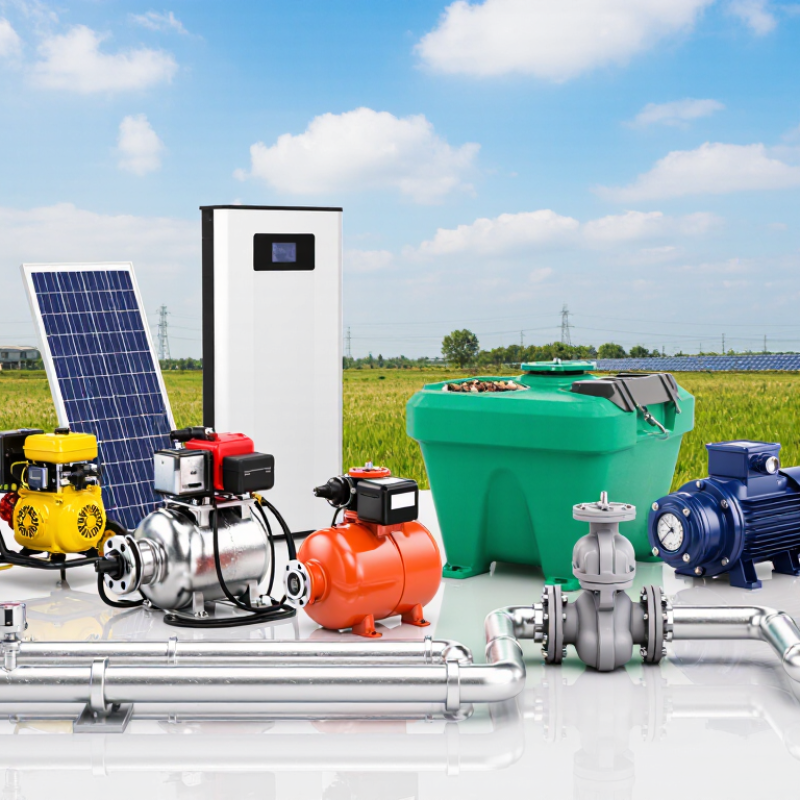
Powered Water Pump Fundamentals: Flow, Head, NPSH, and ISO 9906 Testing
Top 10 Types of Powered Water Pumps for Global Buyers
Powered water pumps move water by converting mechanical energy into flow and pressure. The International Energy Agency reports that electric motor systems consume roughly 53% of global electricity. Pump efficiency therefore deserves careful attention. Flow describes delivered volume, usually in m³/h. Head describes the energy needed to lift and pressurize water. A pump rated for high flow may still fail when pipe friction increases.
NPSH prevents vapor bubbles from forming inside the impeller. The available NPSH must exceed the pump’s required NPSH, with a practical safety margin. Poor suction design, hot water, blocked strainers, or excessive lift can reduce this margin.
The U.S. Department of Energy identifies pumping systems as major industrial electricity users, often exceeding 20% of site consumption. Small design errors can become large operating costs.
ISO 9906 defines acceptance grades for pump performance testing. It verifies measured flow, head, power, and efficiency against declared values. Buyers should request test conditions, fluid temperature, instrument accuracy, and correction methods. A factory test is useful, but field installation still matters. Pipe alignment can change the result. So can an undersized cable.
For a Battery Powered Water Fountain Pump, check battery voltage, duty cycle, recharge time, and actual fountain height.
Marketing figures sometimes assume ideal conditions. I have seen compact pumps lose noticeable height after filter loading, and that deserves more honest testing.
Ten Core Types: Centrifugal, Submersible, Diaphragm, Piston, and More
Global buyers often compare a Powered Water Pump by flow rate, pressure, and energy use. The ten core types serve different field conditions.
Centrifugal pumps move clean water efficiently through farms, buildings, and processing lines. Their impellers need adequate water supply to avoid damaging cavitation.
Submersible pumps operate below the water surface, making them useful for wells, drainage pits, and flooded basements.
Diaphragm pumps handle muddy water and gentle chemical transfer with reliable self-priming action.
Piston pumps create high pressure for washing, spraying, and small-volume delivery.
Small errors matter.
Gear pumps provide steady flow for thicker fluids, although clearances can wear under abrasive grit.
Rotary vane pumps run smoothly, but dry operation may quickly damage their internal surfaces.
Jet pumps lift water from shallow or deeper wells through suction and pressure principles.
Axial-flow pumps move large water volumes at low pressure, often supporting drainage and irrigation channels.
Peristaltic pumps isolate the liquid inside flexible tubing, which helps when contamination control matters.
Trash pumps use wider passages to pass leaves, sand, and small debris without constant blockage.
In practical selection, I check the water sample, pipe length, elevation, power supply, and expected duty cycle. A pump rated for clean water may fail beside a construction trench. Manufacturers’ curves are useful, but installation conditions can change actual performance. I once underestimated suction losses in a long hose; the pump ran loudly and delivered weak flow. That experience remains a useful warning. Reliable buyers also inspect seals, overload protection, service access, and spare-part availability before ordering.
Dynamic Pumps: Centrifugal, Mixed-Flow, Axial-Flow, and Vortex Designs
For global buyers, powered water pump selection starts with the duty point, not the catalog picture.
Dynamic pumps use rotating impellers to add velocity and pressure to moving water. Centrifugal designs suit clean water, irrigation, cooling loops, and moderate-pressure transfer. They are widely available and relatively easy to service. Yet a small mismatch can cause noise, overheating, or poor flow.
Measure it.
Mixed-flow pumps
combine radial and axial movement. They handle larger volumes at medium heads, making them useful for drainage, farming, and flood-control systems.
Axial-flow pumps
push water nearly parallel to the shaft. Their strength is high flow at low head, such as canals, reservoirs, and aquaculture circulation. They dislike excessive head.
Vortex pumps
create a recessed impeller pattern that reduces clogging risk when water carries solids. This advantage may lower efficiency, so buyers should not choose by blockage resistance alone.
I recommend checking flow, total dynamic head, liquid temperature, solids size, voltage, and duty cycle before purchase.
Ask for tested performance curves, materials, efficiency data, and maintenance intervals. Stainless steel may resist corrosion, while coated cast iron can offer practical value in less aggressive water.
Installation matters too; a poorly aligned coupling can shorten bearing life quickly.
Field conditions are rarely perfect. Even experienced operators sometimes underestimate suction losses or seasonal water changes. Leave room for inspection, safe isolation, and realistic operating limits.
Positive-Displacement Pumps: Diaphragm, Piston, Gear, and Screw Models
For global buyers comparing the top ten powered water pump types, positive-displacement models deserve close attention. They move a fixed volume during each cycle, making flow more predictable than many centrifugal designs. In field installations, this matters when water must pass through narrow pipes, dosing lines, or elevated tanks. However, steady does not mean maintenance-free. Incorrect pressure settings can damage hoses, seals, or the pump itself.
Diaphragm pumps use a flexible membrane to isolate water from moving parts. They handle muddy water and intermittent operation well, especially in remote systems. A piston pump produces strong pressure through repeated chamber movement. It suits deep wells and compact pressure systems, but its pulsation may require an accumulator. Gear pumps deliver smooth flow for clean, low-viscosity liquids. Small clearances improve control, yet grit can cause rapid wear. Screw pumps use rotating screw elements for quiet, low-pulsation delivery. They support longer duty cycles, though installation alignment must be precise.
Power selection needs practical testing, not only catalogue figures. A Small Solar Powered Water Pump may run reliably at midday, then struggle under cloud cover or added lift. Buyers should check head, flow, liquid quality, duty cycle, spare parts, and local service skills. I have seen projects focus on maximum flow and overlook inlet conditions. That mistake is expensive. A modest pump, correctly sized, often performs better than a larger unit beyond its design range.
Top 10 Types of Powered Water Pumps for Global Buyers
Positive-displacement pump technologies differ substantially in their typical flow and pressure capabilities. The chart compares representative upper-end operating values; actual performance depends on pump size, materials, speed, temperature, and fluid conditions.
Reading guide: Screw, rotary piston, and gear pumps are commonly selected for higher-flow transfer, while piston and plunger pumps are suited to high-pressure service. Diaphragm, peristaltic, and progressive cavity pumps are often chosen when gentle handling, dosing, solids tolerance, or chemical compatibility is important.
Drive Options: AC Motors, Diesel Engines, Solar Power, and IEC 60034-30-1
AC motors remain the practical choice for stable grid electricity, especially in factories, hotels, and municipal water systems. IEC 60034-30-1 classifies line-operated motors through efficiency levels such as IE2, IE3, and IE4. These ratings help buyers compare motor losses under defined test conditions. However, an IE rating does not guarantee efficient pumping. Oversized impellers, throttled valves, and poor maintenance can waste substantial energy.
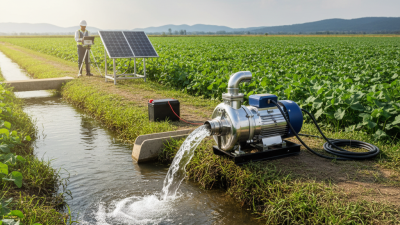
Diesel engines suit remote projects, emergency drainage, and high-flow construction sites. They offer fast refueling, but fuel logistics, noise, vibration, and emissions require careful planning. Solar power reduces operating costs where sunlight is reliable. The International Energy Agency reported almost 420 GW of global solar photovoltaic additions in 2023. That growth supports stronger interest in solar-driven pumps, yet cloudy weather and seasonal storage remain difficult issues. Battery systems add flexibility, but they also increase weight, replacement costs, and control complexity.
For small fountains and decorative installations, buyers often compare Battery Powered Water Fountain Pump Manufacturers by runtime, recharge cycles, and protection against dry running. A compact DC pump may appear efficient, but its battery and charger create additional losses. Field experience suggests checking total energy use, not only rated wattage. Read the duty point carefully. Ask for efficiency curves, motor test conditions, enclosure ratings, and spare-part availability. Some product sheets remain vague. That is a warning. Procurement teams should also verify whether claimed motor efficiency follows IEC 60034-30-1 testing, because marketing language can exceed measurable performance.
Global Selection Criteria: Efficiency, IP Ratings, 50/60 Hz, and Local Standards
For global buyers, ten powered pump types require more than flow and head comparisons.
Centrifugal, submersible, booster, jet, diaphragm, axial-flow, mixed-flow, self-priming, trash, and solar pumps suit different duties.
The U.S. Department of Energy reports that pumping systems can consume 25–50% of industrial electricity. Efficiency therefore deserves lifecycle attention, not only purchase-price attention.
Check the duty point, motor efficiency, control method, and expected operating hours. A pump running far from its best-efficiency point may waste energy and suffer early wear.
IP ratings matter where water, dust, or washdown is present.
IEC 60529 defines protection levels, but a higher IP number does not guarantee chemical resistance or safe submersion.
Confirm the enclosure rating, cable entry, seal material, and installation depth.
Frequency is equally practical. A 50 Hz motor may deliver different speed, head, and current at 60 Hz.
Voltage, phase, plug format, and grid stability must match local standards.
Regional conformity documents should be checked before shipment, not after installation.
Tips:
Request performance curves for both 50 and 60 Hz. Ask for tested efficiency data, not estimates.
Leave a small service margin, but avoid excessive oversizing.
Field reality is untidy; pipe friction, voltage drops, and seasonal demand can change the result.
The DOE Pumping System Assessment Tool supports system-level evaluation, yet local measurements remain valuable.
A perfect spreadsheet choice can still fail beside a clogged intake or unstable power supply.
6SC-PV150 Solar Pumping System: Agricultural Irrigation Insights from IEA Renewables 2024 and FAO AQUASTAT
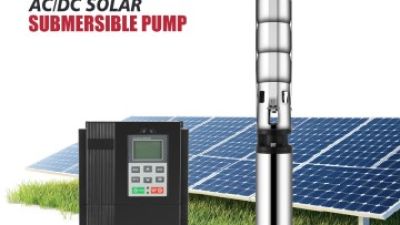
The 6SC-PV150 Solar Pumping System offers a practical approach to agricultural irrigation by combining photovoltaic power with an efficient submersible pump. Its design can support water delivery in rural areas where grid electricity is limited or operating costs are high. During daylight hours, solar energy can drive the pump directly, helping farmers transfer water from wells, reservoirs, or other approved sources to fields, storage tanks, and drip irrigation networks.
Recent renewable-energy outlooks highlight the growing role of solar power in reducing agricultural dependence on diesel and unstable electricity supplies. At the same time, international agricultural water databases emphasize the importance of improving irrigation efficiency as farming faces water stress, changing rainfall patterns, and rising demand for food production. In this context, the 6SC-PV150 can be integrated with water-saving methods such as drip lines, timed irrigation, soil-moisture monitoring, and elevated tanks for controlled distribution.
System performance depends on local solar conditions, well depth, required flow, pipe dimensions, and daily irrigation needs. Proper sizing and installation can help prevent excessive pumping, reduce water losses, and make better use of available sunlight. Routine inspection of the pump, cables, mounting structure, and water intake also supports reliable seasonal operation.
FAQS
Check flow rate, total head, pipe length, elevation, liquid quality, voltage, and duty cycle. Small details matter. A pump curve cannot replace field measurements.
Centrifugal pumps suit clean water, irrigation, cooling loops, buildings, and moderate-pressure transfer. They need enough inlet water. Poor supply may cause cavitation, noise, and impeller damage.
Submersible pumps operate below the water surface. They suit wells, drainage pits, flooded basements, and other submerged locations. Keep cables, seals, and overload protection under inspection.
Diaphragm and trash pumps handle muddy water better than many clean-water pumps. Trash pumps use wider passages for leaves, sand, and small debris. No pump is blockage-proof.
Diaphragm, piston, gear, and screw pumps move measured volumes during repeated cycles. They suit dosing lines, narrow pipes, elevated tanks, and pressure systems. Pressure settings still need care.
Piston pumps create strong pressure for washing, spraying, deep wells, and compact delivery systems. Diaphragm pumps offer self-priming action and isolate liquid from moving parts. Piston flow may pulse. An accumulator can reduce that effect.
Axial-flow pumps move very large volumes at low head. They suit canals, reservoirs, drainage, and aquaculture circulation. Mixed-flow pumps handle large volumes at medium head. Neither design likes excessive head.
Not always. Cloud cover, added lift, long pipes, and weak inlet conditions can reduce output. Check performance during changing sunlight, not only at midday. I once trusted peak figures too much. That was a costly assumption.
Inspect seals, bearings, overload protection, service access, alignment, and spare-part availability. Ask about materials and maintenance intervals. Stainless steel may resist corrosion, while coated cast iron may suit less aggressive water. Leave room for safe inspection.
An oversized pump may waste energy, create excessive pressure, and operate outside its efficient range. A correctly sized model usually runs more steadily. Bigger is not automatically better.
Conclusion
Choosing the right Powered Water Pump begins with understanding essential performance factors such as flow rate, head, suction conditions, and NPSH. Reliable testing, including ISO 9906 principles, helps buyers compare hydraulic performance and operating consistency. The main pump categories include dynamic designs, such as centrifugal, mixed-flow, axial-flow, and vortex pumps, as well as positive-displacement models, including diaphragm, piston, gear, and screw pumps. Submersible pumps are also widely used where compact installation and direct water handling are required.
Drive selection is equally important. AC motors suit stable electrical systems, diesel engines support remote or heavy-duty applications, and solar power offers an efficient option for locations with limited grid access. Buyers should also evaluate motor efficiency under IEC 60034-30-1, enclosure and IP ratings, local voltage requirements, 50/60 Hz compatibility, maintenance needs, and applicable regional standards. A balanced assessment of application, energy use, durability, and service conditions ensures safe and efficient pump selection for global projects.

 DC SOLAR SUBMERSIBLE PUMP
 AC/DC Solar submersible Pump
 DC Solar Surface Pump
 AC/DC solar surface Pump
 Solar swimming Pool Pump
 Built-in Controller Solar Pump
 Solar Pump inverter
 Pump Accessories




 Mr Youkee Kong