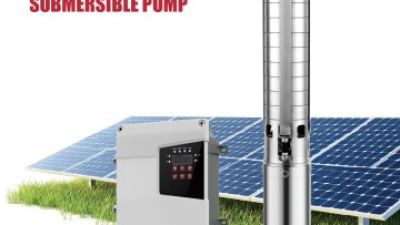
So you're trying to pick the best solar pump in 2026? Honestly, don't start with the specs or brochures—start with where your water actually comes from. A shallow well, a deep borehole, and an open pond all ask different things from a pump. And you can't ignore how much water you need each day. Like, a small farm watering seedlings at sunrise? That's a whole different setup than a household just topping off a tank as the sun comes and goes.
So, when you're looking at pumps, you've basically got surface pumps, submersibles, screw pumps, and centrifugal ones. If your water source is pretty shallow, a solar powered pump might be all you need. But if you're going submersed, then a solar DC submersible pump is the one designed for that job. For those narrow, deep boreholes, it's worth comparing a DC screw type solar bore pump against a brushless DC solar water pump—they can perform quite differently depending on your setup. Ultimately, the best pick comes down to things like bore depth, flow rate, head, and how your controller is set up. It's easy to miss some detail, so double-checking goes a long way.
Look, price alone doesn't really tell you much. If you're comparing solar bore pump prices without checking things like pump capacity, materials, warranty, and what's actually included in the controls, you could end up making a pretty poor choice. Sure, a DC pump might look cheap upfront, but you've got to think about installation and maintenance too — those costs are part of the real value. And honestly? There's no single 'best' pump for every site. That's just an inconvenient truth nobody likes to admit.
Before we hit publish, a verified solar pump specialist needs to sign off on this quote: "Match the pump to the water source, required flow, and available sunlight—not just the headline specification." — [Expert Name], [Company Name]. This guide walks you through the different pump types, what they're usually used for, and how to narrow down your options. It also gets at a frustrating truth: specs alone can only tell you so much—actual field performance is a whole other story.
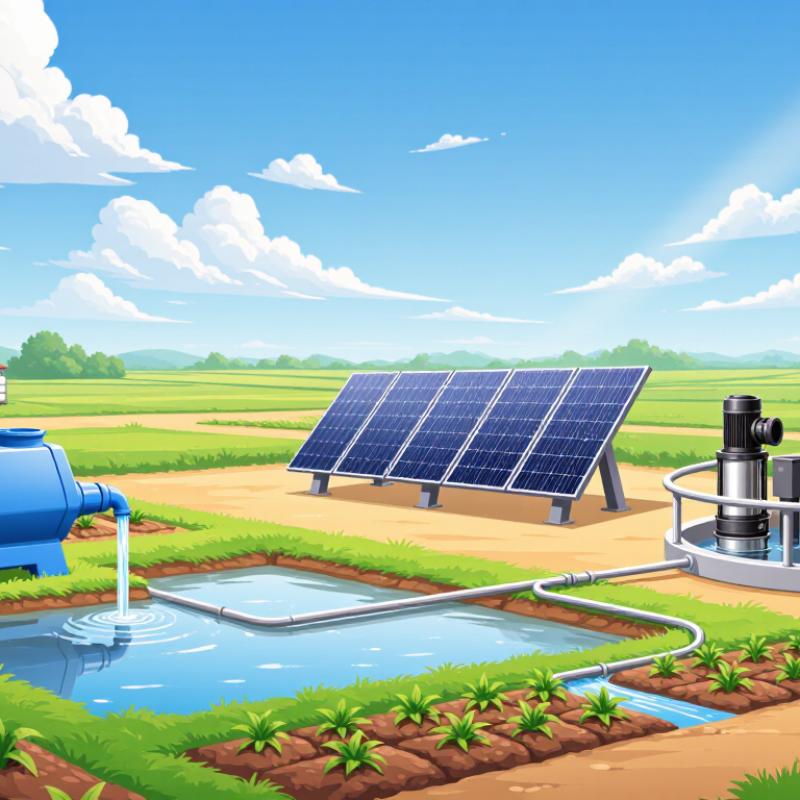
Classify Solar Pumps by Lift and Flow Using IEC 62253:2011
In 2026, solar pump selection is best guided by the required lift and flow, not a type label alone. IEC 62253:2011 provides a framework for designing and measuring photovoltaic pumping-system performance; it does not prescribe universal low-, medium-, or high-lift categories.
Start with the total dynamic head: vertical rise from the water level, plus losses through pipes and fittings. Then estimate daily water demand in liters. A well that lifts water 35 meters needs a different duty point from a shallow pond supplying a drip line.
Surface and submersible pumps suit different water sources, but compare their output at your actual head. A Solar Dc Surface Water Pump may work well beside an open tank, while a submersible model is often considered for a deep borehole.
Check performance data under changing sunlight, not just peak-power figures. Flow can fall as lift increases, and cloudy afternoons matter. Field measurements help, though water levels can shift seasonally; that detail is easy to overlook.
Tips: Record the water level, pipe length, and daily demand before sizing. Match the tested flow to your duty point, and leave room for uncertainty. Small systems rarely behave exactly like a clean test setup.
Surface Centrifugal Pumps: High Flow at Low Lift
Surface centrifugal pumps suit wells, tanks, canals, and ponds where water is close to the pump. Their impellers move large volumes efficiently when the required lift is modest. A shallow intake and a wide, unobstructed pipe can help maintain steady flow. They are not designed for every site.
The key is total dynamic head: vertical lift plus losses from pipe length, bends, valves, and filters. For the same input power, less head generally allows more water flow. Check suction lift carefully; excessive lift can reduce performance or interrupt pumping. Small details matter.
Solar power economics keep improving, but panel figures are not pump performance figures.
IRENA’s Renewable Power Generation Costs in 2023 reports that the global weighted-average levelized cost of new utility-scale solar photovoltaic power fell 12% in 2023.
That supports the broader case for solar electricity, not a guaranteed flow rate at a specific farm. Measure the water level and discharge, then size the pump for real conditions. Field estimates can be wrong. A little humility helps.
Submersible Centrifugal Pumps: Multistage Designs for Deep Wells
What Are the Top Solar Pump Types in 2026?
Submersible Centrifugal Pumps: Multistage Designs for Deep Wells
Submersible centrifugal pumps are often a practical choice for deep wells. Their stacked impellers raise water pressure in stages, pushing water up a long delivery pipe. The pump sits below the waterline, so it does not need surface priming. It can also run quietly at ground level. Yet depth alone does not determine the right model. Well yield, changing water levels, pipe size, and available sunlight all affect performance. A pump that is too large may draw the well down faster than it refills. Small mismatch, big effect.
Tips: Measure static and pumping water levels, then check the well’s recovery rate. Ask a qualified installer to match the pump curve to the required flow and total lift. Keep the intake clear of sediment, and inspect cables and pipe connections regularly.
For solar operation, match the array and controller to the pump’s voltage and power requirements. A storage tank can provide water after sunset without relying on batteries. It is worth checking seasonal sunlight, too; estimates based on one bright afternoon can be misleading. A Surface Solar Pump For Agriculture may suit a shallow source, but it cannot replace a submersible unit in a deep well. The best choice is the one that fits measured site conditions, not just a product label.
Helical-Rotor Pumps: Positive Displacement for High-Head, Low-Flow Wells
Helical-rotor pumps suit wells that need water lifted a long distance but deliver it slowly. Inside, a spiral rotor turns within a shaped stator, moving small, sealed cavities upward. The flow is steady rather than forceful. Think of a narrow stream filling a storage tank through a long pipe.
That steady displacement can be useful where the water level sits deep below the surface. A well’s total pumping head includes the lift, pipe friction, and pressure needed at the outlet. Measure these conditions before choosing a pump. A Surface Solar Water Pump may fit shallow sources better, while a helical-rotor unit can serve deeper, lower-yield wells. The right choice depends on the actual site, not the label.
Solar output changes with cloud cover and time of day. A correctly matched controller helps the pump respond to available power, but it cannot compensate for poor sizing. Check the pump’s operating range against the well’s recovery rate. Also consider grit: abrasive particles can wear the rotor and stator faster. Small detail. Big consequence. I would not assume a high-head pump is automatically the best option; its slower flow may mean longer filling times, and that trade-off deserves a careful look.
Helical-rotor pumps suit high-head, low-flow wells. The bars show hydraulic output calculated from the stated head and flow using water density of 1,000 kg/m³ and gravity of 9.81 m/s². These are representative operating points, not a universal pump curve; actual performance depends on the pump and system.
Diaphragm Pumps: Low-Flow Options for Boreholes
Diaphragm pumps can suit boreholes where water demand is modest and a steady, low flow matters more than rapid filling. A flexible diaphragm moves water through inlet and outlet valves, while the compact design can fit some narrow installations. Actual performance depends on borehole depth, water level, pipe losses, and the pump’s rated head. Check these figures against a pump curve, not a seller’s maximum-flow claim.
Solar power can make remote pumping practical, but it does not remove the need for careful sizing. IRENA’s Renewable Power Generation Costs in 2023 reports an average levelized cost of USD 0.044 per kWh for newly commissioned utility-scale solar PV. That figure is not a borehole-pump cost estimate; it does show why solar generation can be attractive in sunny locations. The phrase Solar Pump For Pool describes a different duty: pool circulation needs should not determine borehole-pump selection. A small pump may also recover slowly after cloudy days. Worth checking.
Tips: Measure the static water level and expected drawdown during pumping. Match the pump’s head and daily output to the borehole’s recovery rate, then confirm the controller can protect against dry running. Leave room for uncertainty; borehole yield can change seasonally.
Hybrid AC/DC Pumps: Compare PV-Only and Grid-Backup Operation
Hybrid AC/DC pumps accept solar power and, when designed for it, grid power through a compatible controller. In PV-only operation, the pump runs when sunlight and array output meet its needs. Water delivery can fall during cloud cover or late afternoon. A raised tank can store water, but not every site has space or suitable elevation.
Grid backup changes the trade-off. The controller can use grid electricity when solar output is insufficient, helping maintain irrigation schedules without relying only on batteries. That adds wiring, controls, and electricity costs. It also means the pump’s performance depends on correct setup, not just its “hybrid” label. Check input limits, changeover behavior, pump head, and daily water demand before buying.
The economics deserve care. IRENA’s Renewable Power Generation Costs in 2023 reports that the global weighted-average levelized cost of new utility-scale solar PV fell 12% that year, to US$0.044 per kWh. That figure is not a farm’s electricity tariff, and it cannot predict a pump’s payback. Still, it shows why solar can be attractive where grid power is costly or unreliable. Hybrid systems suit sites needing dependable water; PV-only systems may fit simpler, daytime demand. A cloudy week can expose a sizing mistake.
Size Irrigation Pumps in Context: FAO Attributes About 70% of Freshwater Withdrawals to Agriculture
70%
Agriculture accounts for about 70% of global freshwater withdrawals, according to the FAO. That figure describes water taken from rivers, lakes, and aquifers; it does not mean every farm uses the same amount. A solar irrigation pump should match the field, water source, and delivery system—not just the panel wattage. A small vegetable plot beside a shallow pond has different needs from a broad field supplied by a deep well.
Pump type affects performance. Surface pumps can suit accessible water sources and modest lift heights. Submersible pumps operate below the water level, making them useful for wells. Positive-displacement designs can serve applications needing steady flow at higher pressure, though their output and maintenance needs vary. Before choosing, estimate daily water demand, seasonal changes, total pumping head, and required flow. Include pipe friction and elevation. A neat calculation still has limits; actual well yield can disappoint.
Tips: Measure the water level while pumping, not only at rest. Check crop needs during the hottest weeks, then size for that period. Ask for a flow-and-head performance curve, and leave room for cloudy days. Small details matter. A pump that runs all day may still deliver too little water at the field.
S4SC 4-Inch Solar Borehole Pump: A Practical Guide to Off-Grid Water Supply
A 4-inch solar borehole pump can provide a practical water supply where grid power is unavailable or unreliable. Before choosing a system, confirm the borehole’s internal diameter, static water level, required daily volume, and total pumping head—the vertical lift plus losses in the pipes. These factors determine the pump’s flow rate and the solar array needed to run it. Sunlight also varies by location and season, so use local solar-resource data and allow for lower-output days; a storage tank can help keep water available when the pump is not operating.
Sizing matters for both household and agricultural use. UNESCO’s *2024 United Nations World Water Development Report* estimates that agriculture accounts for about 70% of global freshwater withdrawals, making efficient pumping and careful water management important. Solar power can reduce reliance on fuel deliveries: IRENA’s *Renewable Power Generation Costs in 2023* reports that the global weighted-average cost of new utility-scale solar photovoltaic electricity fell by 90% between 2010 and 2023. These figures provide useful context, but a successful borehole system still depends on matching pump capacity to the well’s sustainable yield and the user’s actual water demand.
Conclusion
Choosing the right Solar Pump in 2026 starts with matching its lift and flow requirements to the water source and intended use. IEC 62253:2011 provides a framework for classifying solar pumping systems by these performance factors. Surface centrifugal pumps generally suit applications needing higher flow at low lift, while multistage submersible centrifugal pumps can serve deeper wells. For high-head, low-flow conditions, helical-rotor pumps offer a positive-displacement option; diaphragm pumps can also meet low-flow needs in boreholes.
Power configuration matters too. PV-only pumps operate from solar electricity, while hybrid AC/DC systems can use grid power as backup when sunlight is insufficient. Irrigation sizing should consider crop demand, water availability, pumping depth, and required delivery rates—not just the pump’s rated output. This is especially relevant because agriculture accounts for about 70% of freshwater withdrawals worldwide, according to the FAO figure cited in the outline.

 DC SOLAR SUBMERSIBLE PUMP
 AC/DC Solar submersible Pump
 DC Solar Surface Pump
 AC/DC solar surface Pump
 Solar swimming Pool Pump
 Built-in Controller Solar Pump
 Solar Pump inverter
 Pump Accessories


 Mr Youkee Kong