
 DC SOLAR SUBMERSIBLE PUMP
 AC/DC Solar submersible Pump
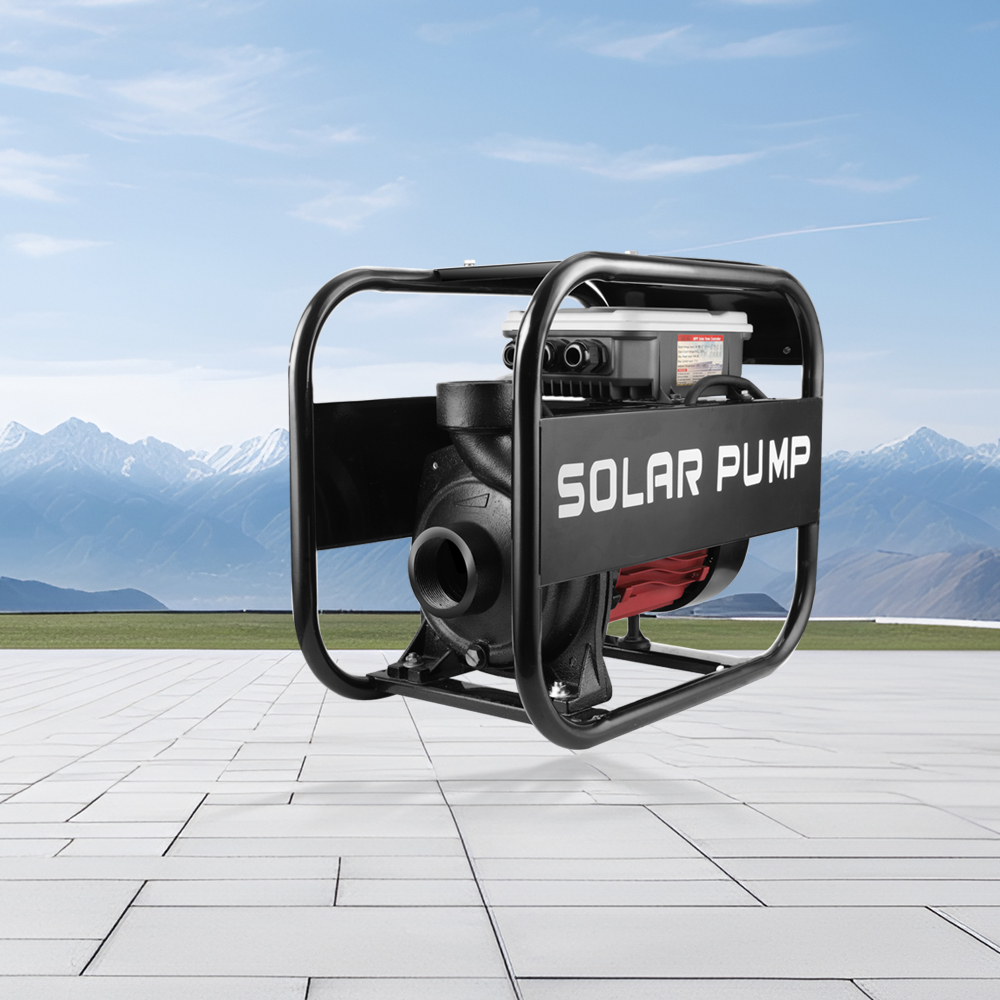
 DC Solar Surface Pump
 AC/DC solar surface Pump
 Solar swimming Pool Pump
 Built-in Controller Solar Pump
 Solar Pump inverter
 Pump Accessories


 Mr Youkee Kong




Dry Run, Lightning and Sand: The Failure Modes That Kill Solar Borehole Pump Installations
Four Hundred Installations and Three Failure Signatures
A dealer in Tanzania commissioned 410 solar borehole systems over two growing seasons. By month twenty, returns had settled into three patterns: motors burnt after the static level dropped below the intake, controllers destroyed in clusters during the first storms of the season, and impellers worn smooth within three months on sandy boreholes.
The repair bill reached roughly 19 per cent of equipment value, none of it recoverable. Every one of those modes is predictable before installation. None is fixed by a costlier pump. All are fixed by a written specification.
Dry Run: Probes Versus Current Thresholds
Dry running kills a submersible in minutes rather than hours. With no water to carry heat away the winding passes 130 degrees; with no film on the friction faces, plastic stages seize in an afternoon.
A downhole water level probe hung above the intake stops the motor before the pump swallows air, and it is the only method that reacts in advance. Its weakness is fouling, since scale and biofilm on the electrodes give false readings. Specify a probe you can clean without pulling the pump.
Sensorless detection reads motor current instead. A pump that loses prime shows a current drop of 25 to 40 per cent. Set the threshold at 60 to 70 per cent of measured running current, never a fixed amp value, because array voltage moves current on its own.
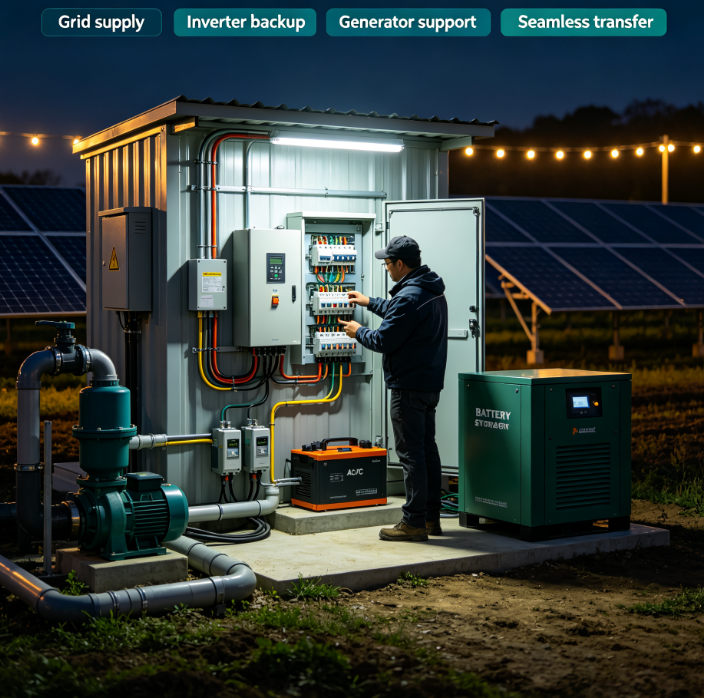
Then demand two numbers: dry run tolerance under 60 seconds and an automatic restart interval of 20 to 30 minutes, with six retries before latch off. On hybrid units such as a 4 inch AC/DC hybrid solar submersible pump, confirm the logic also governs grid or generator input, since many units protect the solar path only.
Lightning and Surge: Where the Controller Dies
Storm losses arrive in clusters because a strike couples into both the array cables and the motor cable. A raised array is a large collecting area, and a long DC run acts as an antenna.
Protection is two-sided. Fit a type 2 surge device on the array side at string open circuit voltage with a discharge rating of 20 kA, plus a second device on the motor output. Both must sit within one metre of the controller; an SPD at the combiner box alone leaves the controller exposed.
Grounding is where most installations fail. Require earth resistance below 10 ohms, measured by fall-of-potential rather than a clamp meter, and bond the pump frame, array frame and chassis to one electrode.
Sandy Water: Parts Per Million and the Screw Pump Answer
Sand is not a defect, it is a design condition nobody measured. Draw a one litre sample after 30 minutes of pumping and read the settled volume. Below 50 ppm suits a standard multistage centrifugal; above 150 ppm an impeller wears five times faster than in clear water.
Above that line, change the pumping principle. A 3 inch DC deep well screw solar water pump moves water through a progressing cavity at low velocity, so abrasion spreads over a large area and efficiency degrades slowly. Expect tolerance to about 500 ppm, with the stator a planned consumable.
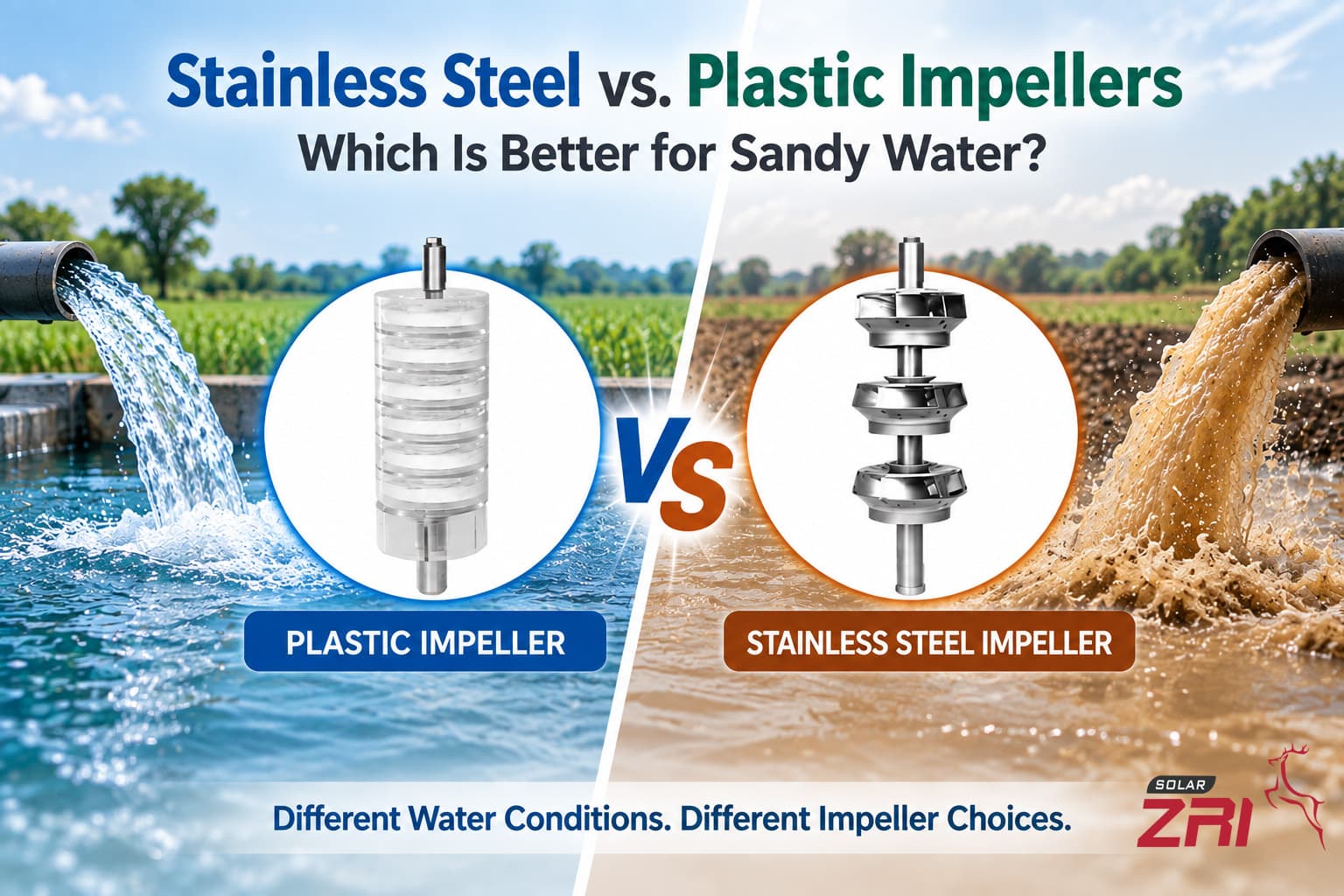
Impeller Material: Stainless Against Plastic
In mildly sandy water the material call is a trade, not a hierarchy. A 3 inch DC stainless steel impeller deep well solar pump resists cutting wear, but stainless against stainless can gall when sand packs the clearance. Polymer impellers are cheaper and more forgiving of grit; they lose on heat resistance in a dry run.
Put the choice on the PO. State impeller, diffuser and pump head material separately, since a stainless impeller in a plastic diffuser in a hot borehole is a mismatch. A 3 inch DC plastic impeller pump with a copper pump head gives abrasion tolerance in dirty water and thermal mass at the motor.

Winding Temperature, Overload and Duty Cycle
Burnout is a thermal story with an electrical ending. Running a pump 20 per cent above its best efficiency point halves insulation life. Require a thermal switch in the winding with a trip point of 130 degrees Celsius.
Sizing decides temperature too. A 6 inch DC stainless steel impeller deep well solar pump at 55 to 75 per cent of rated speed outlasts a three inch unit flat out in the same duty, because continuous current heats copper. Sell the option with the lower amperage at the duty point.
Screens, Sumps and Flow Sleeves
Mechanical mitigation is cheap and chronically skipped. Set the intake at least five metres above the borehole bottom, fit a stainless screen with 0.5 to 1.0 mm apertures, and add a gravel pack in loose formations. A flow sleeve is mandatory in a wide borehole, where still water lets the winding run 20 degrees hotter.
Commissioning Checklist and Warranty Boundaries
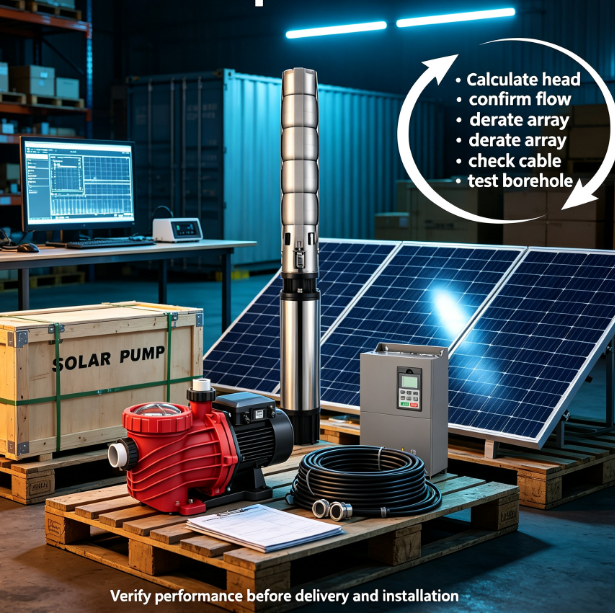
Give the crew one form and refuse to sign off without it:
- Static and dynamic water level recorded, probe set above the intake
- Dry run threshold from measured current, restart interval and retry limit
- Earth resistance under 10 ohms, measured and written down
- Array side and motor side SPDs within one metre of the terminals
- Settleable solids result filed, pump matched to the ppm band
Then settle the commercial side. Warranty excludes dry running, lightning and abrasive wear, so your margin depends on preventing them. Price SPDs, probes and screens into every quotation as non-optional lines, and make commissioning data a condition of any claim.
The Bottom Line
Borehole pumps do not fail randomly. They fail at the water level, the controller terminals and the impeller clearance. Write down a dry run threshold, restart interval and retry limit, an earth resistance figure and two SPD locations, and a sand band, then log them at commissioning. The dealer who lost 19 per cent had no recorded numbers.