
 DC SOLAR SUBMERSIBLE PUMP
 AC/DC Solar submersible Pump
 DC Solar Surface Pump
 AC/DC solar surface Pump
 Solar swimming Pool Pump
 Built-in Controller Solar Pump
 Solar Pump inverter
 Pump Accessories


 Mr Youkee Kong



High pressure solar submersible pump common faults and solutions
As an efficient and environmentally friendly water supply solution, high pressure solar submersible pump is widely used in agricultural irrigation, household water and industrial water supply. However, even high-quality submersible pumps may encounter some common problems during use. This article will provide you with a detailed troubleshooting guide to help you quickly identify and resolve these issues to ensure that your submersible pump is always operating at its best.
First, common faults and solutions
1. The water pump does not produce water or the flow rate is small
This is one of the most common problems with high pressure solar submersible pumps. Possible causes include motor reversals, blocked intakes, leaky water inlet pipes, worn couplings, worn impingers, blocked check valves, insufficient solar panel power or insufficient operating voltage.
solution
Motor reversal: Check the wiring of the motor to make sure it is rotating in the correct direction. If the motor is reversed, switch the position of the two-phase cable to correct the direction of the motor rotation.
Inlet blockage: Clean the inlet of the pump to remove debris or sediment that may be blocked.
Water inlet pipe leaks: Check the water inlet pipe and repair any leaks.
Worn coupling: Replace worn coupling.
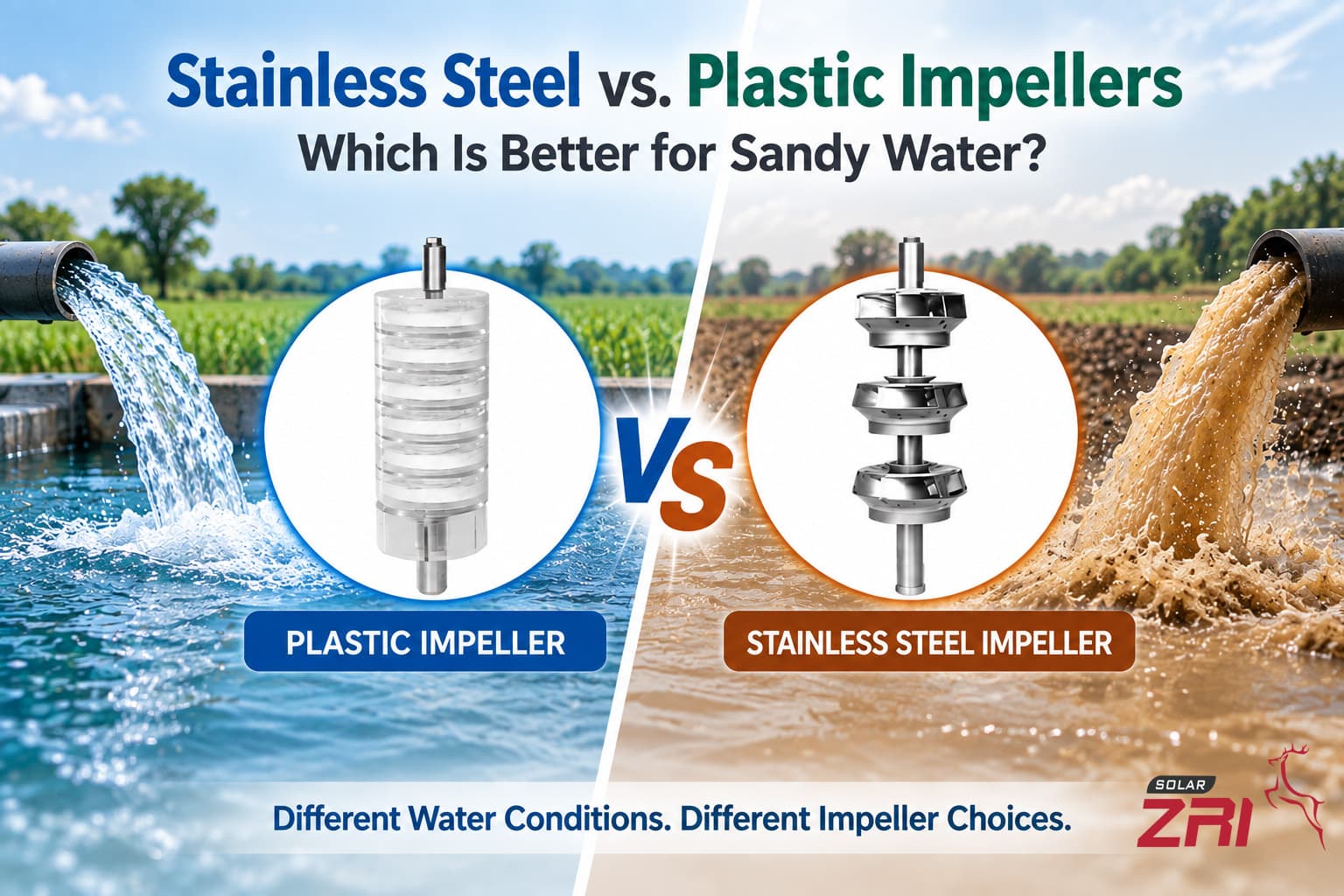
Impeller wear: Check the impeller for signs of wear, and replace the new impeller if necessary.
Check valve blockage: Clean or replace a blocked check valve.
Insufficient solar panel power: Check whether the solar panel is clean and ensure that it can fully absorb sunlight. If the panel is damaged, consider replacing it.
Insufficient working voltage: Check the output voltage of the solar panel to ensure that it can meet the operating requirements of the submersible pump.

2. Fluctuating water flow
Even in the case of normal power supply, the water flow may fluctuate. This may be due to improper pump location, low water level, or excessive delivery flow.
solution
Improper pump position: Adjust the position of the pump in the well to ensure it is at optimal depth.
Low water level: Ensure that the water level is higher than the inlet of the pump to avoid unstable water supply due to low water level.
Excessive transfer flow: Reduce the transfer water flow or reposition the pump.
3. The inverter is powered off
If the inverter has no power, it may be due to a connection problem with the solar panel, a blown fuse, or damage to the solar panel.
solution
Check the connection: Make sure the connection of the solar panel is strong and not loose or damaged.
Check the fuse: check whether the fuse of the inverter is blown, and replace it if necessary.
Check the solar panel: Check the solar panel for damage or breakage and replace it if necessary.
4. Low water yield
Low water output may be due to blocked water pipes or pumps themselves, dirty solar panels, or worn impellers.
solution
Clean up blockages: Check water pipes and pump intakes to remove any blockages.
Clean solar panels: Clean solar panels regularly to ensure that their surfaces are free of dust and dirt.
Replace the impeller: Check the impeller for signs of wear, and replace the impeller with a new one if necessary.
5. The inverter error code
The error code displayed by the inverter can help you locate the problem quickly. Each code corresponds to a specific problem and will guide you through the next steps.
solution
Check the user manual: Learn about the error codes according to the inverter user manual, and perform operations according to the suggestions in the manual.
Reset the inverter: Follow the instructions in the user manual to try to reset the inverter.
6. Pump intermittent operation
Intermittent operation of the pump may be due to low water levels in the well or wiring problems.
solution
Check water level: Make sure the water level in the well is higher than the inlet of the pump.
Check the wire connection: Check the wire connection between the solar panel and the inverter to ensure that the connection is strong and not damaged.

7. High energy consumption
If the energy consumption of the inverter is found to be too high, it may be due to mechanical problems with the pump or improper Settings of the inverter.solution
Check for mechanical problems: Check the impeller, bearings and seals of the pump and replace them if necessary.
Calibrate inverter Settings: Recalibrate inverter Settings according to the user manual.
8. The system overheats
Overheating of the pump or inverter may be due to insufficient ventilation or mechanical friction.
solution
Ensure ventilation: Ensure that there is sufficient ventilation around the inverter to avoid overheating.
Lubricating mechanical parts: Check the mechanical parts in the pump and lubricate them if necessary.
Second, routine maintenance suggestions
1. Check your solar panels regularly
Check the cleanliness of the solar panel regularly to ensure that its surface is free of dust and dirt. If dirt is found on the surface of the panel, it should be cleaned in time.
2. Check the cable connections
Check wire connections regularly to make sure they are strong and free of damage. If the wires are found to be loose or damaged, they should be repaired in time.
3. Check the mechanical parts of the pump
Check pump impellers, bearings and seals regularly and replace them if necessary. Worn mechanical components not only affect the efficiency of the pump, but can also lead to increased energy consumption.
4. Calibrate the inverter Settings
According to the user manual, the inverter Settings are calibrated regularly to ensure that they are operating in optimal condition.
5. Check the water level
Periodically check the water level in the well to make sure it is higher than the pump inlet. Low water levels can cause intermittent operation or damage to the pump.

The common faults of high pressure solar submersible pumps can usually be solved by simple inspection and maintenance measures. By regularly checking solar panels, wire connections, pump mechanical components and water levels, you can effectively avoid these problems and ensure that the submersible pump is always operating at its best. It is hoped that this troubleshooting guide will help you better use and maintain high pressure solar submersible pumps to improve the reliability and efficiency of your system.
If you have any further questions or need more detailed information, please feel free to contact us.