
 DC SOLAR SUBMERSIBLE PUMP
 AC/DC Solar submersible Pump
 DC Solar Surface Pump
 AC/DC solar surface Pump
 Solar swimming Pool Pump
 Built-in Controller Solar Pump
 Solar Pump inverter
 Pump Accessories


 Mr Youkee Kong
Impeller Material Showdown: How to Balance the Pros and Cons of Stainless Steel vs. Plastic Impeller Pumps in Drinking Water and Agricultural Irrigation Applications?
Impeller Material Showdown: How to Balance the Pros and Cons of Stainless Steel vs. Plastic Impeller Pumps in Drinking Water and Agricultural Irrigation Applications?
When purchasing solar water pumps, many buyers struggle between stainless steel and plastic impellers. Salespeople claim “stainless steel lasts longer,” yet plastic models offer tempting prices. But doubts linger: Is plastic safe for pumping groundwater for direct drinking in African villages? How many years will plastic impellers endure when irrigating hundreds of acres of farmland? Choosing wrongly risks quick pump failure at best, and undermining the credibility of entire water supply projects at worst. This article aims to clarify your thinking. Drawing on over a decade of real-world case studies, I'll explain the true performance of these two materials. By the end, you'll know how to choose based on different water sources and budgets.
I. Durability Showdown: Is Stainless Steel Truly “Wear-Proof”?
First, the conclusion: Stainless steel impellers generally have a longer absolute lifespan—but only if the water quality “cooperates.”
The advantage of stainless steel impellers lies in their resistance to wear and deformation. Their high hardness allows them to withstand prolonged abrasion from sand and gravel in water. In water sources with high silt content, such as rivers or shallow sandy wells, stainless steel demonstrates clear superiority. A Nigerian agricultural irrigation project reported that in identical silt-laden water conditions, a high-quality 304 stainless steel impeller pump maintained less than a 10% efficiency drop after three years of continuous operation. In contrast, ordinary plastic impeller pumps showed noticeable declines in head and flow rate after just one and a half years.
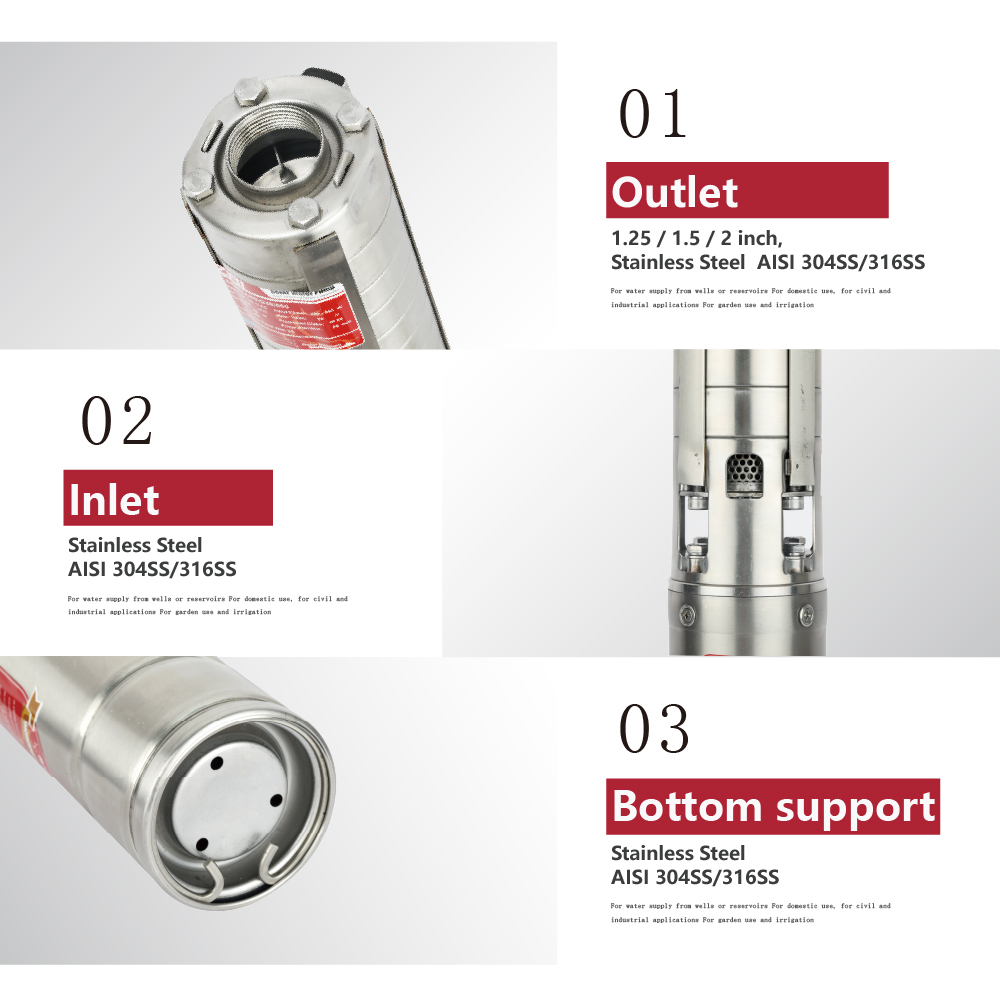
However, “durable” does not equate to “invincible.” In water sources with high chloride ion content (such as groundwater in certain regions), substandard 201 or 202 stainless steel grades remain susceptible to pitting corrosion and rust-through. True durability is achieved with food-grade 304 or superior 316 stainless steel.
Common user question: Is “food-grade stainless steel” just a marketing gimmick?
Absolutely not. Food-grade 304 stainless steel has strict specifications for metal elements like chromium and nickel. This ensures minimal leaching of harmful metals during prolonged contact with drinking water, safeguarding water quality. It's a mandatory requirement for drinking water projects.
II. Safety and Compatibility: Can Plastic Impeller Pumps Be Used for Drinking Water?
Yes, but with strict grade restrictions.
Many buyers misunderstand plastics as inherently unsafe. In reality, engineering plastics like PP (polypropylene) and food-grade nylon are inherently safe and non-toxic. The key lies in using “food contact grade” raw materials without recycled content.
However, their critical weakness is sensitivity to water temperature. Prolonged exposure to water or ambient temperatures exceeding 60°C accelerates plastic aging and deformation. Consequently, in regions with intense sunlight, insufficient insulation on pump surfaces significantly shortens the lifespan of plastic impellers.
A real-world example: We supplied drinking water pumps to an island community in Southeast Asia. Their water source was rainwater collection, characterized by softness and slight acidity. We recommended pumps with food-grade PP plastic impellers. This solution was approximately 25% lower in cost than stainless steel. After over four years of operation, the community reported excellent performance, with water quality consistently meeting standards. In this scenario, plastic proved to be the more economical and suitable choice.
III. Efficiency and Energy Consumption: How Much Does Material Affect Pump Performance?
The impeller material directly impacts pump efficiency and long-term energy consumption, which affects the overall configuration cost of solar systems.
Stainless steel impellers, due to their high strength, can be designed thinner with more precise blade curvature. This reduces friction and vortex formation within the pump chamber, achieving higher hydraulic efficiency. In scenarios requiring high head (e.g., deep well pumping), a high-efficiency stainless steel pump can be driven by a smaller solar panel or deliver greater flow rates.
Plastic impellers can also achieve decent initial efficiency with high-precision molds. The issue lies in their “aging.” Over time, plastic may undergo slight deformation due to stress and fatigue, or suffer erosion, leading to a gradual decline in efficiency. This means that after several years, the same amount of sunlight will produce less water output.
Common user question: For a low-power system, is a plastic pump more energy-efficient (in terms of solar panels)?
Initially, yes. Plastic pumps of the same specifications may have slightly lower starting torque due to their lighter weight and lower inertia. However, a full lifecycle perspective is crucial. Stainless steel pumps maintain high efficiency over the long term, better utilizing precious solar energy and reducing the need for system expansion due to performance degradation. For projects requiring daily use over several years, stainless steel offers more cost-effective long-term energy benefits.

IV. Total Cost Analysis: Purchase Price Is Just the Tip of the Iceberg
Smart procurement calculates total cost of ownership.
Plastic impeller pumps typically cost 20%-40% less upfront—a compelling advantage. However, stainless steel pumps require less frequent maintenance and replacement. In remote areas lacking service centers, pump reliability becomes critical. Labor and travel costs for a single pump replacement can offset the material price difference.
Downtime losses must also be considered. A pump failure during irrigation season could wither crops; a broken community water station pump forces villagers back to carrying water by hand. These hidden costs are enormous.
A decision flowchart could be structured as follows:
Water Source Purpose:
* Direct consumption → Prefer food-grade 304/316 stainless steel; or confirm highest-grade food-grade plastic.
Water Quality: High sediment content or complex water → Prioritize stainless steel; Clean water with balanced pH → Consider high-quality plastics.
Project Budget & Timeline: Extremely limited budget or short-term pilot → Plastics as an entry-level option; Pursuing long-term stability or core projects → Stainless steel offers greater reliability.
Maintenance Capability: Difficult maintenance or seeking “maintenance-free” → Stainless steel provides greater peace of mind.
FAQ
Q1: Are there “composite material” impellers that combine the advantages of both?
A1: Yes. The market offers stainless steel skeletons coated with engineering plastics or specialized reinforced plastics (e.g., glass fiber reinforced). These strike a balance between corrosion resistance and weight reduction. However, such products involve complex manufacturing processes, carry a premium price tag, and vary significantly in quality. When purchasing, always request detailed material composition reports and durability test data.
Q2: I've seen stainless steel pumps rusting. Did I buy counterfeit products?
A2: Quite possible. Beyond substandard materials, “surface contamination” is another cause. During installation or welding, ordinary steel particles may adhere to the stainless steel surface, creating “rust sources.” High-quality pump manufacturers prioritize cleanliness and packaging to prevent this issue. When purchasing, verifying reliable brands and material certification documents is crucial.
Q3: For large-scale farm irrigation covering thousands of acres, what should I choose?
A3: For large-scale agricultural irrigation systems, the core requirements are sustained reliability and high efficiency. Stainless steel impeller pumps are recommended as the top choice. Although the initial investment is higher, they demonstrate superior resistance to harsh water conditions (where fertilizer and pesticide residues may contaminate water sources), exhibit slower long-term performance degradation, and ensure stable water supply throughout the entire irrigation season, delivering higher overall benefits. They should be viewed as an investment in production equipment rather than a consumable item.
Choosing between stainless steel impeller pumps and plastic impeller pumps is never a simple matter of “which is better,” but rather “which is more suitable.” Drinking water projects prioritize health, where safety and compliance are paramount; agricultural irrigation projects focus on yield, where reliability and longevity are key. By understanding water quality, calculating total costs, and clarifying priorities, you can make decisions that best serve your project and clients. May this comparison serve as a practical reference for your next procurement.
Meta Description: Debating stainless steel or plastic impellers for solar water pumps? This article provides a comprehensive comparison of durability, safety, efficiency, and total cost, backed by real-world case studies. It offers clear decision-making guidance for B2B buyers in drinking water and agricultural irrigation scenarios. Read now to make an informed choice.
Keywords: Stainless steel impeller solar water pumps, Plastic impeller pump selection, Solar water pump procurement guide, Agricultural irrigation pump materials, Drinking water pump safety standards