
 DC SOLAR SUBMERSIBLE PUMP
 AC/DC Solar submersible Pump
 DC Solar Surface Pump
 AC/DC solar surface Pump
 Solar swimming Pool Pump
 Built-in Controller Solar Pump
 Solar Pump inverter
 Pump Accessories


 Mr Youkee Kong



Selection of Supporting Equipment for DC Solar Submersible Pumps
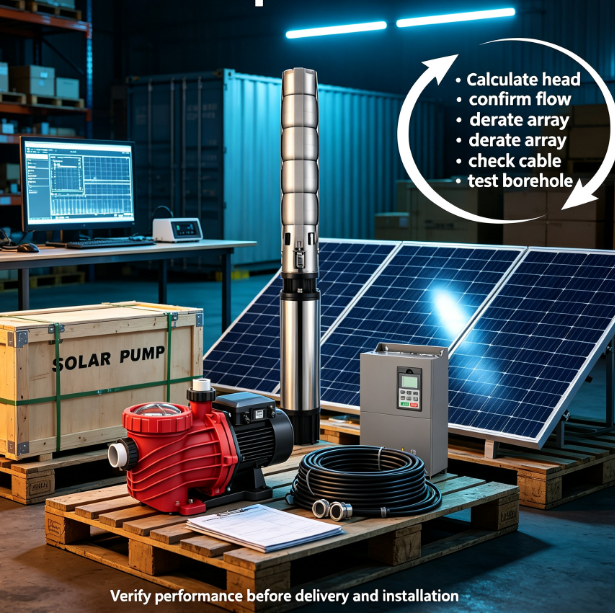
With the continuous advancement of solar energy technology, DC solar submersible pumps have gained widespread application in various fields, including agricultural irrigation, small-scale water supply, and horticulture. However, to ensure the stable and efficient operation of DC solar submersible pump systems, the correct selection of supporting equipment is of paramount importance. This article thoroughly explores the key considerations in selecting the supporting equipment for DC solar submersible pumps, covering aspects such as solar panels, charging controllers, batteries (when required), inverters (in specific situations), and piping systems.
- Introduction
DC solar submersible pumps have become indispensable in many remote areas and power supply - specific scenarios, thanks to their remarkable advantages, including environmental friendliness, energy efficiency, and grid - independence. The rational selection of supporting equipment not only impacts the performance of solar submersible pumps but also directly influences the overall system's lifespan and operating costs.
2.Selection of Solar Panels

2.1 Power Matching
The power rating of solar panels should be determined by considering the rated power of the DC solar submersible pump and local lighting conditions. Given the inherent variability of sunlight and potential system losses, it is advisable to opt for solar panels with a power slightly exceeding that of the submersible pump. For example, if a submersible pump has a rated power of 100W, solar panels with a power range of 120 - 150W would be a suitable choice.
2.2 Types of Solar Panels
Monocrystalline Silicon Solar Panels: These panels offer relatively high conversion efficiencies, typically ranging from 18% to 22%. They feature a long service life and excellent stability, albeit at a higher cost. Monocrystalline silicon panels are ideal for regions with abundant sunlight and applications demanding high system efficiency.
Polycrystalline Silicon Solar Panels: With conversion efficiencies slightly lower than monocrystalline silicon, around 15% to 18%, polycrystalline silicon panels come at a more affordable price. They represent a practical option in areas with moderate sunlight and budget - constrained projects.
Thin - Film Solar Panels: Known for their flexibility and adaptability, thin - film solar panels can be installed on irregular surfaces. Although their conversion efficiency is relatively low, their lightweight design and installation flexibility make them suitable for applications with specific installation shape requirements and ample sunlight.
2.3 Dimensions and Installation Methods
Size: The size of solar panels should be determined based on available installation space and power requirements. Larger panels can generate more power but require more installation area.
Installation Methods: Common installation methods include fixed and adjustable types. Fixed installations are simple and cost - effective, while adjustable installations can enhance light absorption by adjusting the panel angle, thereby increasing power generation throughout different seasons and times of the day.
3.Selection of Charging Controllers

3.1 Types
PWM (Pulse Width Modulation) Charging Controller: Characterized by its simple structure and low cost, PWM charging controllers are widely used in small - to - medium - sized solar systems where high charging efficiency is not a primary requirement. They regulate charging current and voltage by modulating pulse width, effectively protecting batteries from overcharging.
MPPT (Maximum Power Point Tracking) Charging Controller: MPPT charging controllers offer significantly higher charging efficiency, especially under varying light intensity and temperature conditions. They can track the maximum power point of solar panels, ensuring the system operates at peak power output. While more expensive, they are a worthy investment for large - scale solar submersible pump systems or applications with strict charging efficiency requirements, as they can substantially boost system power generation and reduce long - term operating costs.
3.2 Rated Current and Voltage
Rated Current: The rated current of the charging controller should be selected according to the maximum output current of the solar panel, with the controller's rated current being equal to or greater than the panel's maximum output current. For example, if a solar panel has a maximum output current of 8A, a charging controller with a rated current of at least 8A is required. It is often recommended to choose a slightly higher rated current, such as 10A, to provide a sufficient current margin for the system.
Rated Voltage: The rated voltage of the charging controller must match the output voltage of the solar panel and the voltage of the battery (if present). Common solar panel output voltages include 12V and 24V, and the charging controller's rated voltage should be compatible with these levels.
4.Selection of Batteries (When Necessary)
4.1 Uses and Necessity
Purpose: Batteries play a crucial role in supplying power to DC solar submersible pumps during periods of low light or at night, ensuring continuous operation. They are particularly essential in scenarios with intermittent sunlight or high - demand continuous water supply requirements.
Necessity Assessment: In regions with abundant sunlight and when pump operation is mainly during daylight hours, batteries may not be required. However, in areas with frequent cloudy days or nighttime water pumping needs, installing batteries can significantly enhance system reliability.
4.2 Types
Lead - Acid Batteries: Lead - acid batteries are cost - effective and have mature technology. They offer a high depth of discharge and large capacity. However, they are bulky, heavy, and require regular maintenance, such as distilled water replenishment and electrolyte density checks. Their lifespan is relatively short, with a typical charge - discharge cycle of 300 - 500 times.
Lithium Batteries: Lithium batteries are characterized by high energy density, lightweight design, long service life (with 1000 - 2000 charge - discharge cycles), high charging efficiency, and minimal maintenance requirements. However, they come at a higher cost and demand strict charging and discharging management, as overcharging or overdischarging can cause irreversible damage.
4.3 Capacity Calculation
The capacity of the battery is determined based on the pump's power, expected operating time, and acceptable power outage duration. The general formula for calculating battery capacity is: Battery capacity (Ah) = Submersible pump power (W) × Operating time (h)/Battery voltage (V). For instance, for a 50W submersible pump operating for 4 hours with a 12V battery, the required battery capacity is approximately 50×4/12≈16.7Ah. In practice, it is advisable to select a battery with a slightly larger capacity to account for system efficiency and potential additional load demands.
5.Selection of Inverters (in Specific Situations)
5.1 Applicable Scenarios
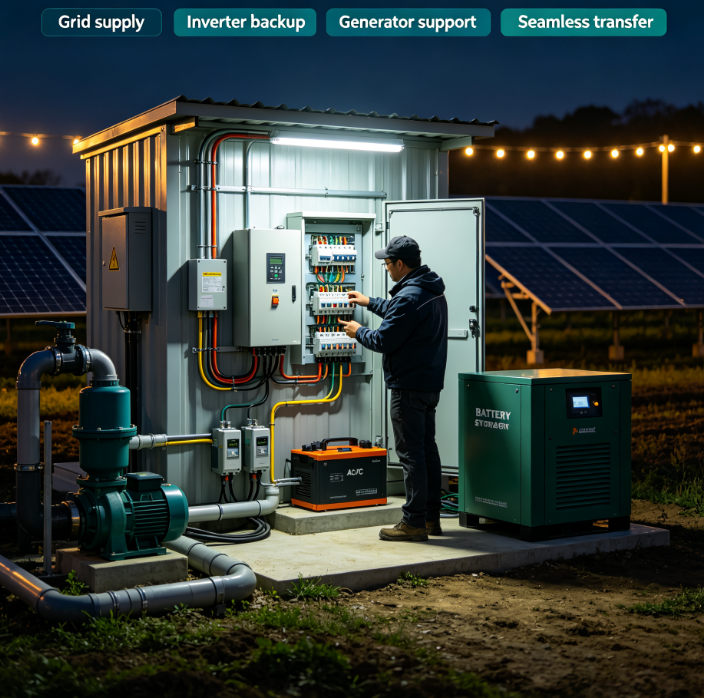
An inverter is required when the load connected to the DC solar submersible pump is an AC device, such as certain auxiliary equipment with AC pumps or those requiring AC control. The inverter converts the DC power from solar panels (via the charging controller) into AC power.
5.2 Types
Pure Sine Wave Inverters: Pure sine wave inverters produce an AC output waveform identical to that of the grid, meeting the power requirements of most AC equipment, especially those sensitive to power quality, such as computers and precision instruments. Despite their higher cost, they are the preferred choice for applications demanding precise power supply.
Modified Sine Wave Inverters: Modified sine wave inverters generate an AC waveform that approximates a pure sine wave but contains some harmonic components. They are more cost - effective and suitable for equipment with less stringent power quality requirements. In DC solar submersible pump systems, if the connected AC devices do not require a high - quality waveform, a modified sine wave inverter can be a viable option.
5.3 Power Selection
The power rating of the inverter should be chosen based on the total power of the connected AC equipment. It is recommended to select an inverter with a power slightly higher than the total equipment power to ensure stable operation. For example, if the total power of the connected AC devices is 200W, an inverter with a power of 250 - 300W would be appropriate.
6.Selection of Piping Systems
6.1 Pipe Diameter
The pipe diameter of the piping system should be determined according to the flow rate and head of the submersible pump. A pipe diameter that is too small will increase water flow resistance, leading to excessive head loss and reduced water supply efficiency. Conversely, an overly large pipe diameter will increase system costs. Typically, submersible pump flow rate and head parameters can be used as a reference, and the appropriate pipe diameter can be selected through fluid mechanics formulas or empirical tables.
6.2 Pipe Material
PVC Pipe: PVC pipes are cost - effective, corrosion - resistant, and easy to install. They are suitable for irrigation and small - scale water supply systems where water quality requirements and working pressures are relatively low.
PPR Pipe: PPR pipes offer excellent heat resistance and pressure - bearing capacity, making them suitable for hot water supply or water supply systems with specific water quality requirements. Although more expensive, they have a long service life and stable performance.
Steel Pipe: Steel pipes are known for their high strength and pressure resistance, making them ideal for industrial water supply or large - scale irrigation systems with high flow rates, high heads, strict water quality requirements, and significant pressure - bearing needs. However, they are prone to rust and require anti - corrosion treatment.
- Conclusion
The proper selection of supporting equipment is fundamental to ensuring the efficient and stable operation of DC solar submersible pump systems. When choosing solar panels, factors such as power, type, size, and installation method should be carefully considered. Charging controllers should be selected based on type, rated current, and voltage requirements. The decision to include a battery and the choice of battery type should be based on application needs, battery type characteristics, and capacity calculations. Inverters (when needed) should be selected according to applicable scenarios, types, and power requirements. For piping systems, pipe diameter calculations and material characteristics are key considerations. Only by comprehensively and rationally evaluating all these supporting equipment components can DC solar submersible pump systems achieve optimal performance in diverse applications, fulfilling the goal of energy - efficient water supply and irrigation.