
 DC SOLAR SUBMERSIBLE PUMP
 AC/DC Solar submersible Pump
 DC Solar Surface Pump
 AC/DC solar surface Pump
 Solar swimming Pool Pump
 Built-in Controller Solar Pump
 Solar Pump inverter
 Pump Accessories


 Mr Youkee Kong



Sizing a Solar Pump: Total Dynamic Head, Daily Water Demand and Array Matching for Irrigation Dealers
An irrigation dealer in Andhra Pradesh quoted a 4 inch solar pump in February on one catalogue line: 90 m head, 4.5 m3/h. The grower installed it on 3 hectares of drip irrigated vegetables above a 46 m static water level. At noon it delivered 1.9 m3/h; after 16:30 it delivered nothing at all. By April, 0.8 hectare was lost and the grower claimed INR 340,000 from the dealer. The pump was never faulty. It was sold on a headline number, not a duty point.
Total Dynamic Head Is Three Numbers Added Together
Headline head figures are shut-off head: the lift at zero flow. The number that matters is total dynamic head, and it is the sum of static lift, friction loss and operating pressure. Static lift is the gap between pumping level and discharge point. Friction loss comes from pipe length, diameter and fittings; operating pressure is what the emitters need at the far end.
Take a typical job: static lift 46 m, 220 m of 2 inch PVC at 6 m3/h, eleven elbows, drip at 1.2 bar. Friction is about 9 m, the elbows and filter add 3 m, and 1.2 bar is another 12 m of head. Total dynamic head is therefore 46 plus 12 plus 12, or 70 m, and you quote against 70, not against 46. Add 10 per cent for ageing pipe and the design point becomes 77 m.
Read the Curve at the Duty Point
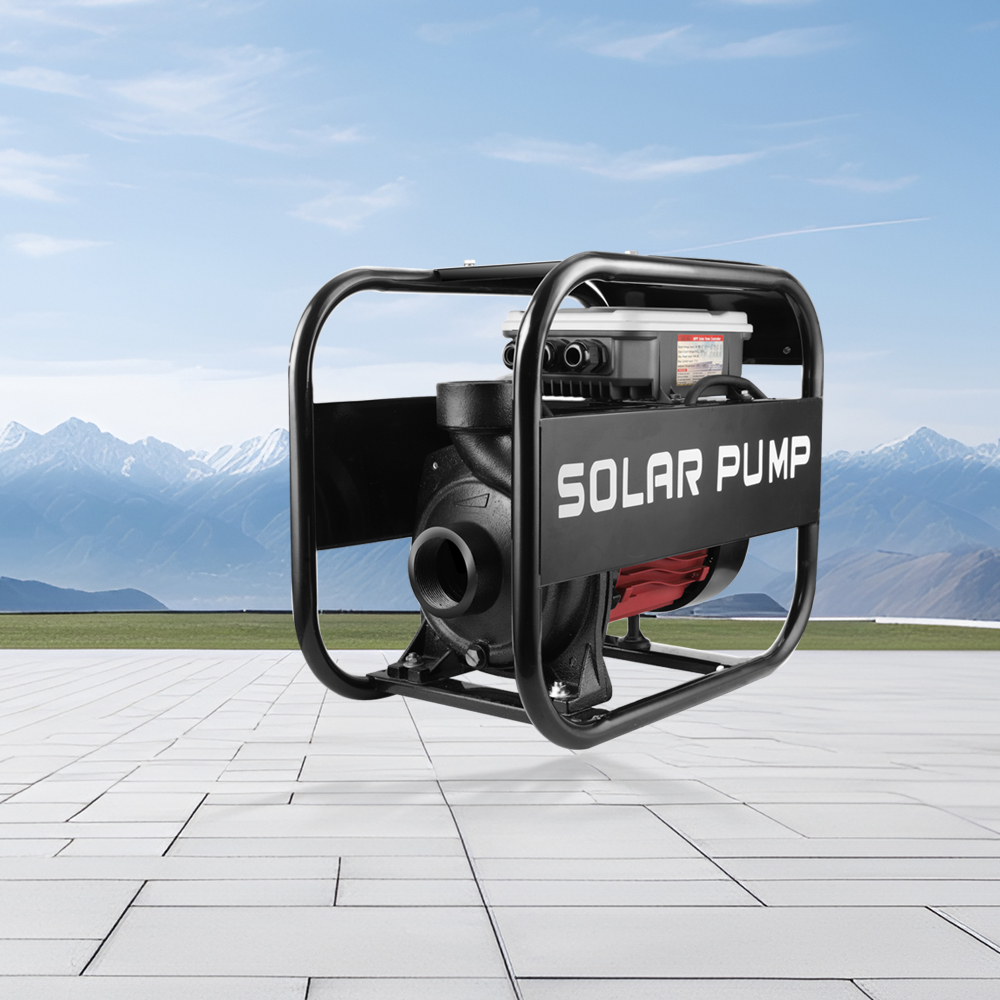
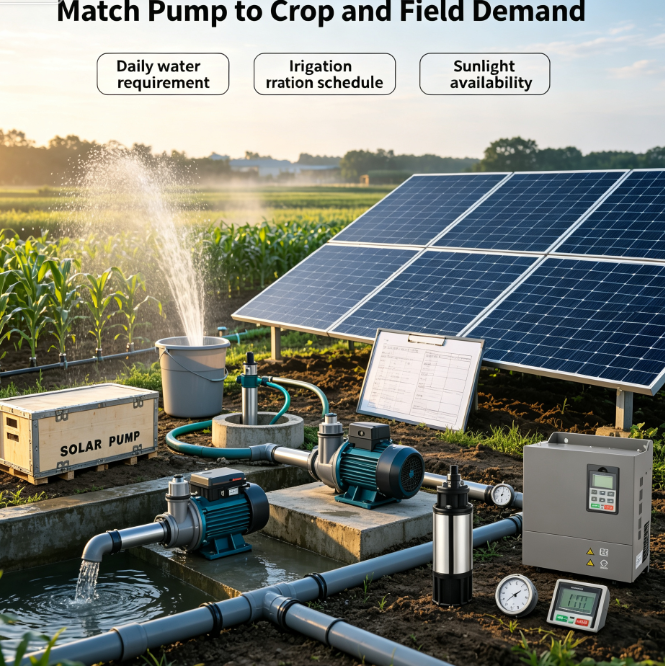
The 90 m on that page is the point where flow is zero. Useful flow happens where the curve crosses your TDH line. On a typical 4 inch multistage pump, 90 m at zero flow becomes 2.0 m3/h at 70 m. A dealer quoting 4.5 m3/h at 90 m has sold a number that cannot exist. Read a 3 inch DC stainless steel impeller deep well pump the same way: mark the duty point before promising flow.
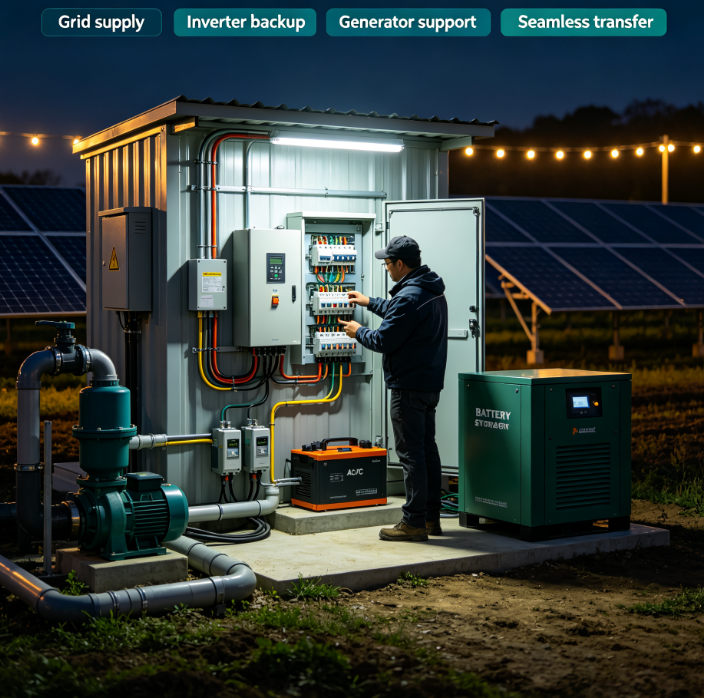
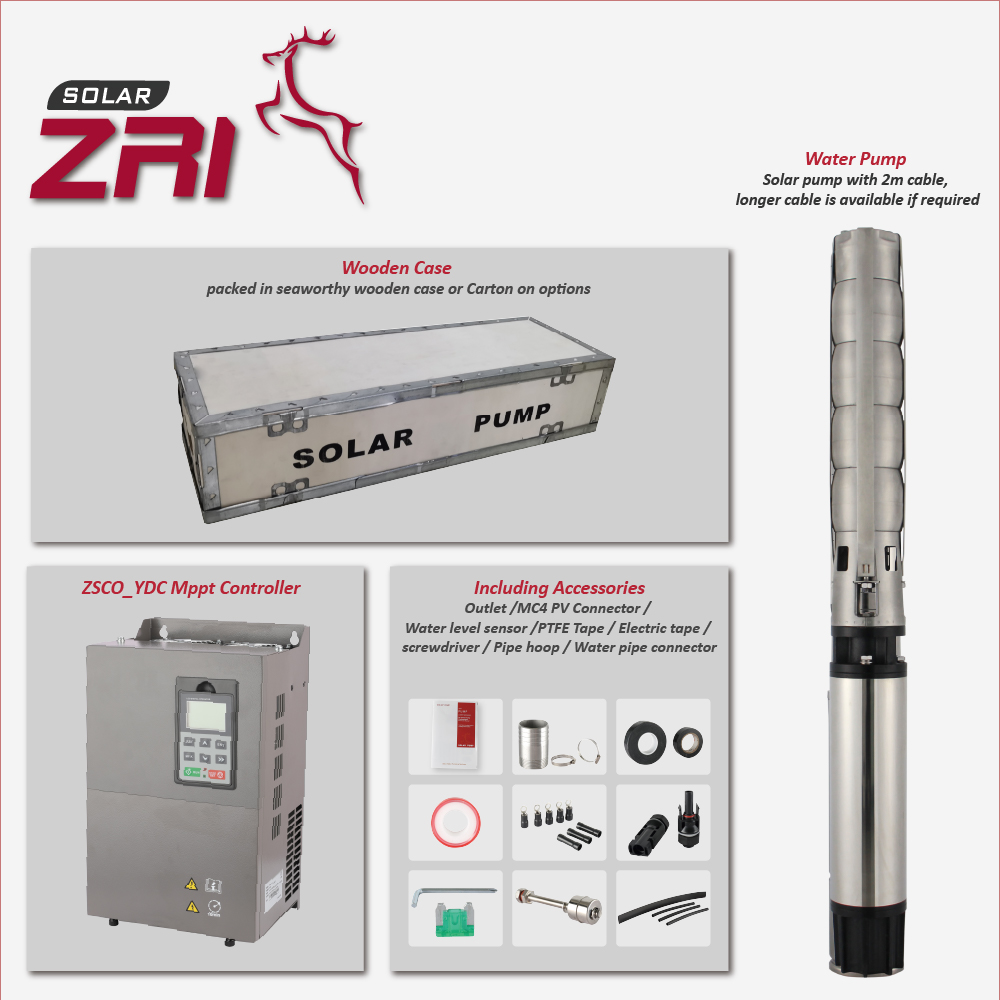
Efficiency at the duty point is the second filter: running at 30 per cent of best efficiency runs the motor hot and shortens controller life. Ask for the efficiency curve and input range with the head flow curve. A 4 inch AC/DC hybrid solar submersible pump with automatic switching answers another problem: array power by day, grid when the sun fails, and it is the specification where crop loss is unacceptable.
Daily Demand Comes From the Crop, Not the Pump
Work backwards from the water the plants use. Daily demand in m3 is crop area times evapotranspiration times the crop coefficient, split by irrigation efficiency. A 3 hectare block at ETo 5.5 mm/day, Kc 0.9 and 0.9 efficiency needs 165 m3/day. Under sprinkler at 70 per cent it needs 212 m3/day.
Split that volume by the solar window. Five peak sun hours means 33 m3/h to hit 165 m3/day, far more pump than the site needs with storage. The standard answer is a buffer tank and a longer pumping day: deliver the daily volume across 6 to 7 hours of usable sun. Behind a 30 m3 tank at 40 m3/day, a 6 inch DC stainless steel impeller deep well pump is the mainstream answer.
Array Matching and the Derating Nobody Applies
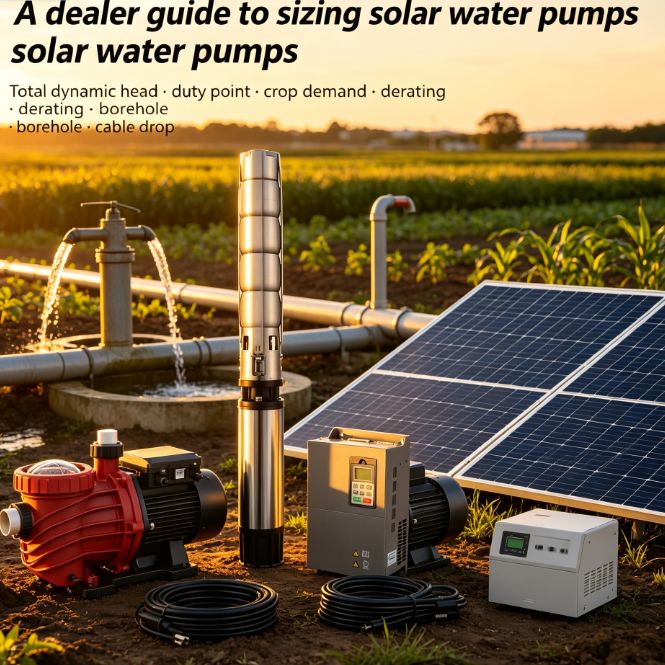
A 500 W panel is 500 W only at 25 C cell temperature, 1000 W/m2 irradiance, clean glass. A working array in April sits at 65 C with dust on it. Apply a temperature coefficient of minus 0.35 per cent per degree: 40 degrees above STC costs 14 per cent. Add 5 per cent for soiling and 3 for wiring, and a nominal 2000 W array delivers about 1500 W at noon. Size the array at 1.3 to 1.5 times pump input, never at 1.0.
Then check the voltage window. A 4 inch controller might accept 60 to 150 VDC, and three 500 W modules give a Voc near 147 V at 25 C, safe until you remember that Voc rises about 0.3 per cent per degree below 25 C. On a 5 C morning the string opens near 157 V and shuts down on overvoltage until 08:30.
Borehole Diameter, Sand and the Cable Run
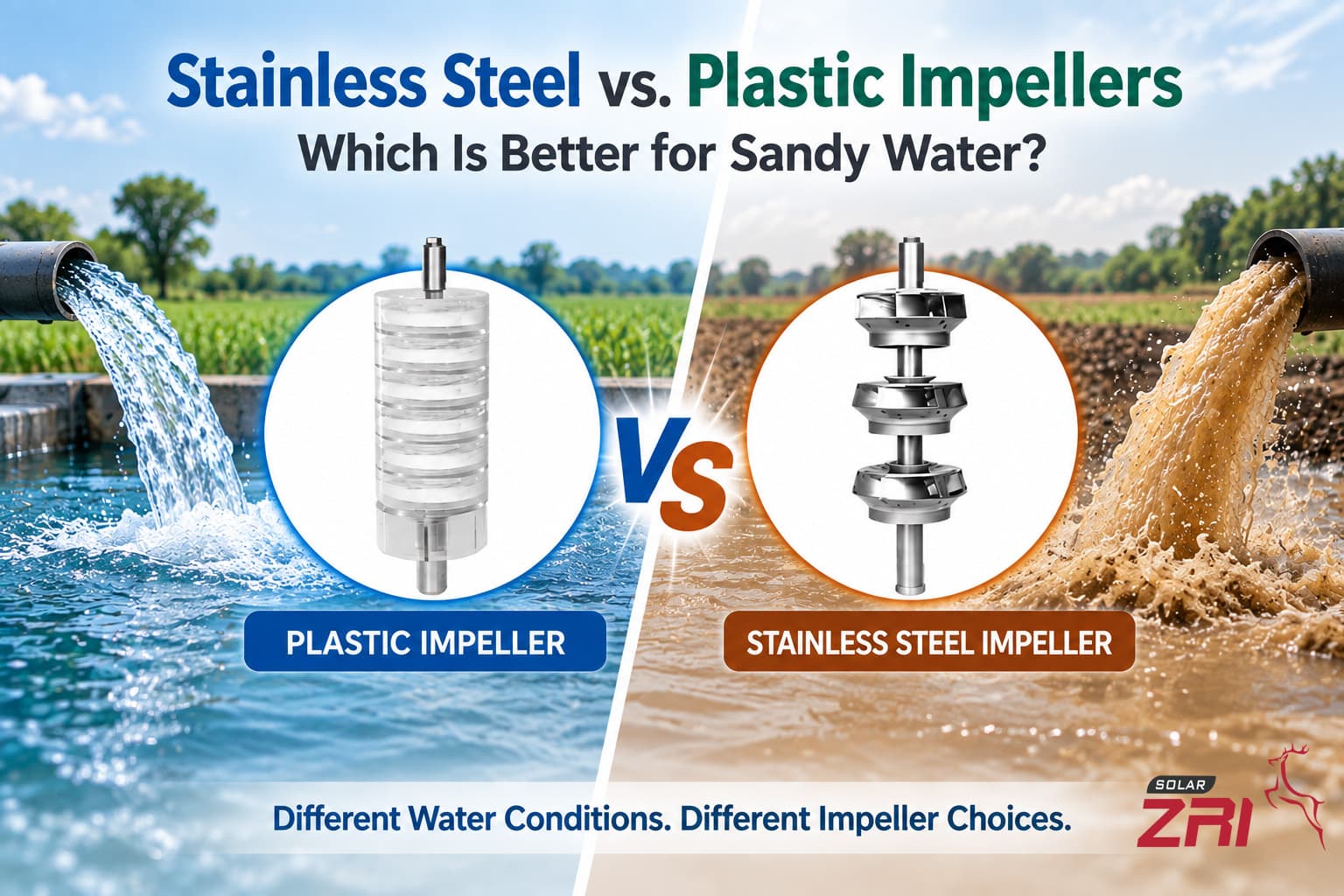
Borehole diameter sets the ceiling on everything: 3 inch boreholes run 1 to 3 m3/h, 4 inch is the mainstream 3 to 10 m3/h choice, and 6 inch is the answer above 20 m3/h. Measure the bore, and never quote from a drawing of the well. Where the water carries sand, an impeller pump wears its stages out, so a 3 inch DC deep well screw solar water pump is the safer call: it tolerates far higher sand content.
Long cable runs quietly destroy performance. Voltage drop is two times length times current times resistance per km: an 80 m run at 8 A on 4 mm2 copper drops 5.9 V, or 6 per cent on a 96 V system, while 10 mm2 brings it to 2.4 V, inside the 3 per cent target. Price the cable with the pump, or the installer buys whatever is cheapest on the shelf. Specify dry-run protection and low water cutouts as well.
The Data Sheet to Collect Before You Quote
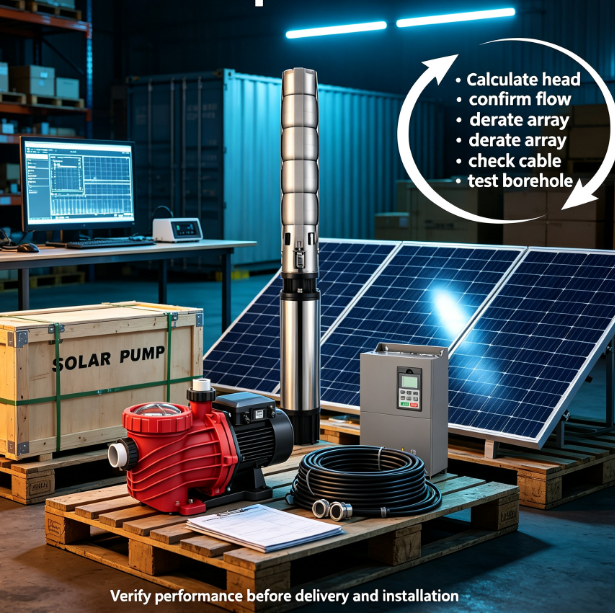
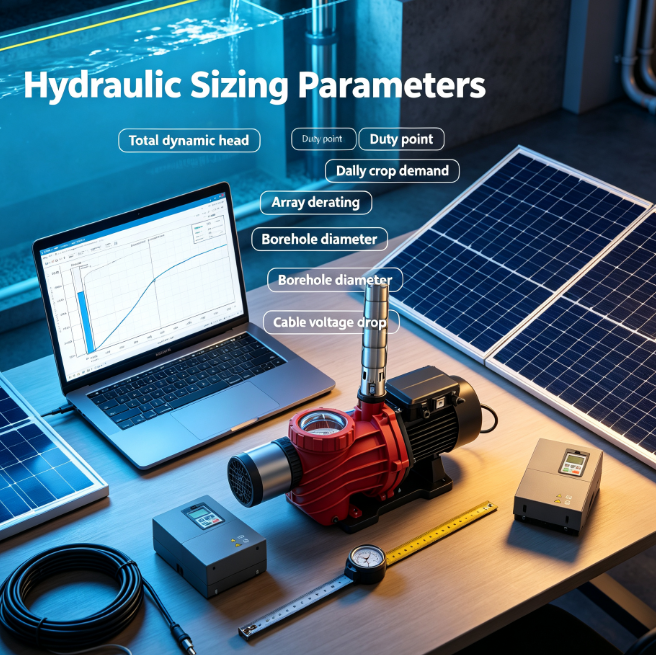
Collect these six items and sizing stops being guesswork.
- Borehole data: inner diameter, casing, static and dynamic level, safe yield in m3/h.
- Site layout: discharge height, pipe length and diameter, elbow count, filter losses.
- Application pressure: drip at 1.0 to 1.5 bar or sprinkler at 2.5 to 3.5 bar.
- Crop and area: hectares, crop type and Kc, local ETo in mm/day, irrigation efficiency.
- Solar resource: peak sun hours in the worst month, tilt, your derating.
- Water quality: sand content in g/m3, pH, salinity, dry-run frequency.
The Bottom Line
Quote from the duty point, never from the catalogue headline. Add static lift, friction and operating pressure into one TDH figure, convert crop and evapotranspiration into daily volume, spread it across a realistic solar window behind storage, and size the array at 1.3 to 1.5 times pump input. Dealers who quote this way do not pay crop-loss claims.