
 DC SOLAR SUBMERSIBLE PUMP
 AC/DC Solar submersible Pump
 DC Solar Surface Pump
 AC/DC solar surface Pump
 Solar swimming Pool Pump
 Built-in Controller Solar Pump
 Solar Pump inverter
 Pump Accessories


 Mr Youkee Kong
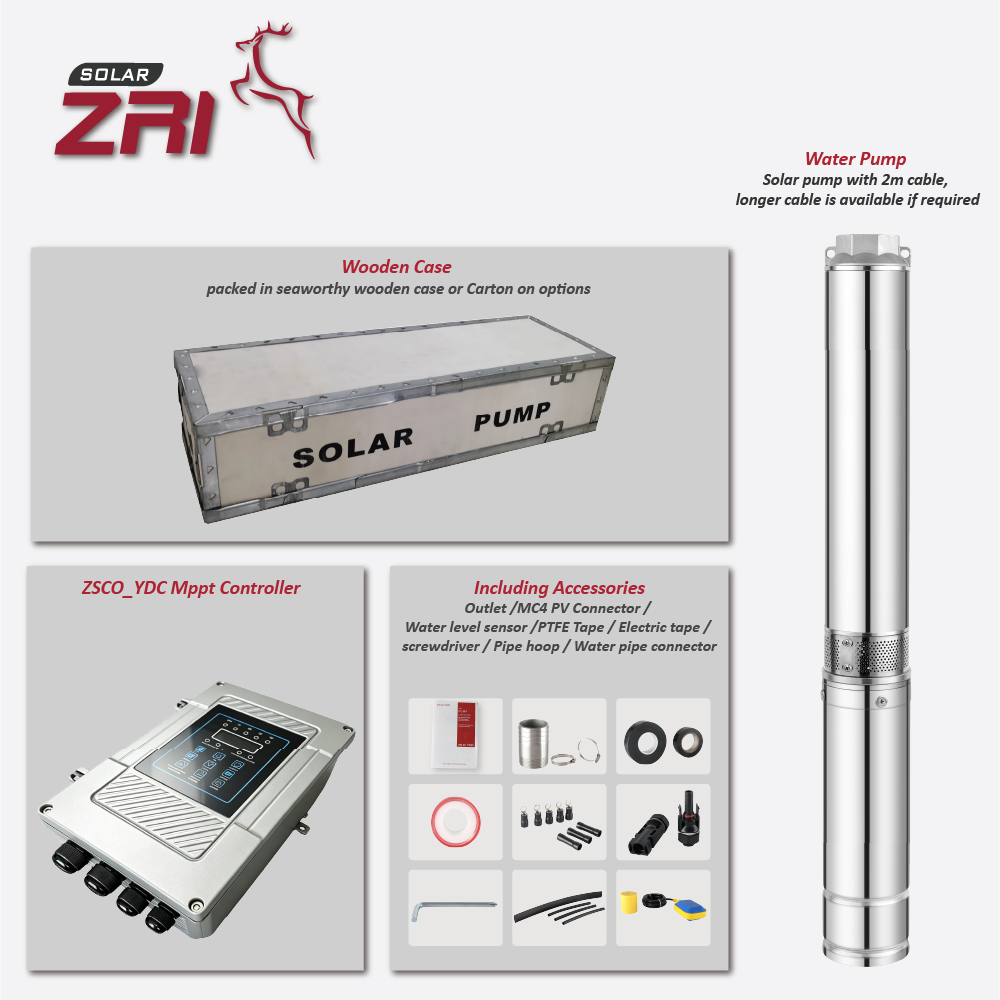
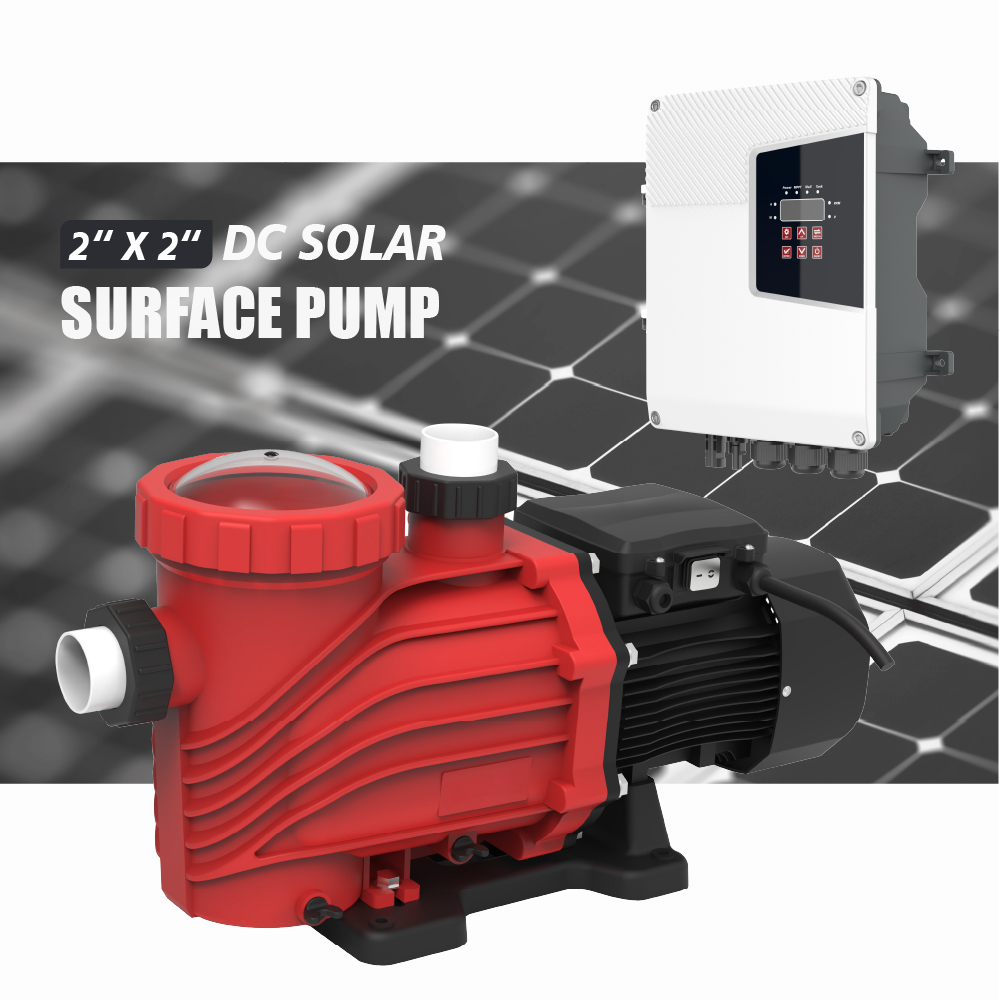
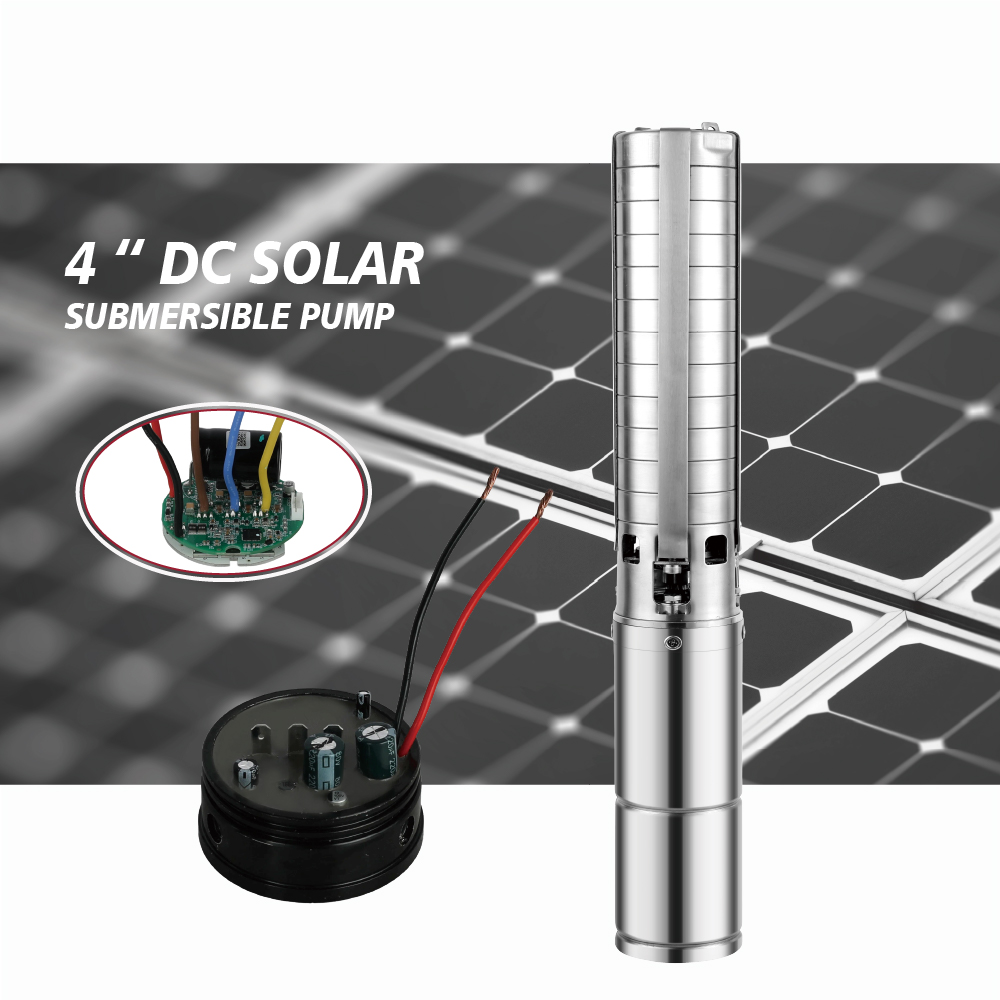
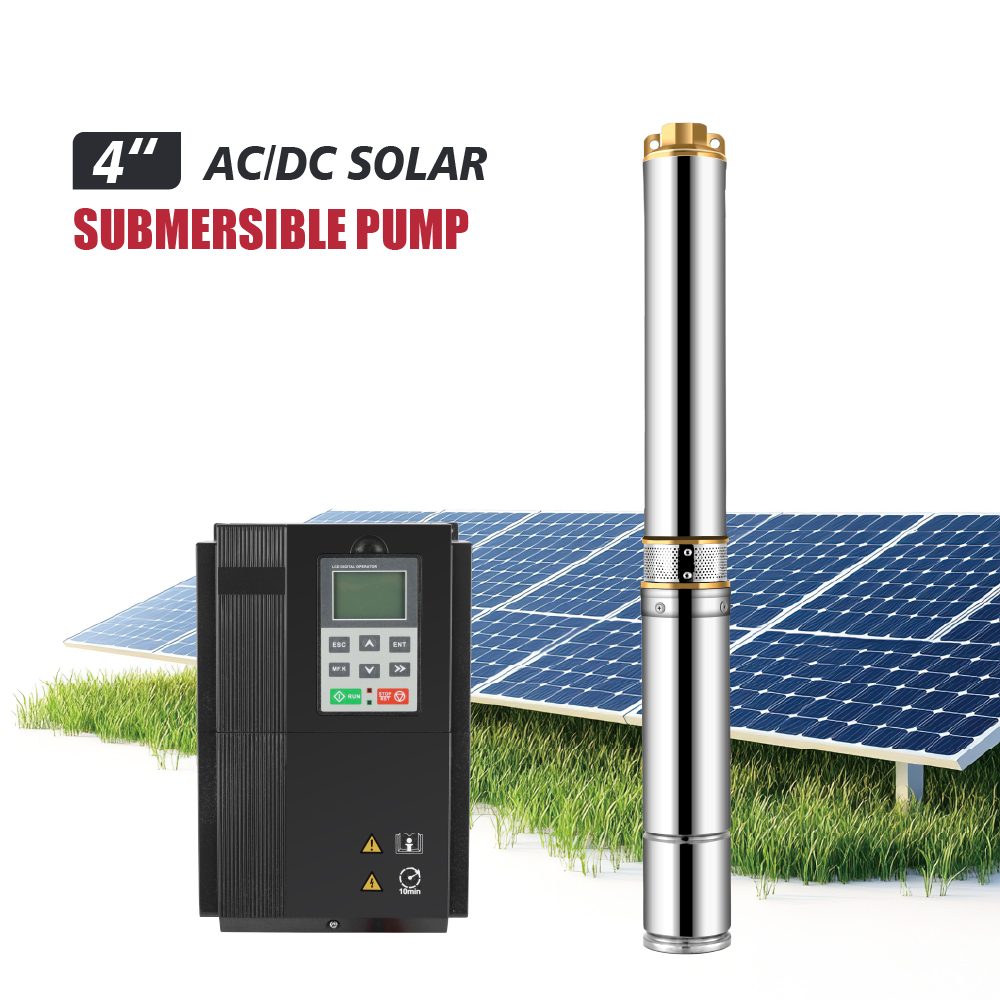
Sizing a solar submersible pump for drip irrigation without clogging
A European distributor landed a 14 ha olive grove contract where the grower already owned 6 km of drip line rated at 1.1 bar at the emitter, but the only pump quoted was a solar submersible pump sized to the grower's daily 90 m³. Within a week the far rows ran dry and the grower blamed the drip irrigation pressure design rather than the pump selection.
It was the assumption that meeting daily volume equals meeting emitter pressure. A pump delivering 90 m³ over 8 hours at free flow still collapses to 0.6 bar at the last emitter once filter loss, friction and elevation enter the system curve. We size from the system curve first, then confirm the array.
Why a daily-volume pump still starves drip emitters
Most dealers quote from the daily litre target. That number tells you nothing about whether the last emitter gets pressure. A 4 L/h emitter rated at 1.0 bar delivers 2.4 L/h at 0.6 bar and 0.4 L/h at 0.3 bar, so a volume-only pump underwaters the far rows while flooding the near ones.
The 90 m³/day target over 8 hours needs a continuous 11.25 m³/h, not a peak. Continuous flow is the point the curve must hold at system head, not at the free-discharge point where the pump shows 14 m³/h.
- The nameplate flow is measured at zero head, never at your 80 m of system loss.
- The free-discharge point overstates real flow by 40-60% on a typical drip block.
Our agriculture submersible pump range is built around that continuous-duty point. We size it from the system curve first because the emitters do not care about your daily litre total.
ZRI agriculture submersible pump for 2-15 ha drip and sprinkler irrigation
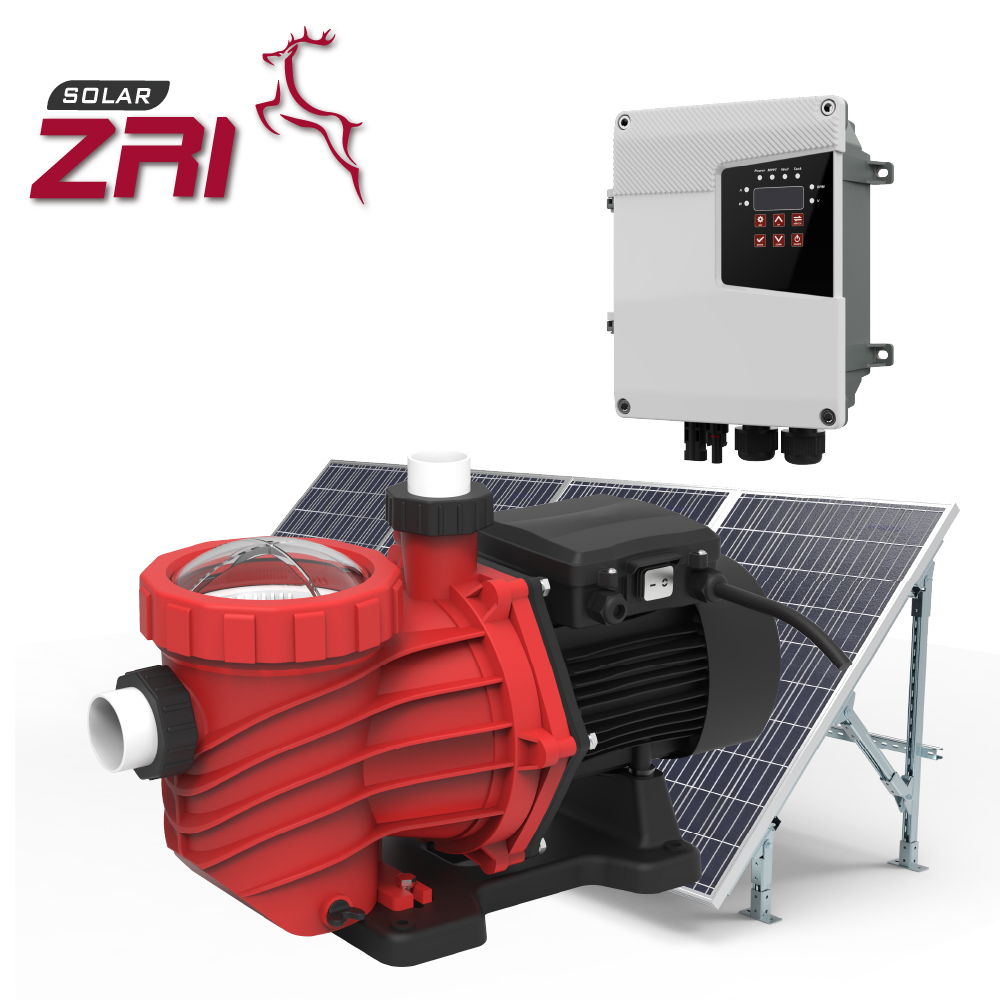
How much head does the filter stack actually eat?
Filter loss is the line item everyone forgets. A screen filter at 120 mesh adds 3-5 m of head, and a disc filter behind it adds 4-7 m at 10 m³/h, so the pump loses 7-12 m before the mainline. Media filters for dirty canal water eat 8-12 m more. A 63 mm mainline is the usual bore for blocks up to 10 ha running under 10 m³/h.
Sand loads screens fast on surface water. We specify a heavy-duty submersible pump where the source carries more than 50 mg/L suspended solids, because the extra margin absorbs the fouling curve between flushes.
- Screen filter, 120 mesh: 3-5 m head loss at 10 m³/h.
- Disc filter, 120 mesh: 4-7 m head loss at the same flow.
- Media filter, dirty source: 8-12 m and it climbs as the bed loads.
ZRI heavy-duty submersible pump for high-solids irrigation water
Building the worked total dynamic head calculation
Take a job: static water level 40 m, pump set at 55 m, tank 3 m above ground, 600 m of 63 mm mainline at 5 m³/h, a 120-mesh screen plus disc filter, emitters needing 1.1 bar. Static lift is 55 m, elevation 3 m, friction 8 m, filter loss 6 m and emitter head 11.2 m, giving 83.2 m of total dynamic head at 5 m³/h. Field crews record total dynamic head in metres, never in litres per hour, on the tender sheet.
The curve must cross the system curve at 5 m³/h and 83.2 m. A 4-inch bowl set holds the 5 m³/h line through the 60-80 m/s motor band on a DC array. Solar bowls for this duty run on 48-96 V DC from the array through the controller.
- Static lift: 55 m to the pump setting below water level.
- Delivery elevation: 3 m to the top of the supply tank.
- Mainline friction: 8 m across 600 m of 63 mm pipe at 5 m³/h.
- Filter loss: 6 m for the screen and disc pair at this flow.
ZRI 4-inch submersible well pump for 40-150 m deep boreholes
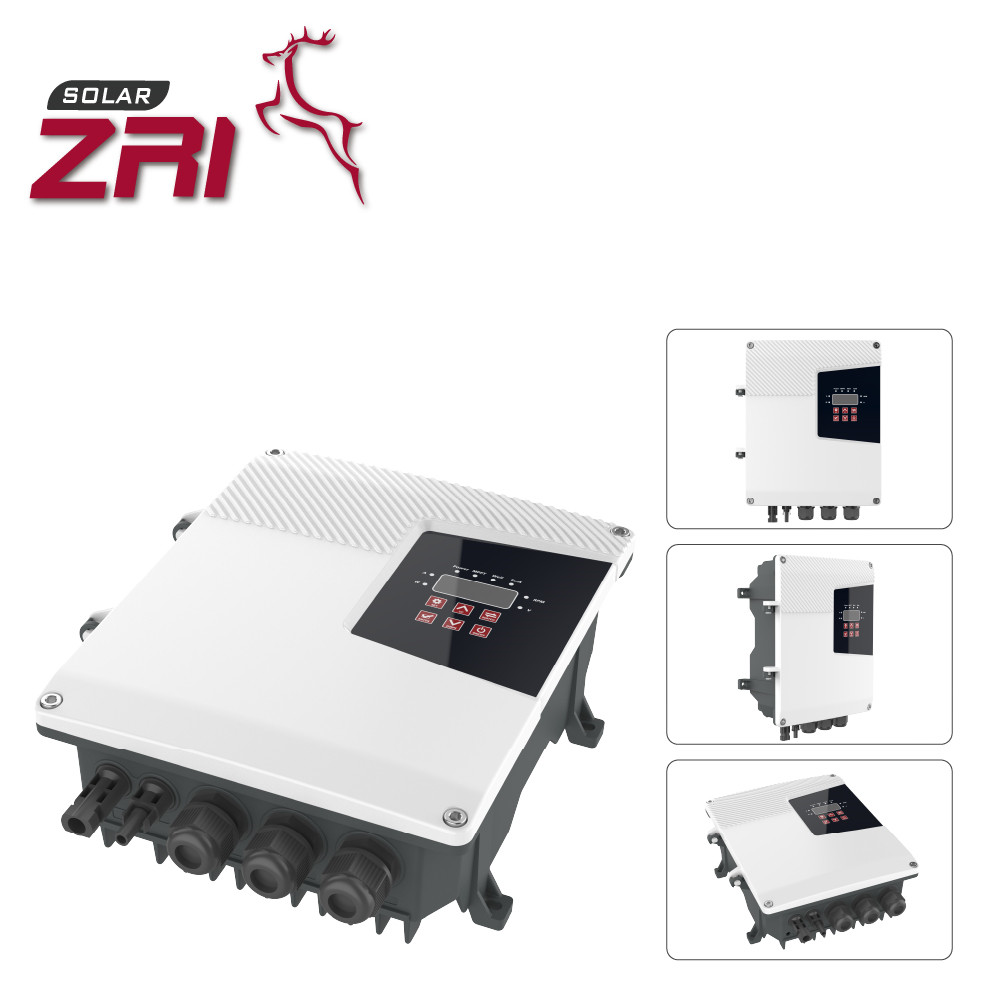
What filtration mesh matches your emitter flow class?
Emitter class sets the mesh, not the other way round. Turbulent-flow drippers tolerate 120 mesh, but pressure-compensating emitters on sandy water need 150-200 mesh, and underscreening clogs the labyrinth within a single season.
Narrow boreholes limit bowl diameter. Our 3-inch submersible well pump fits 80-100 mm casings and still carries the 5-7 m³/h a short drip block needs.
- 120 mesh: turbulent drippers on clean well water.
- 150 mesh: pressure-compensating emitters on canal water.
- 200 mesh: sandy sources feeding 2.0 L/h labyrinth emitters.
ZRI 3-inch submersible well pump for 30-90 m narrow boreholes
What happens when pressure drops below the emitter minimum?
Below 0.8 bar most pressure-compensating emitters stop compensating. Flow collapses unevenly, the near rows flood and the far rows bake, and the crop map shows the failure within 7-10 days. A partially clogged labyrinth raises local pressure and blows the next emitter.
The fix is not a bigger pump. The fix is a pressure-compensating lateral and a regulator set 0.2 bar above the emitter floor. Add a flush valve at the block end and the labyrinth stays open all season.
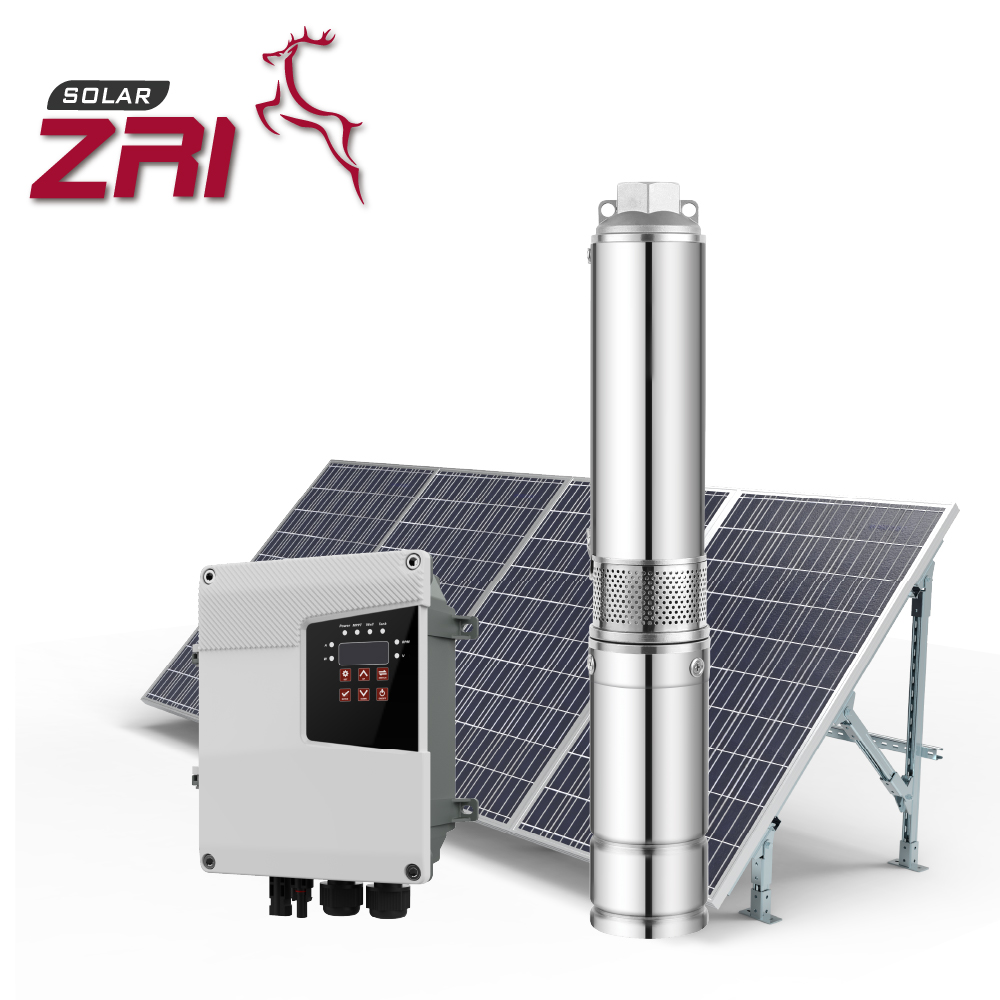
Pressure regulation, flushing and keeping flow on spec
Regulators belong at the block inlet, not at the pump. A 1.0 bar regulator at each block trims the 1.2-1.5 bar supply down to a flat line the emitters can use.
Skip the purge and biofilm builds to a 20-30% flow loss. On long runs a 220 V booster sits after the tank to lift pressure into the block, and running it on grid avoids a second solar array.
- Set the block regulator 0.2 bar above the emitter minimum, never at it.
- Flush every 14-21 days for 2-3 minutes at 0.5 bar over operating pressure.
- Log filter differential; clean at 0.3 bar loss, not at 0.6 bar.
ZRI 220 V submersible water pump for booster and transfer duties
Where a small unit earns its place on the farm
Not every duty needs a deep-well solar unit. A 0.5-2.0 ha nursery block or a livestock trough 200-400 m from the main line is a transfer job, best served by a small submersible or a 220 V unit on a timer.
The dealers who win drip tenders stop quoting litres and start quoting the cross point. Size from total dynamic head, name the filter loss, and the emitters stay at 1.1 bar from row one to row last.