
 DC SOLAR SUBMERSIBLE PUMP
 AC/DC Solar submersible Pump
 DC Solar Surface Pump
 AC/DC solar surface Pump
 Solar swimming Pool Pump
 Built-in Controller Solar Pump
 Solar Pump inverter
 Pump Accessories


 Mr Youkee Kong



Solar aerators vs. conventional aerators: a complete comparison
In the field of water treatment and environmental governance, aeration technology is a key means to improve water quality and promote the self-purification ability of water bodies. As environmental awareness increases and technology advances, solar aerators are becoming a popular alternative. This paper will make a comprehensive comparison between solar aerators and traditional aeration methods, analyze their advantages and disadvantages, and help international wholesale buyers better understand the characteristics and application scenarios of these two technologies.
1. Advantages and disadvantages of traditional aeration methods
1. Blast aeration
Air blast aeration is to send air into the water through the blower, and release bubbles through the aerator head or pipe to increase the dissolved oxygen in the water.
Advantages: Good oxygenation effect, suitable for large water surface and deep water area.
Disadvantages: requires power supply, high operating costs, and complex equipment maintenance.
2. Mechanical aeration
Mechanical aeration uses a mechanical device (such as an impeller) to stir the water surface and increase the contact area between air and water.
Advantages: simple equipment, easy installation and maintenance.
Disadvantages: The oxygenation effect is relatively poor, and the service area is limited.
3. Jet aeration
Jet aeration uses high-speed water flow to shear air into tiny bubbles to form an oxygen-rich gas-liquid mixture.
Advantages: Good oxygenation effect, suitable for deep water area.
Disadvantages: complex equipment, high cost, easy to jam.
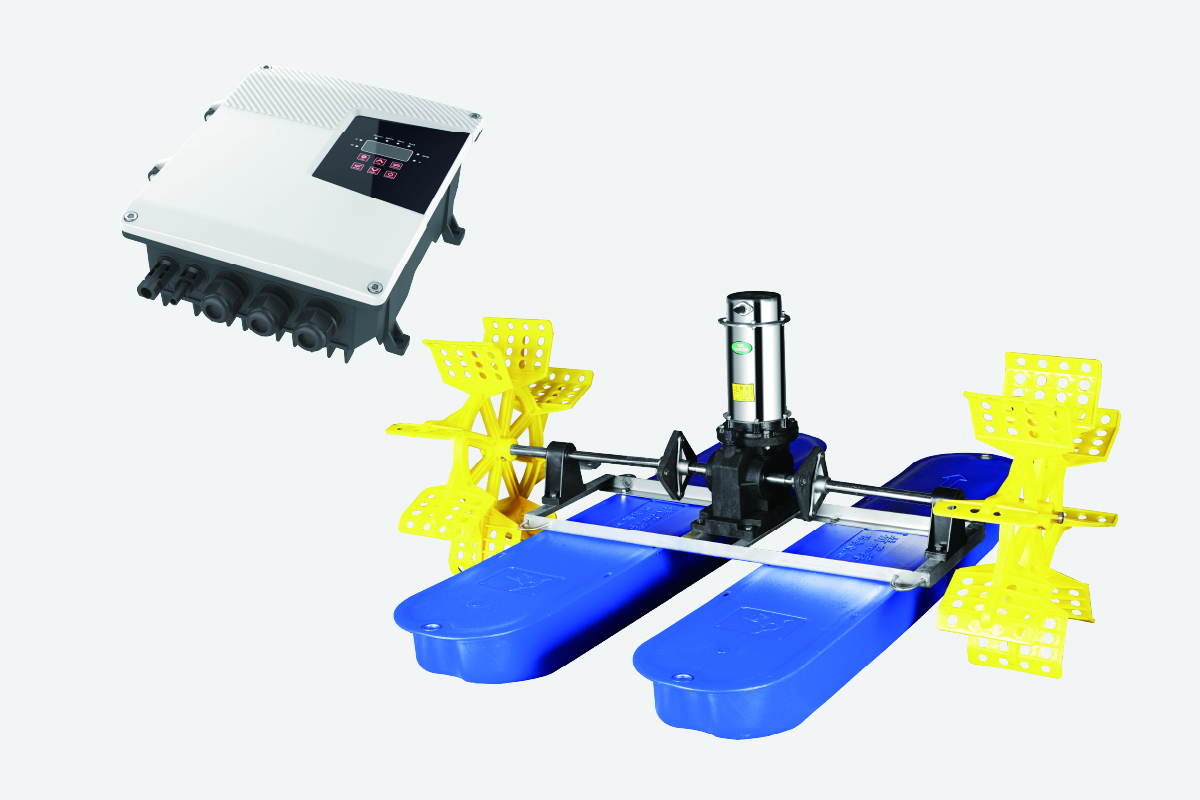
Two, the advantages and disadvantages of solar aerator
1. Energy saving and environmental protection
Solar aerators use solar energy as a power source, do not require external power supply, have low operating costs, and do not produce pollutants.
Advantages: Environmental protection, energy saving, suitable for remote areas without power supply.
Disadvantages: Relying on solar energy, the effect is limited in rainy days.
2. High efficiency
The solar aerator can improve the oxygen transfer efficiency and promote the self-purification of water body through micro-nano bubble technology.
Advantages: Good oxygenation effect, improve water transparency.
Disadvantages: High initial investment cost.
3. Intelligent control
The solar aerator is equipped with an intelligent control system that can remotely monitor and adjust operating parameters through the APP.
Advantages: Easy to operate, can be automatically adjusted according to water quality changes.
Disadvantages: High technical requirements, the need for certain operational training.
3. Comprehensive comparison
1. Oxygen delivery capacity
Traditional aeration methods: blast aeration and jet aeration have higher oxygen delivery capacity, but the cost and maintenance requirements are also high.
Solar aerator: Although the oxygen delivery capacity of micro-nano bubble technology is lower than that of traditional methods, it can already meet most water treatment needs.
2. Diffusion radius
Traditional aeration methods: jet aeration and blast aeration have large diffusion radius, but the equipment is complicated.
Solar aerator: The diffusion radius is relatively small, but it can be used in combination with multiple devices to expand the scope of service.
3. Operating cost
Traditional aeration methods: High operating costs, requiring continuous power supply and equipment maintenance.
Solar aerator: Low operating cost, no power supply, simple maintenance.
4. Environmental adaptability
Traditional aeration method: lower environmental requirements, but may cause secondary pollution to water quality.
Solar aerator: environmental protection and pollution-free, but greatly affected by the weather.

4. Application scenarios
1. Traditional aeration method
It is suitable for urban sewage treatment plants, large-scale industrial water treatment facilities and other scenarios that require high oxygen enhancement effect and diffusion radius.
2. Solar aerator
It is suitable for rural sewage treatment, small lakes and rivers management, aquaculture and other scenarios with high operating costs and environmental protection requirements.
V. Conclusion
The solar aerator and the traditional aeration method have advantages and disadvantages, and the selection should be considered according to the specific needs and scenarios. For international wholesale buyers, understanding these comparative information helps to provide customers with more accurate product recommendations and services.
I hope the above will help you better understand how solar aerators compare to traditional aeration methods. If you have any further questions or need more detailed information, please feel free to contact us.