
 DC SOLAR SUBMERSIBLE PUMP
 AC/DC Solar submersible Pump
 DC Solar Surface Pump
 AC/DC solar surface Pump
 Solar swimming Pool Pump
 Built-in Controller Solar Pump
 Solar Pump inverter
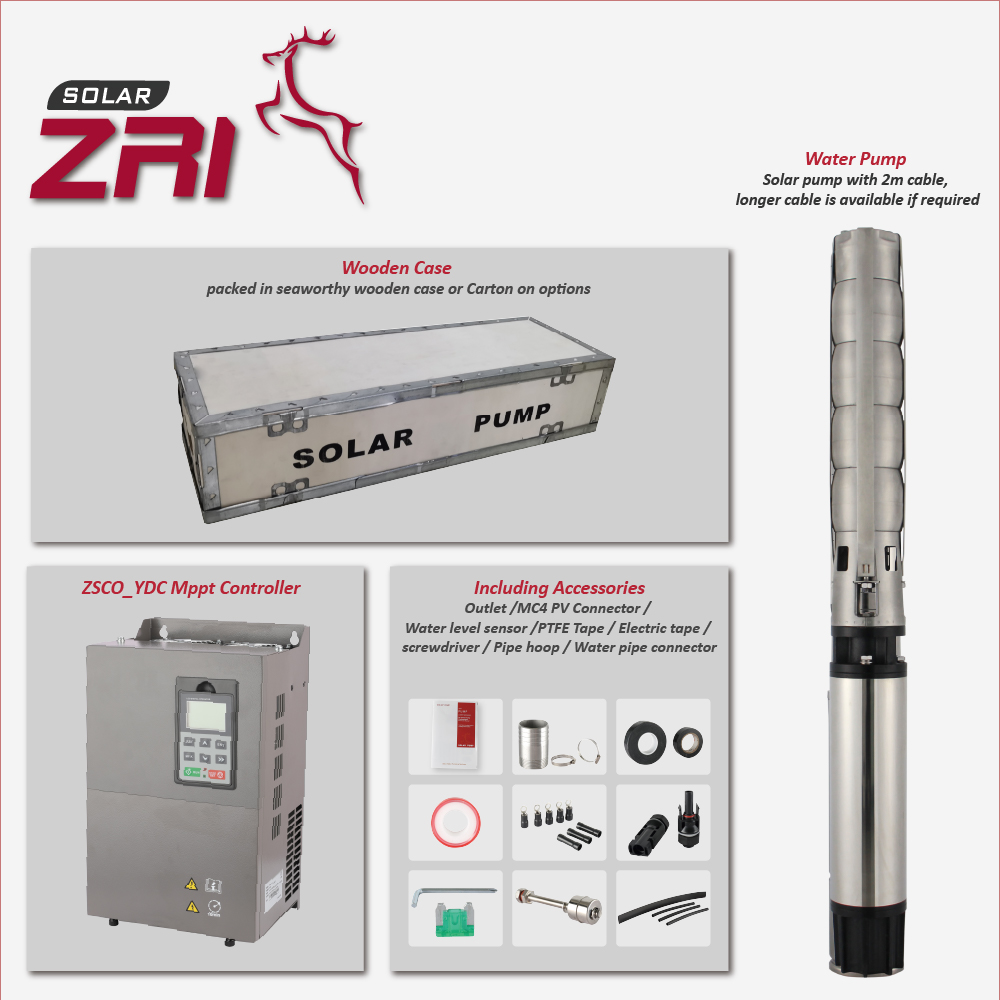
 Pump Accessories


 Mr Youkee Kong



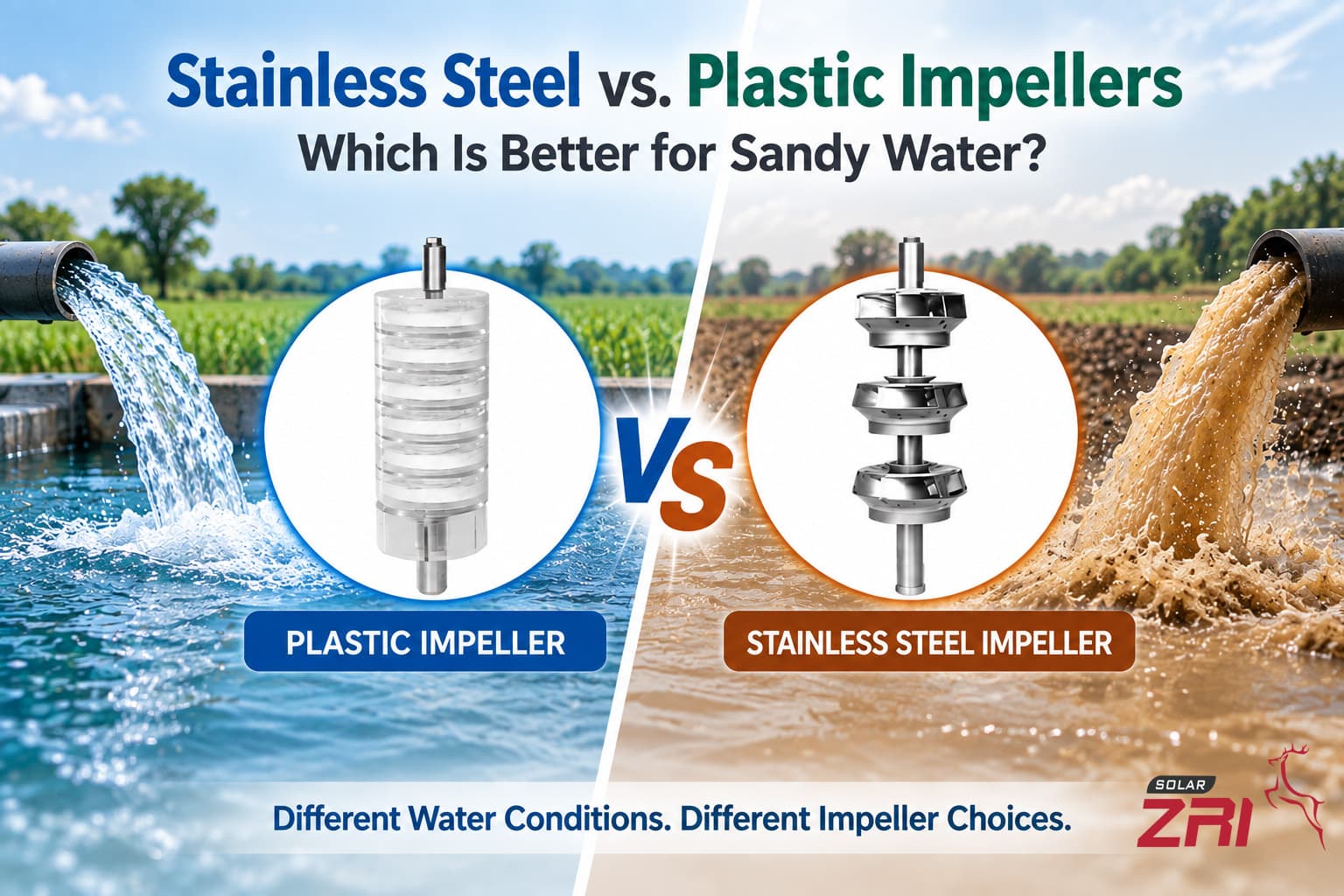
Stainless Steel vs Plastic Impellers: Which Is Better for Sandy Water?
When choosing a solar water pump, buyers usually compare flow, head, motor power and price first. Impeller material is easy to overlook.
But when the water contains sand or silt, this small detail can make a noticeable difference to pump life and long-term performance.
ZRI solar pumps are available with both engineering plastic and stainless steel impellers. Neither material is simply “better”. The right choice depends mainly on the water source and working conditions.
Plastic vs Stainless Steel Impellers
Plastic impellers, commonly made from engineering plastics such as Noryl/PPO, are lightweight and naturally resistant to corrosion. They also help keep the overall pump cost competitive.
Stainless steel impellers cost more, but offer higher mechanical strength and better resistance to abrasive wear.
| Feature | Plastic Impeller | Stainless Steel |
|---|---|---|
| Initial Cost | Lower | Higher |
| Weight | Lightweight | Heavier |
| Corrosion Resistance | Excellent | Excellent |
| Sand Wear Resistance | Moderate | Better |
| Clean Well Water | Very suitable | Suitable |
| Sandy Water | Limited | Recommended |
| Long-term Irrigation | Depends on water quality | More suitable |
The important point is not just the material itself. What is actually inside the water matters more.
Why Sandy Water Changes the Situation
Sand particles continuously pass across the impeller blades while the pump is running. Over time, they can cause erosion and abrasion.
Plastic is softer, so this wear can gradually change the impeller profile. Once that happens, the pump may still operate, but its flow and hydraulic efficiency can slowly decrease.
Stainless steel has much higher mechanical strength and generally handles abrasive conditions better. Sand can still cause wear — stainless steel is not indestructible — but the process is usually slower.
This becomes especially important for pumps running several hours every day.
Which Impeller Should You Choose?
For clean borehole water, a plastic impeller is often the more economical solution. There is little reason to pay extra for stainless steel when abrasive particles are minimal.
For rivers, ponds, shallow wells or visibly sandy water, stainless steel is usually worth considering.
ZRI generally recommends the following:
| Water Condition | Suggested ZRI Series |
|---|---|
| Clean deep-well water | S3PC / S4PC |
| Clean water + budget project | S3PCB / S4PCB |
| Sandy well water | S3SC / S4SC |
| River or pond irrigation | ZSHF |
These recommendations follow the material configurations in ZRI's existing product range. The S3PC/S4PC families use plastic impellers, while S3SC/S4SC and ZSHF provide stainless steel options for more demanding water conditions.
Think Beyond the Pump Price
A stainless steel impeller normally increases the initial pump cost. But purchase price is only one part of the calculation.
For a long-term irrigation project, buyers should also consider impeller replacement, maintenance labor, downtime and declining water output.
On the other hand, using stainless steel for clean household water may simply add unnecessary cost.
This is why ZRI offers both options instead of using one material for every solar pump.
Conclusion
The choice between a plastic and stainless steel solar pump impeller is really a question of application.
Clean water + limited budget → Plastic impeller
Sandy water + frequent operation → Stainless steel impeller
Before selecting a solar water pump, tell us your water source, well depth, required flow and total head. If the water contains visible sand or sediment, mention that as well.
ZRI can then recommend the pump and impeller configuration that better matches the actual working conditions.