
 DC SOLAR SUBMERSIBLE PUMP
 AC/DC Solar submersible Pump
 DC Solar Surface Pump
 AC/DC solar surface Pump
 Solar swimming Pool Pump
 Built-in Controller Solar Pump
 Solar Pump inverter
 Pump Accessories


 Mr Youkee Kong



Submersible pumps vs. surface pumps: Choose the right type of solar water pump for your application scenarios
Submersible pumps vs. surface pumps: Choose the right type of solar water pump for your application scenarios
When choosing a solar water pump, many people's first reaction is to look at hard indicators such as power, flow rate and head, but they tend to overlook a fundamental issue - the installation method of the pump, that is, whether to choose a submersible pump or a surface pump. Both of these types seem to be "tools for pumping water", but their underlying logics are completely different. Using them wrongly not only leads to low efficiency but may also cause the entire system to take more detours. Especially when it comes to scenarios such as agricultural irrigation, livestock drinking water, and water supply in remote areas that rely on solar power for operation, choosing the right type is equivalent to providing an insurance policy for long-term stable operation.
Submersible pump: The "Invisible Labor Force" Submerged Underwater
People who see submersible pumps for the first time might be curious: How do you throw the motor into the water? In fact, this is precisely its ingenuity - the entire machine works submerged in water, relying on the natural cooling of water to keep the motor running continuously and stably, and the noise is so low that it is almost inaudible. Because there is no loss of "pumping water from the air", the flow efficiency of submersible pumps is often higher. Under the same power, they can increase the head by several meters or handle deeper water sources (such as groundwater with a well depth of more than 5 meters).
This is particularly friendly for scenarios where water needs to be drawn from the bottom of deep Wells, ponds or reservoirs. For instance, when irrigating farmland, if the water level of the water source drops with the seasons, the submersible pump can always "touch the bottom" to draw water, avoiding the problem of empty suction due to the shallower water level. When livestock farms draw water from open-air pools, submersible pumps submerged underwater can avoid the interference of floating objects on the water surface (such as fallen leaves and algae), reducing the risk of clogging. However, it should be noted that submersible pumps must be well waterproof sealed (even though all regular products meet the standards), and during installation, it is necessary to ensure that the water depth covers the pump body; otherwise, the heat dissipation of the motor will be affected - this may seem basic, but it is a common pitfall for many beginners.

Surface Pump: The "Agile General" Standing on the shore
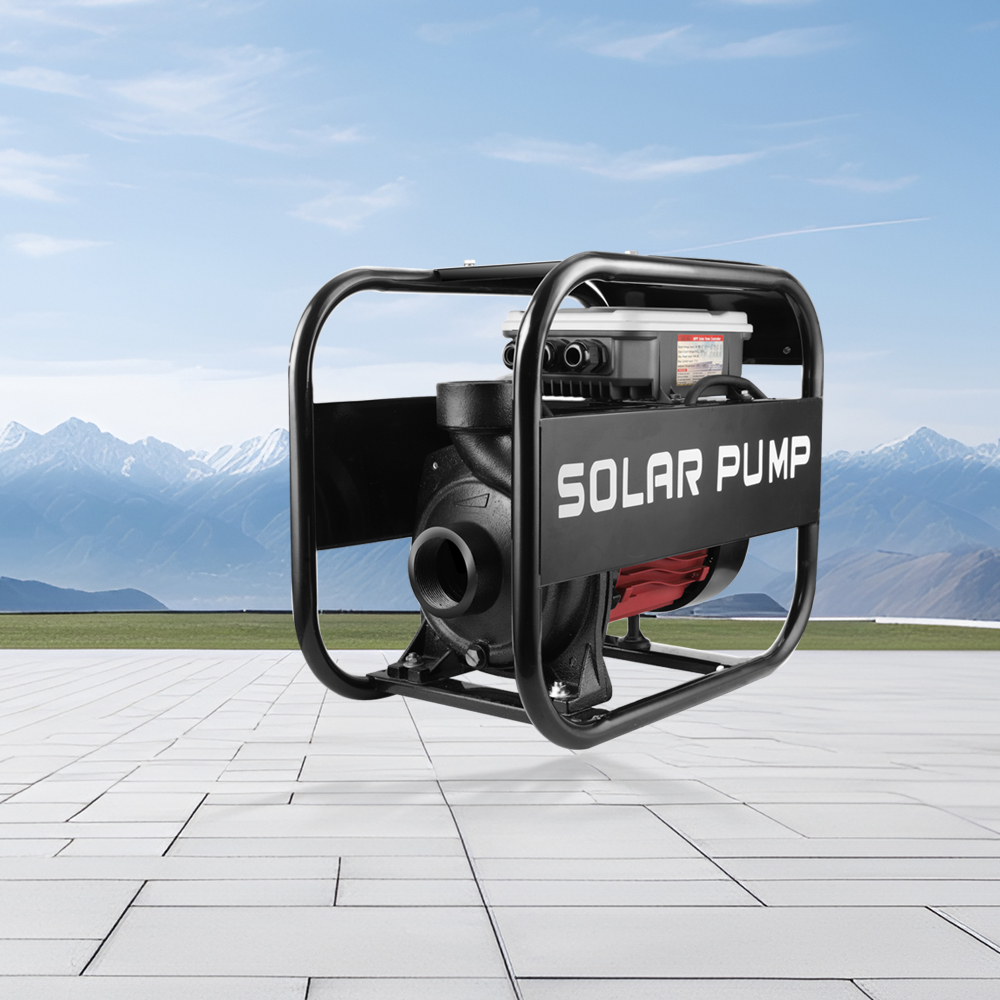
Unlike submersible pumps, surface pumps operate completely exposed to the air and draw water by "extending" into the water through the intake pipe. Its advantage does not lie in its "depth", but in its "flexibility" - the installation position is flexible, and it can be lifted and moved whenever you want. Maintenance is also convenient. There is no need to drain and disassemble the pump. Just unscrew a few screws and you can check the interior.
This feature makes surface pumps more popular in scenarios where water sources are relatively shallow (usually ≤5 meters), frequent movement is required, or temporary water usage is needed. For instance, when irrigating an orchard, it might be necessary to water the eastern plot today and switch to the western one tomorrow. The surface pump can be moved simply by placing it on the pickup truck. Or for temporary water supply at construction sites, just connect the water pipes and water can be pumped from nearby rivers and ditches. It's not troublesome to evacuate the site after use. In addition, the inlet of a surface pump is usually equipped with a filtration device, which is sufficient for shallow water with good quality (such as mountain streams and shallow Wells). However, if the water source contains a lot of sediment and dense impurities, an additional pre-filter must be added; otherwise, the impeller is prone to wear.

Choosing the right type essentially means matching the "underlying demands" of the scenario.
When we talk about this, it's not hard to notice that the choice between submersible pumps and surface pumps is never about "who is better", but rather "who understands your situation better". If the water usage point is close to deep water and long-term stability is pursued (such as centralized water supply in villages or fixed farmland irrigation), the "submersible high efficiency" of submersible pumps is more worry-free. If the water source is shallow and flexible movement is required (such as orchard rotation irrigation or temporary construction water supply), the "onshore freedom" of surface pumps is more practical.
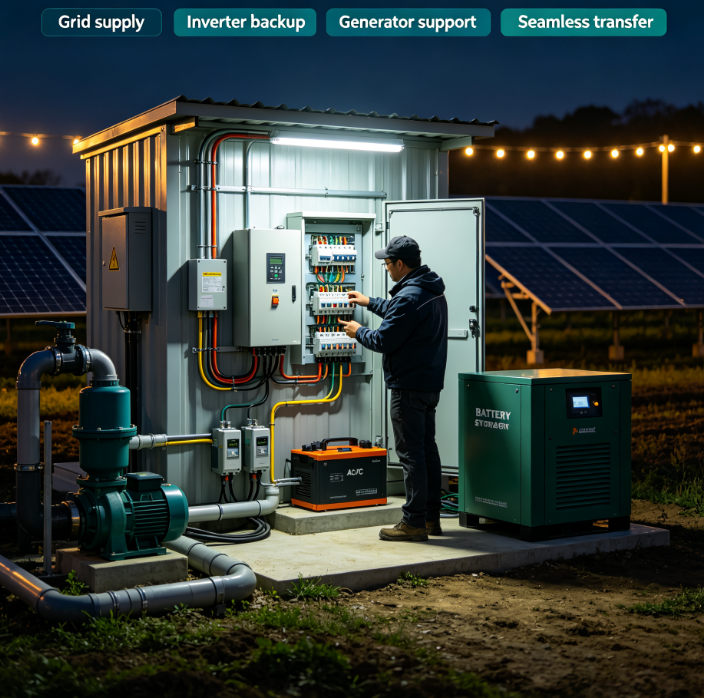
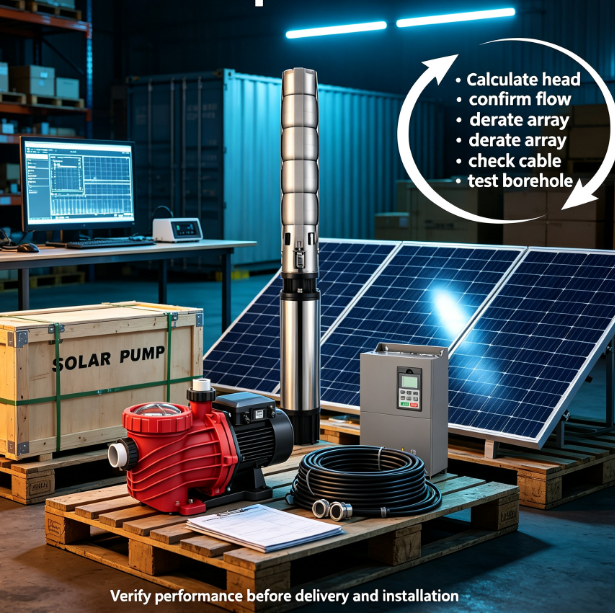
There is another point that is often overlooked: the matching degree of solar energy systems. Due to the submersible pump's submerged operation, the motor load is relatively stable. When paired with solar panels, it is easier to achieve linear regulation of "light intensity - flow rate". For surface pumps, the "self-priming pressure" caused by the height of the water inlet needs to be taken into account. When choosing a solar controller, sufficient margin should be left. These details may seem technical, but in fact, they directly affect the energy consumption and lifespan of the entire system - after all, for users who rely on solar energy, "energy saving" and "durability" have always been two sides of the same coin.
Ultimately, choosing the type of solar water pump is like choosing shoes: only those that fit well can go far. Submersible pumps are like "rain boots", suitable for wading deep water and traveling long distances. The surface pump is like a "sports shoe", light and flexible, going wherever needed. Only by understanding their temperaments and then choosing them based on one's own water source conditions and water usage habits can solar water pumps truly be "put to good use".