
 DC SOLAR SUBMERSIBLE PUMP
 AC/DC Solar submersible Pump
 DC Solar Surface Pump
 AC/DC solar surface Pump
 Solar swimming Pool Pump
 Built-in Controller Solar Pump
 Solar Pump inverter
 Pump Accessories


 Mr Youkee Kong





With or without brushes? ZRI explains in detail the technological differences of DC motors
In the pump industry, motor technology directly determines the performance, service life, and user experience of the product. As one of the world's top three suppliers in the solar pump market, ZRI consistently uses brushless permanent magnet synchronous DC motors to offer users more efficient, quieter, and more reliable water supply solutions. So, what are the real differences between a brushless motor and a traditional brushed motor?
Brushed DC Motor: Simple Structure, but Obvious Limitations
The brushed DC motor was the first widely used type of DC motor. Its basic structure includes a stator, a rotor, brushes, and a commutator. The stator is typically equipped with permanent magnets that create a fixed magnetic field, while the rotor consists of copper windings. Electric current is transmitted through carbon brushes to the rotating commutator, and the direction of the current in the windings is constantly reversed as the rotor turns, thereby generating continuous torque.
This design allows the brushed motor to be connected directly to a battery or DC power source, featuring simple control and low manufacturing costs. That's why it was long used in toys, simple household appliances, and early models of low-power pumps. However, the main problem lies precisely in this seemingly insignificant detail—the brushes.
Since the brushes must constantly maintain friction with the rapidly rotating commutator, they gradually wear out with prolonged use. This not only requires regular replacement of the brushes but also leads to the formation of carbon dust and electrical sparks. In a humid environment, carbon dust can easily cause short circuits, and electrical sparks can create electromagnetic interference and even pose safety hazards. Furthermore, energy losses due to friction reduce the overall efficiency of the motor, leading to significant operating noise and considerable heat generation. These disadvantages are particularly pronounced in pumps that must operate continuously for long periods.
As a manufacturer of solar pumps, ZRI understands perfectly well that users in remote areas or in environments with unstable power supplies can least afford frequent breakdowns and high maintenance costs. The inherent shortcomings of brushed motors clearly do not meet this key requirement.
Brushless DC Motor: Electronic Commutation, a Quantum Leap in Performance
The brushless permanent magnet synchronous DC motor is a high-performance motor whose commutation is handled by an electronic controller. It abandons the mechanical contact between brushes and a commutator, characteristic of traditional brushed motors, and eliminates all wear-prone mechanical commutation components. The rotor is equipped with high-energy permanent magnets, and the stator windings are precisely powered by an intelligent driver chip.
Although a brushless motor cannot be connected directly to a power source and must be paired with a special driver circuit, it provides a complete upgrade in performance: higher energy efficiency, longer service life, minimal noise, and unparalleled control flexibility.
Key Differences: A Generational Gap from Principle to User Experience
The fundamental difference between brushed and brushless motors lies primarily in the type of commutation. The former operates through mechanical friction, while the latter relies on electronic control. This distinction directly leads to significant discrepancies between the two types of motors in terms of efficiency, service life, noise level, and the ability to integrate into smart systems.
Due to brush resistance and energy losses from friction, the overall efficiency of a brushed motor is typically only 70–85%. In contrast, a brushless motor, free from mechanical contact losses, has an energy conversion efficiency of over 90% on average, with some high-end models even reaching 95%. This means that for the same power input, a brushless pump can provide a greater head or a larger water flow, significantly increasing energy utilization—a crucial factor for solar power systems.
In terms of service life, a brushed motor requires maintenance or replacement after only a few hundred to two thousand hours of operation due to brush wear. A brushless motor, on the other hand, having no wear-prone mechanical commutation components, easily surpasses this.
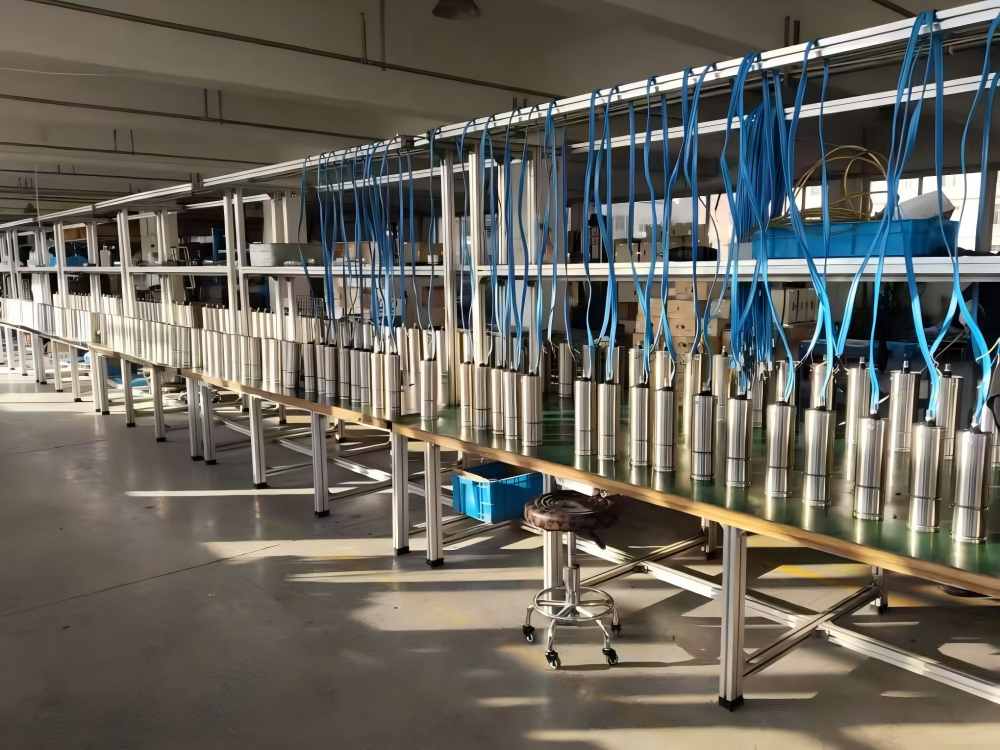
ZRI is an innovation-driven technology enterprise focusing on the solar water pump sector. Our product line includes DC solar water pumps, ACDC hybrid solar water pumps, and canned motor solar water pumps, among other series. Since its establishment, we have remained deeply engaged in this field, and currently, over 100,000 ZRI pumps are operating stably in multiple countries and regions around the world. We are now actively seeking global partners and supporting OEM cooperation. If you have further cooperation intentions or need more information, please feel free to contact us. Thanks for your trust and support in ZRI.
E-mail:ula@zripump.com
Tel/WhatsApp:+86 16605763305